Where to soak in central Japan: onsen towns near Nagoya, famous and quiet
By Trip Japan YLP Editorial TeamPublished by Trip Japan YLP
In this article
Once someone decides they want an onsen in their trip, the next question is always the same, and it's a surprisingly hard one: which one?
Japan has thousands. Guidebooks push you toward Hakone or Kusatsu, both of them a long way from here. But we're based in Nagoya, and honestly, the hot springs on our doorstep are some of the best value in the country — one of them has been on the national podium since the 1600s. Here's where we'd actually send you.
One housekeeping note first. If you've never been in a Japanese bath and the etiquette is what's making you hesitate, read our first-timer's guide to onsen etiquette before you go. It's shorter than you think and it comes down to one rule. This post is about the where.
Gero Onsen, the big name (Gifu)
If you only do one, do Gero. It sits in the Hida valley, and it's been ranked among Japan's three great hot springs since the Edo scholar Hayashi Razan put it beside Kusatsu and Arima back in 1621. That's four centuries of reputation.
The water is an alkaline simple spring, smooth to the point that the town has built its whole identity on being a "bath of beauty." What makes Gero fun, though, is that you don't have to check into a fancy ryokan to enjoy it. Free foot baths are dotted around the streets, so you can wander, sit down, roll up your trousers and soak for ten minutes between shops. And the ryokan cooperative sells a bath-hopping pass, the yumeguri tegata, at 2,500 yen: it lets you into three different member inns' baths, and it's good for six months. Three completely different baths in an afternoon. That's the sort of thing I'd travel for.
From Nagoya it's about ninety minutes on the JR Hida limited express, roughly 4,500 yen. Same train carries on to Takayama if you want to stretch the trip.
Yunoyama Onsen, the one-hour escape (Mie)
Closer to home, tucked at the eastern foot of Mt Gozaisho in the Suzuka mountains, is Yunoyama. Local records trace it to around the year 718, when a monk named Jokun is said to have found the spring; another old story has an injured deer healing itself here, which is why it's also called Shika-no-yu, the deer's bath. The town marked its 1,300th year in 2018. The water is an alkaline radium spring, clear and soft, and it's been called a beauty bath for a very long time.
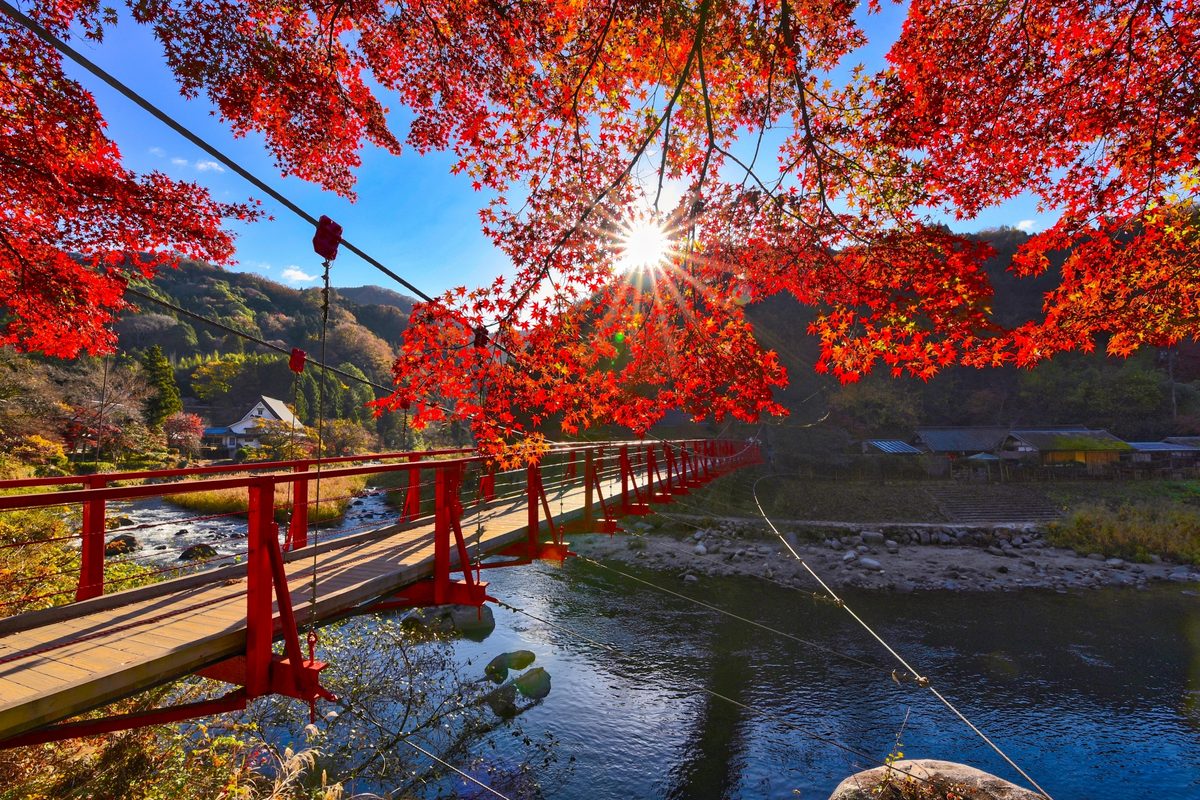
What makes it a great day out is the pairing: inns line the Mitaki river, most of them open their baths to non-staying visitors, and the Gozaisho Ropeway lifts off right there and carries you up the mountain. Ride up into cooler air, come down, get in the water. In autumn the whole valley turns red and it's madness — in a good way.
From Nagoya you're at Kintetsu Yunoyama-Onsen station in about an hour, then ten minutes on the bus.
Yuya Onsen, the one nobody tells you about (Aichi)
Now the quiet one. Yuya sits deep in Oku-Mikawa, eastern Aichi, along the Une river where it cuts through the Horai gorge. The spring is called Hoeki-sen, and it's credited to Rishu Sennin, the ascetic who founded Horai-ji temple some thirteen centuries ago. Sodium-calcium chloride water. About ten inns, strung along both banks.
That's the whole town. No arcades, no crowds, no queue for the good photo. Just the river running past your window. The regional tourism council counts it among Japan's hundred notable springs, which tells you the water is taken seriously even if the place is not busy.
You reach it on the JR Iida line — a slow, gorgeous little railway, and Yuya-Onsen has its own station. If you're not staying overnight, the public bathhouse Horai Yu-Yu Ariina (鳳来ゆ~ゆ~ありいな) runs day bathing for 620 yen for adults, generally from 10:00 (9:00 at weekends, holidays and through the summer), closed on Tuesdays. One honest warning: the footbath at the entrance to the town has been out of service, so don't plan your afternoon around it.
It's also the corner of Aichi we ride through on our Okumikawa cycling day — the route finishes with a bath after the hike up to Chiiwa Gorge, because earning your onsen is genuinely the best way to have one.
Okuhida Onsen-go, if you have two days (Gifu)
Further north, past Takayama, the road climbs into a cluster of five hot spring villages — Hirayu, Fukuji, Shin-Hirayu, Tochio and Shin-Hotaka — collectively the Okuhida Onsen-go. They sit between roughly 800 and 1,300 metres, ringed by three-thousand-metre peaks of the Northern Alps, and the local tourism association counts more than a hundred springs pouring out around 37,000 litres a minute.
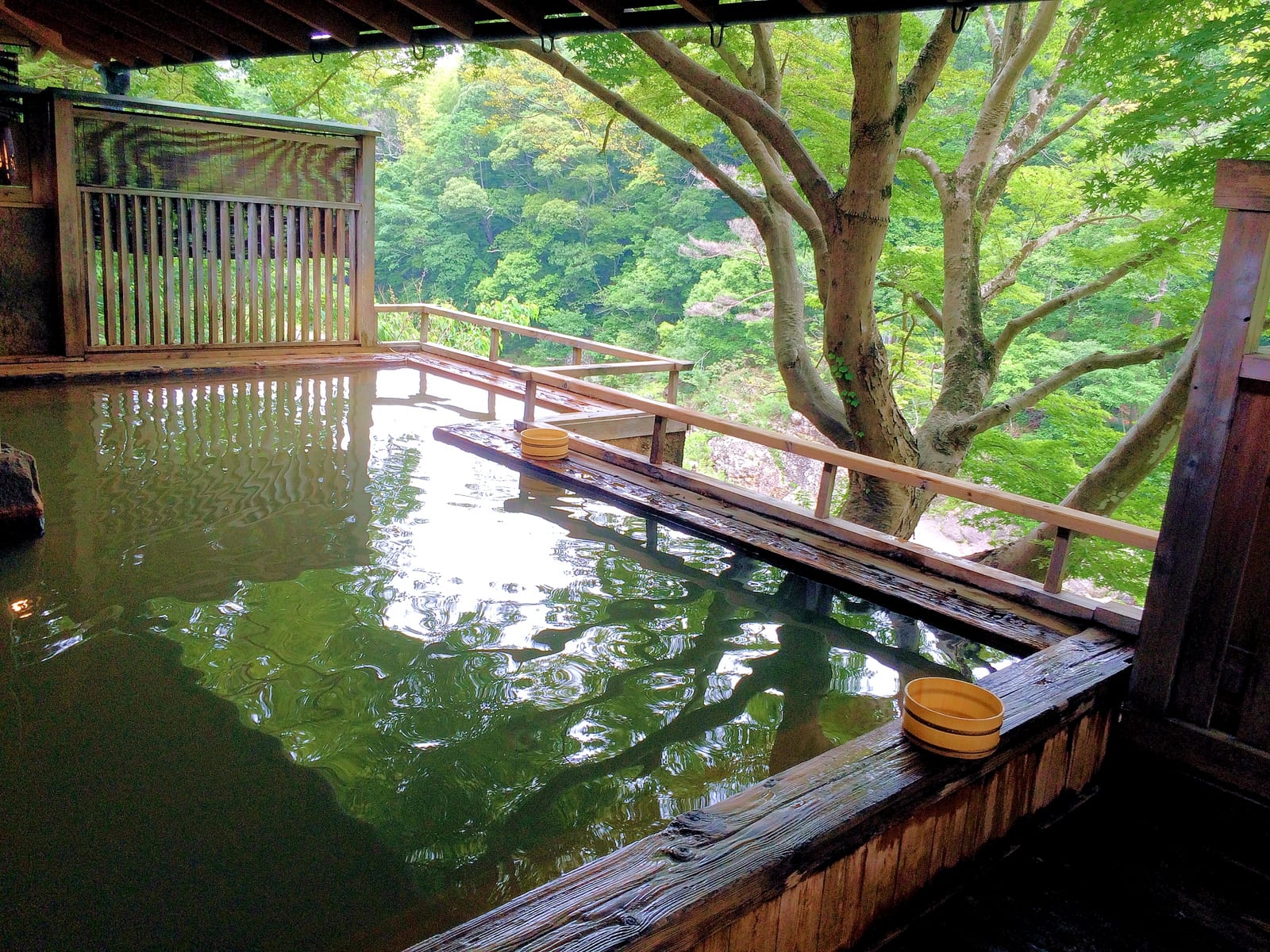
This is open-air bath country. Rotenburo looking straight at snow-dusted mountains, steam going sideways in the wind. The Shinhotaka Ropeway is right there too. It is not a day trip from Nagoya — go via Takayama, by JR Hida or highway bus, and then a Nohi Bus up the valley — but if you can spare a night, it's the one that stays with people.
And one small extra
If you're only free for an afternoon, Katahara Onsen over in Gamagori is a gentle little seaside option, and in June its hydrangea garden is genuinely something.
A few practical things
Most inns here run higaeri nyuyoku — day bathing for non-guests, usually a few hundred to a thousand-odd yen, typically in the middle of the day while the overnight guests are out. Check the day's hours before you set off; small towns change them seasonally, and Tuesdays are a common closing day.
If you have tattoos, the etiquette guide covers your options — the short version is that booking a private bath solves it almost everywhere.
And take the slow train if there's a choice. Half the pleasure of a central Japan onsen is the hour of river and mountain you watch on the way in. See you in the steam.
Planning a trip around central Japan? See the small-group days we run from Nagoya.
Browse all toursDid you enjoy this story?