20 minutes from Nagoya, a 1,300-year-old night you won't see anywhere else
By Trip Japan YLP Editorial TeamPublished by Trip Japan YLP
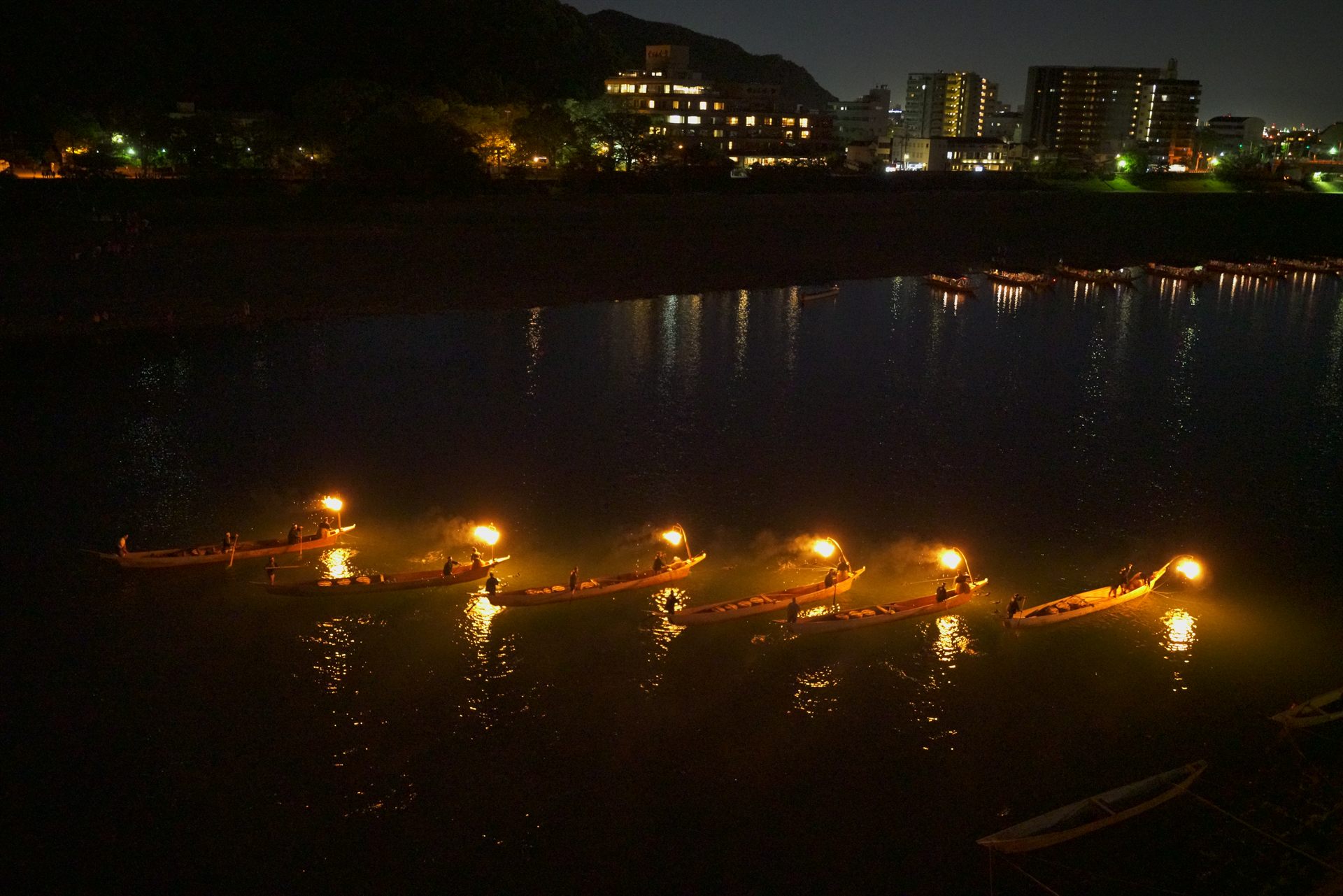
Picture this. It's a warm summer night in Gifu. You're sitting low in a wooden boat on the Nagara River, the city lights behind you, and somewhere ahead a bonfire is hanging off the bow of another boat — actual flames, over the water. Then the drums and the shouts start, and the cormorants hit the river.
This is ukai. Cormorant fishing. And honestly, it's one of those things that's been happening so close to home for so long that a lot of people here forget how strange and beautiful it is.
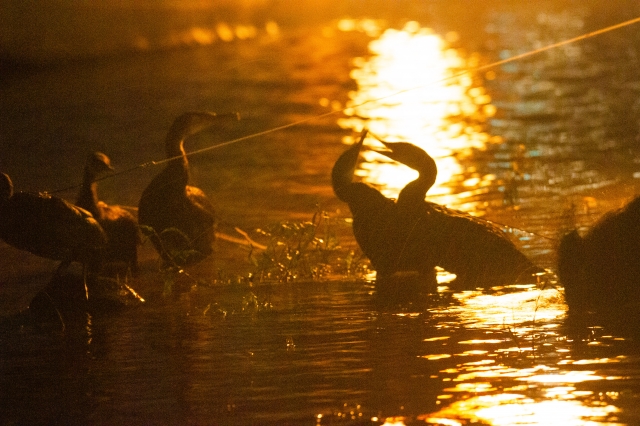 The real stars of the night: trained cormorants, lit by the fire on the water.
Here's the short version. For about 1,300 years, fishermen on the Nagara River have caught ayu — sweetfish — using trained cormorants instead of nets or lines. The master, called an ushō, stands at the bow in a straw skirt, holding a cluster of birds on cords, working them by feel in the firelight. A loose snare on each bird's throat lets it catch the fish but not swallow the big ones. It looks like chaos. It's actually decades of skill.
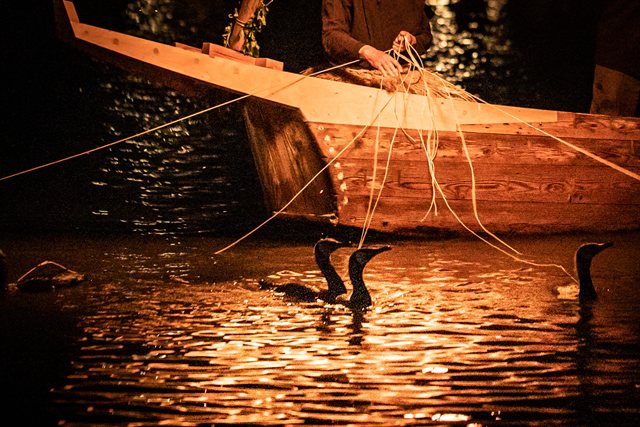 The ushō at the bow, a fistful of cords, reading the birds by feel in the firelight.
The part that gets me every time: this isn't a show someone invented for tourists. The six cormorant masters on the Nagara River carry an official imperial title — Kunaichō Shikibushoku Ushō — which makes them employees of the Imperial Household Agency. Some of the catch still goes to the imperial table. The fishing itself is a designated National Important Intangible Folk Cultural Property. You're not watching a reenactment. You're watching the real, living thing.
Even the poet Bashō got caught off guard by it, more than 300 years ago: "Omoshirōte / yagate kanashiki / ubune kana" — fascinating, and then, somehow, sad. Sit on that boat for an hour and you'll feel exactly what he meant.
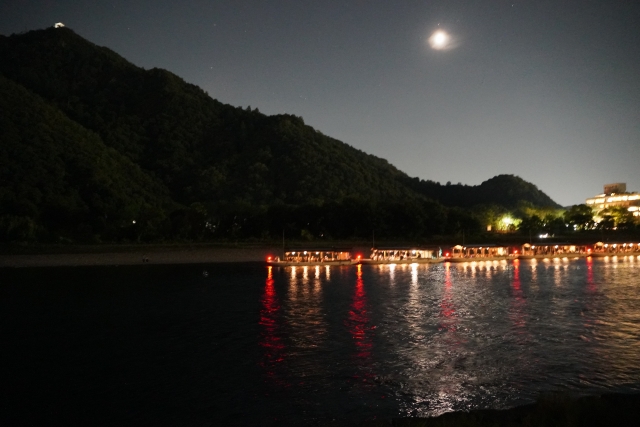 A summer night on the Nagara — the moon over Mt. Kinka, with Gifu Castle just visible on the peak.
Now the good news for anyone based around Nagoya: Gifu is under 20 minutes away by JR Special Rapid train (about ¥470). It's an easy evening, not an expedition.
The season runs May 11 to October 15 this year, almost every single night. You board a viewing boat — fares are around ¥4,200 for adults, ¥2,100 for kids on normal nights, a bit more on the busy summer Saturdays and over Obon. Boats push off in the early evening (departures at 6:15, 6:45 and 7:15), everyone eats and waits as it gets dark, and the fishing itself kicks off around 7:45 pm. The waiting is half the magic, so don't rush it.
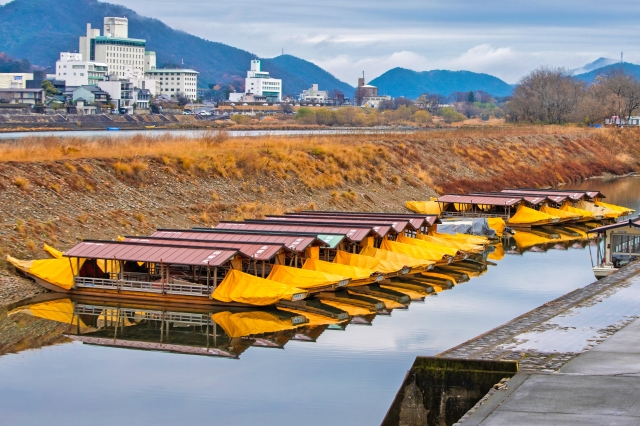 The viewing boats, moored by day. As the light fades, you'll climb aboard one of these.
I won't pretend it's slick and modern — it's not, and that's the whole point. Bring a light layer for the river breeze, something to nibble, and a little patience for a slow start. What you get back is a night that hasn't really changed in over a thousand years.
Good to know
- What it is: Ukai — traditional cormorant fishing for ayu (sweetfish) by firelight on the Nagara River, Gifu City.
- Season (2026): May 11 – October 15, nightly except the Sept 24 rest day and any high-water nights.
- Timing: Viewing boats depart around 6:15 / 6:45 / 7:15 pm; the fishing begins about 7:45 pm.
- Fares: roughly ¥4,200 adult / ¥2,100 child on standard nights; a little higher on busy summer dates.
- Getting there: JR Special Rapid from Nagoya to Gifu, ~19 min / ¥470, then a short city bus toward Nagarabashi.
- Book ahead in midsummer and over Obon — the popular nights fill up.
If you'd like us to fold an ukai evening into a few days in central Japan, just say the word. It's one of those nights people talk about long after they've flown home. See you on the river.
Planning a trip around central Japan? See the small-group days we run from Nagoya.
Browse all toursDid you enjoy this story?