
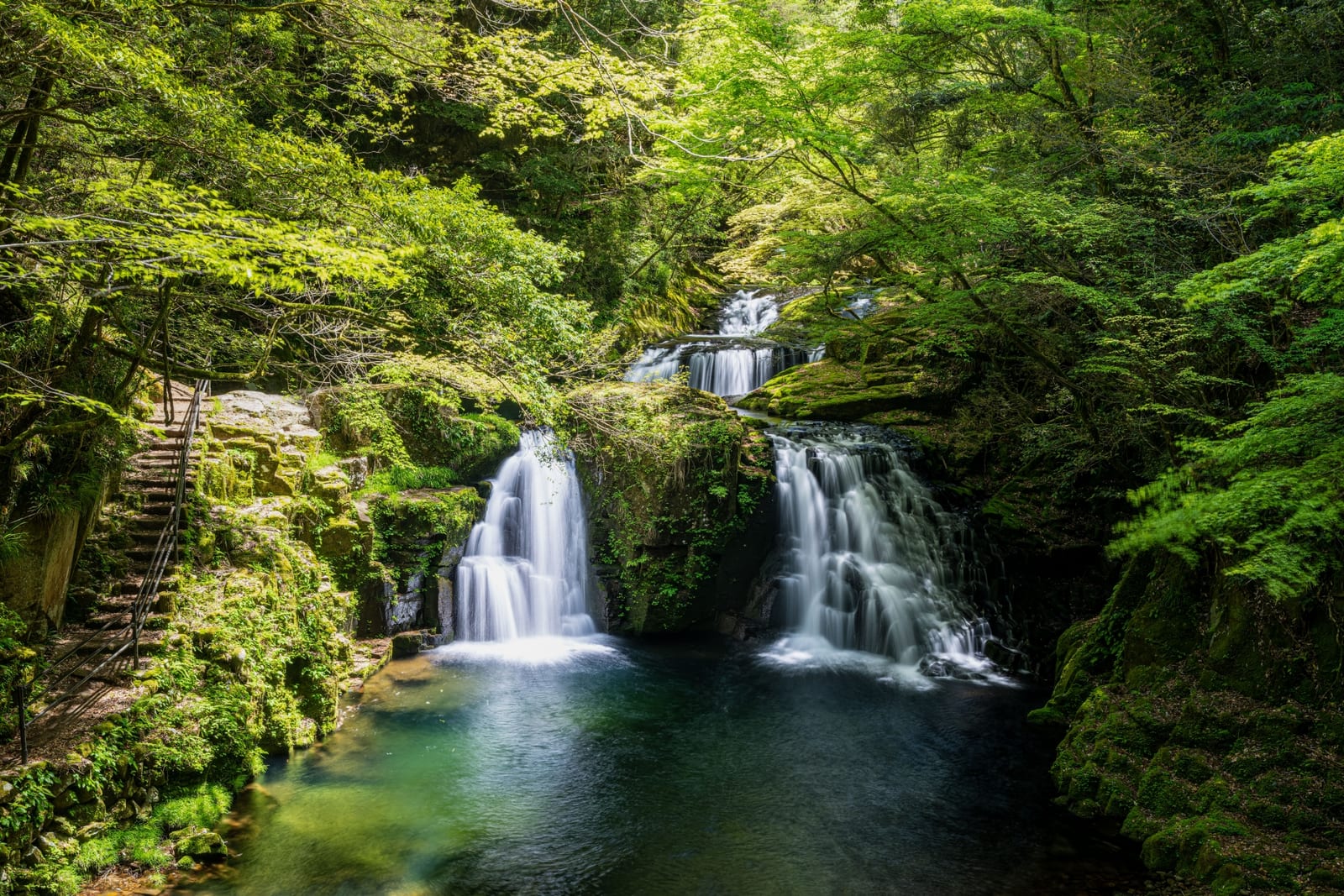
Akame 48 Waterfalls
A cool green ravine of waterfalls deep in the Mie mountains — a four-kilometre trail past five famous falls, a giant salamander the size of your forearm, and the valley where the Iga ninja once trained. The walk you'll want on a hot summer day.
Plan your visitHere's a trick the locals know for a Japanese summer: instead of fighting the heat, walk straight into a place that never gets it. Deep in the mountains of Mie, about an hour from Osaka, there's a ravine where the air is always cool and damp and the only sound is water. They call it Akame Shijuhachi-taki — the Akame 48 Waterfalls. Forty-eight is poetic licence for "more than you can count," and on a hot afternoon I can't think of a better place to be.
A green ravine of waterfalls
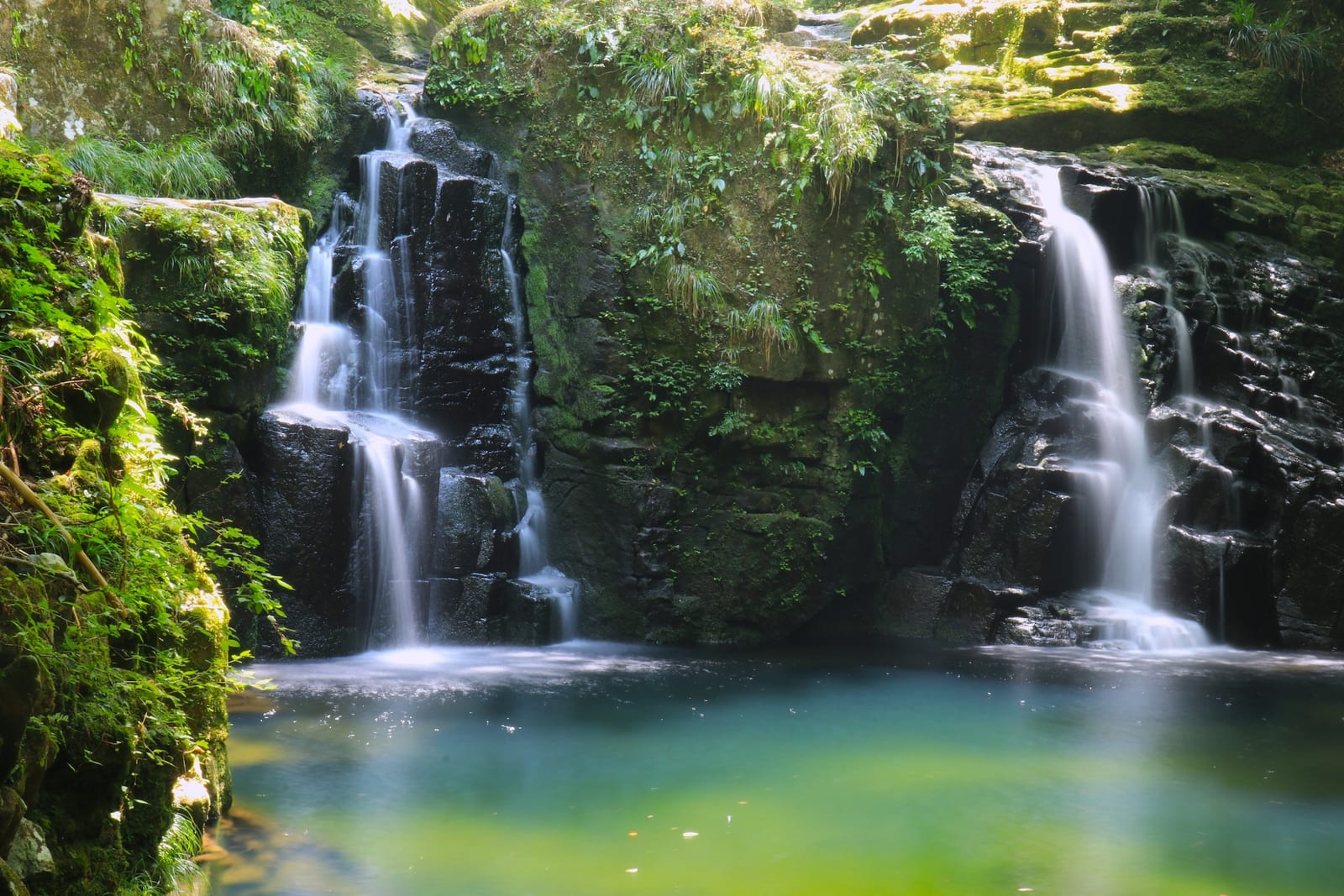
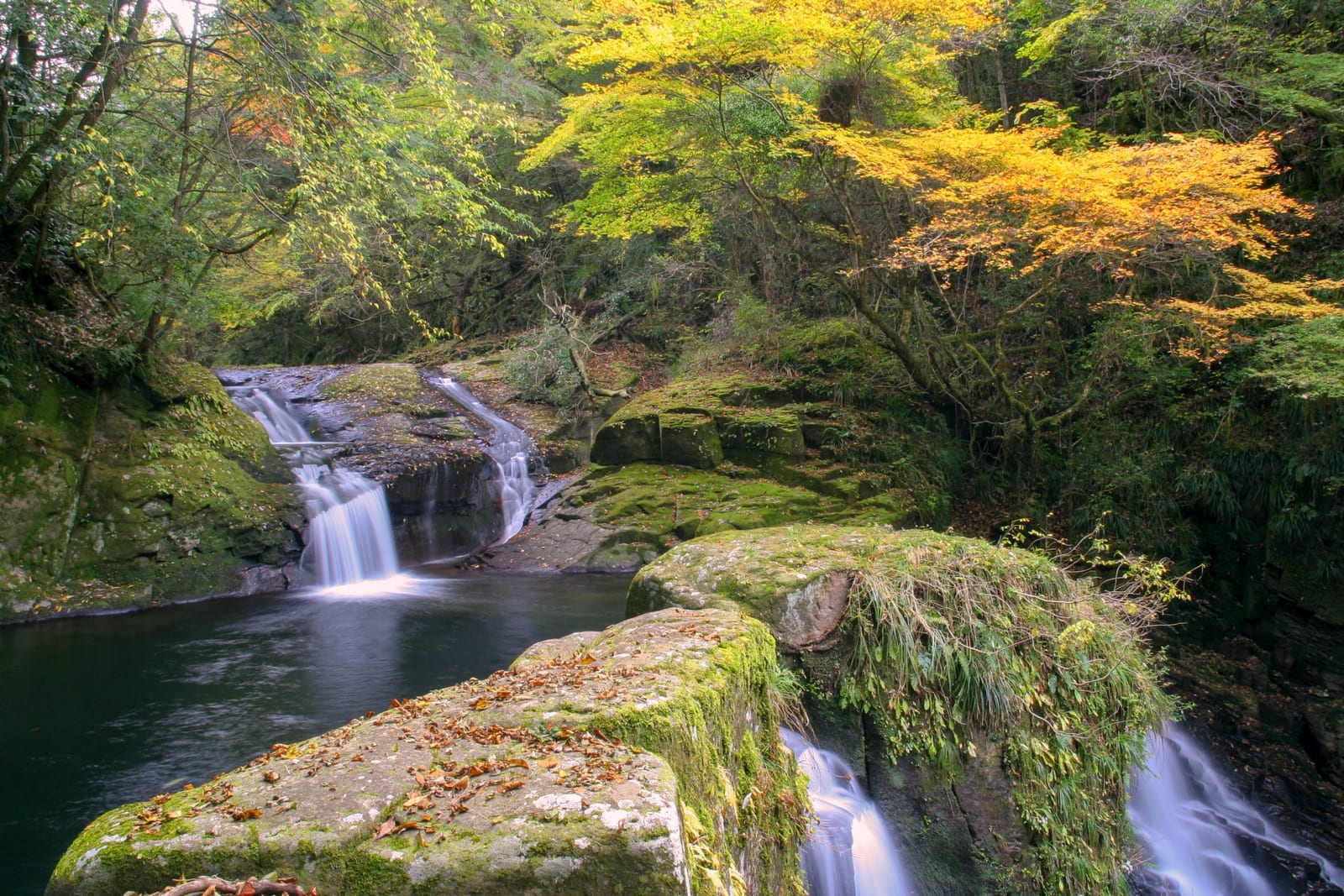
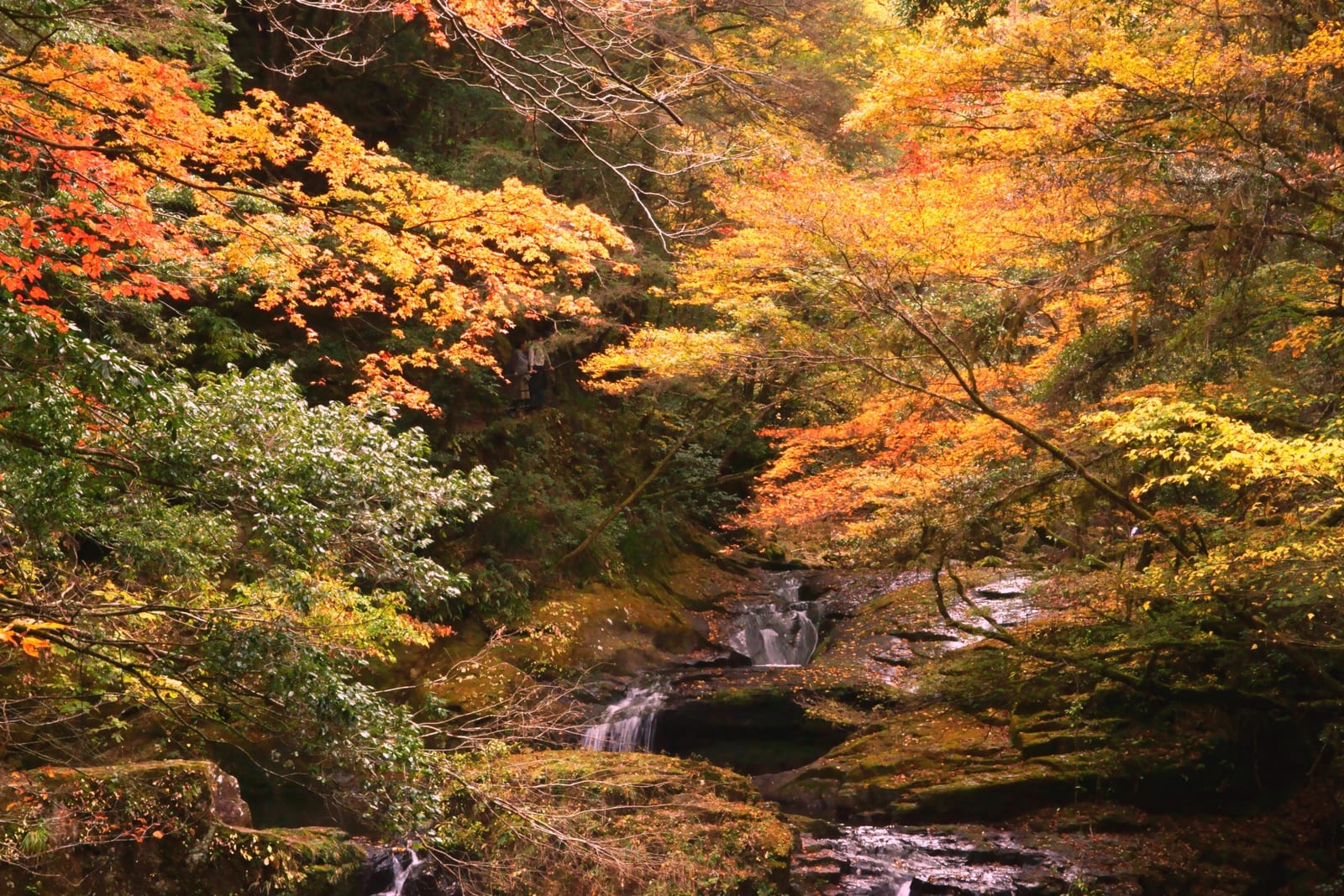
The trail is a single path that follows the river up the valley, about four kilometres one way, an hour and a half at an easy pace. You don't have to do the whole thing — but you'll want to keep going, because the next fall is always just around the bend. Five of them have names and a reputation: Fudo, the calm curtain near the entrance; Senju and the thirty-metre drop of Nunobiki; Ninai, which splits into two streams around a boulder; and Biwa near the top. Between them, dozens of smaller cascades, mossy rocks, little wooden bridges, and pools so clear they look filtered.
The salamanders at the gate
Before you start the walk, the Akame Falls Aquarium sits right at the valley mouth, and it's worth the few minutes. The star is the Japanese giant salamander — a living Special Natural Monument that can grow well past a metre, with a broad flat head and skin like wet stone. These are some of the largest amphibians on Earth, and Akame's clean, cold rivers are one of the few places they still live in the wild. Seeing one up close changes how you look at the stream for the rest of the walk.
Where the ninja trained
There's a reason this valley feels secret. Centuries ago it was a training ground for the Iga-ryu ninja, who came here to harden themselves against the cold water and the long climbs, and to disappear into the forest. You're an hour's drive from the Iga ninja town over the hills, and the two make a natural pair — the legend in one place, the landscape that made it in the other.
Honest about the walk
This is a real mountain trail, not a paved promenade. There are stone steps, narrow ledges, the odd metal handrail, and stretches where the rock is wet and slick — proper walking shoes, not sandals. Allow three to four hours if you want to reach the top and come back, less if you turn around at Ninai. After heavy rain, take the slippery bits slowly, and check the official site, because the upper path can close. It's shaded and cool, but it's a hike, and a small one is still a hike.
Make it part of your trip
Akame is the kind of half-day that resets you — green, quiet, and a few degrees cooler than wherever you came from. It folds beautifully into a Mie itinerary alongside Iga's ninja streets, or as a breather between the cities. Tell us when you're travelling and how far you'd like to walk, and we'll set the pace and the turnaround point to match — in English or Vietnamese, with the cool of the valley doing most of the work.
In pictures
Highlights
Five famous falls in one walk
The four-kilometre trail strings together the valley's five signature waterfalls — Fudo, Senju, Nunobiki, Ninai and Biwa — plus dozens of smaller cascades, with the river at your side the whole way.
A giant salamander you can actually meet
At the valley mouth, the Akame Falls Aquarium keeps Japanese giant salamanders — a protected Special Natural Monument that can grow well over a metre. Akame's clean rivers are one of the places they still live wild.
Where the Iga ninja trained
This hidden ravine was a training and meditation ground for the Iga-ryu ninja between the 15th and 18th centuries. It pairs naturally with the ninja town just over the hills.
Cool air on a hot day
Even in the thick of summer the gorge stays shaded and damp, the spray and the running water taking the edge off the heat. It's one of the region's best escapes from a Japanese August.
One of Japan's 100 famous waterfalls
Akame is on the national list of Japan's hundred best waterfalls, and the fee you pay goes straight into keeping the valley clean and the path safe.
A suggested route
- 1
Aquarium entrance (start)
Buy the conservation ticket here and meet the giant salamanders at the Akame Falls Aquarium before you set off up the valley.
- 2
Fudo Falls
The first of the five, a short walk in — a calm curtain of water that once marked the edge of the sacred grounds.
- 3
Senju & Nunobiki Falls
Deeper in, a wide cascade and a tall thirty-metre ribbon of water — the heart of the lower valley.
- 4
Ninai Falls
A graceful twin fall splitting around a great rock; many walkers make this their turnaround point, about an hour and a half up.
- 5
Biwa Falls and the upper trail
Keep going to the far falls for the full four kilometres, then walk the same path back down.
Best time to visit
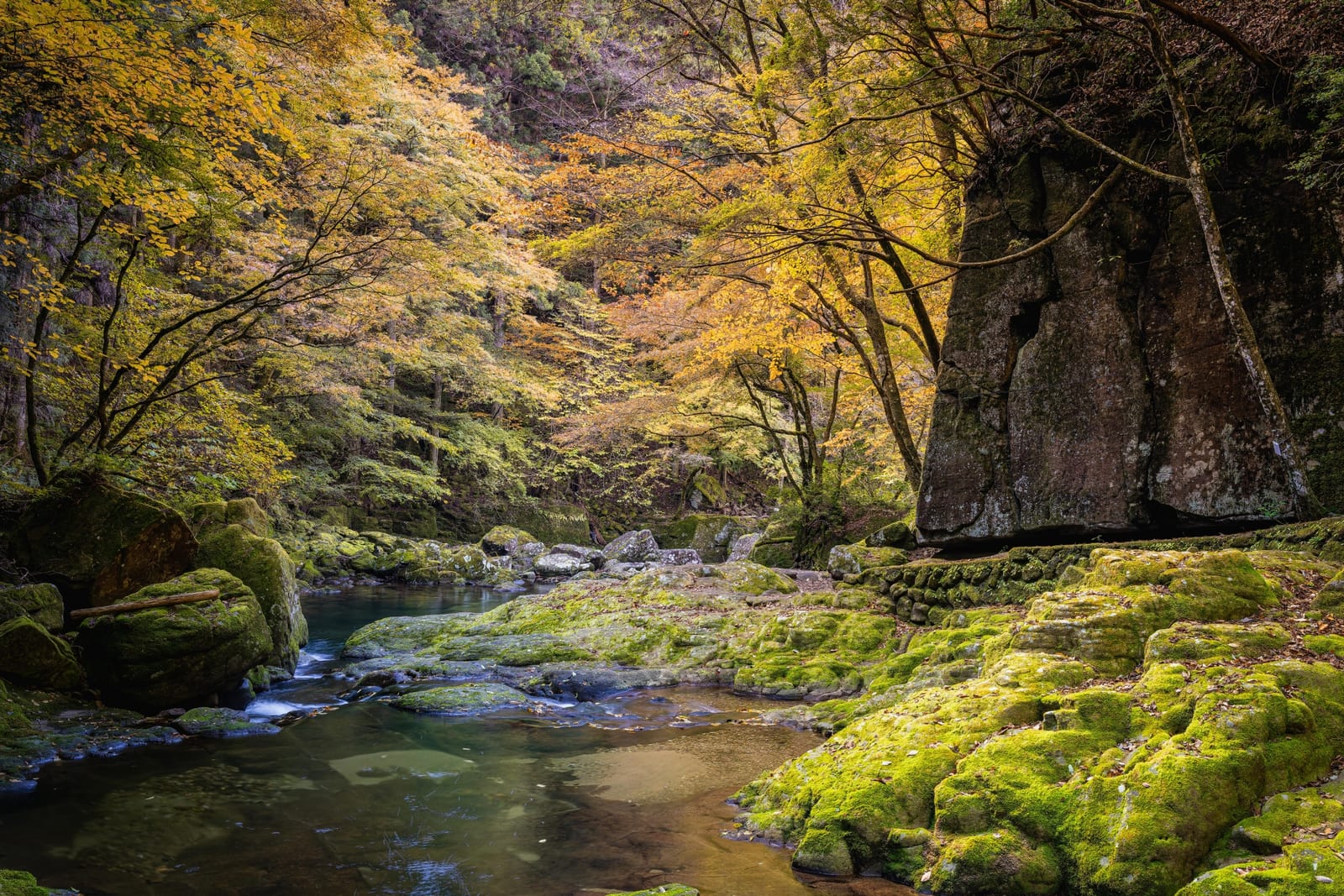
Late spring and early summer bring fresh green and a full, fast river; midsummer is when the cool of the gorge is most welcome; autumn leaves peak in early-to-mid November. It's open year-round on shorter winter hours. After heavy rain the rocks and steps get slippery, so take the wet stretches slowly.
Getting there
- Kintetsu Akameguchi StationAbout 10 minutes by bus to the Akametaki stop, then a short walk to the valley entrance.
- Osaka (Namba)Around an hour on the Kintetsu Osaka Line to Akameguchi Station.
- NagoyaRoughly 90 minutes by Kintetsu, changing trains along the way, to Akameguchi Station.
Would you like to visit?
Plan your visit
Want to include this in a guided day with transport and an English- or Vietnamese-speaking guide? Tell us your dates and we’ll build it around you.