
Hida Furukawa
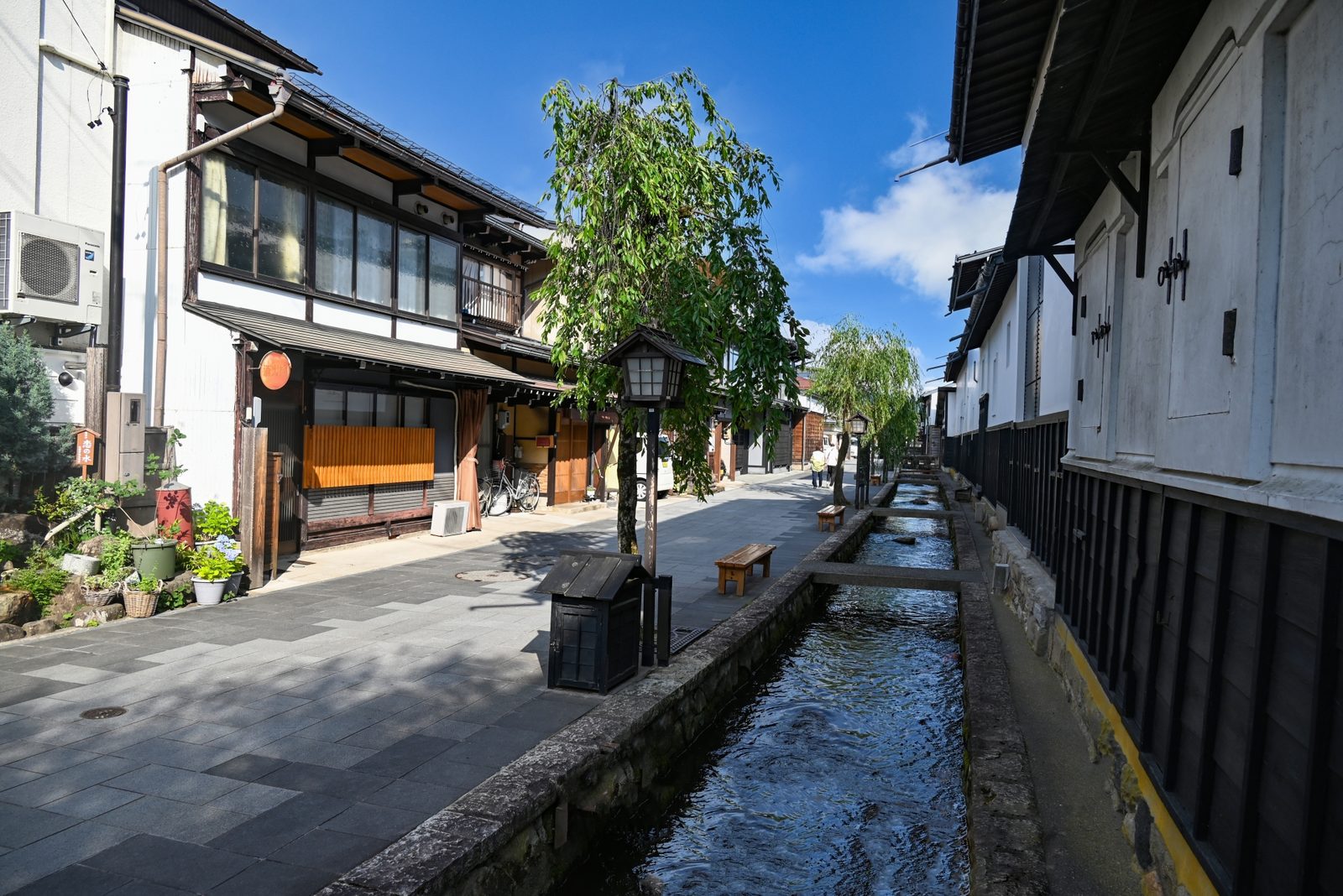
About fifteen minutes by train from busy Takayama, Hida Furukawa is a quiet town of white-walled storehouses along the Setogawa canal, where hundreds of carp swim through the warmer months. It is known for the woodwork of the Hida carpenters and for the Furukawa Festival — an unhurried countryside day trip in the Hida mountains.
Plan your visitIn the Hida mountains of northern Gifu, a short train ride beyond Takayama, the town of Hida Furukawa keeps a slower pace. Water runs clear in the Setogawa, a narrow canal that threads between white-walled storehouses, and from spring into late autumn hundreds of carp drift in it, bright against the dark stone and pale plaster. Takayama draws the crowds; Furukawa, a quarter of an hour up the same line, is where the Hida countryside goes quietly about its day.
A town that lives at its own pace
Furukawa was a castle town, and it still feels like a working one rather than a place set out for visitors. Along Ichinomachi and the neighbouring lanes stand old merchant houses, latticed shopfronts and a couple of long-established sake breweries, the round cedar balls at their doors marking the season's brew. The carp give the streets their rhythm: they swim in the Setogawa roughly from April to November, then move to the pond at the Masushima Castle ruins to winter over before returning in spring. Feed can be bought at shops along the water, and a kimono rental makes for an easy walk between the storehouses. Because most travellers stop only at Takayama, the lanes here stay calm even in high season.
The Furukawa Festival and the okoshi-daiko
Once a year the quiet breaks. The Furukawa Festival, the spring rite of Ketao Wakamiya Shrine, fills the town on April 19 and 20. On the night of the 19th comes the okoshi-daiko, the "rousing drum": a great drum is raised on a tall wooden frame and carried through the streets by crowds of men in loincloths, while teams press in around it with smaller drums of their own. The next day, tall yatai floats — carved, gilded and hung with embroidery, some carrying mechanical karakuri puppets — process through the old town. The okoshi-daiko and the float procession are designated a National Important Intangible Folk Cultural Property and are inscribed on UNESCO's list of Intangible Cultural Heritage.
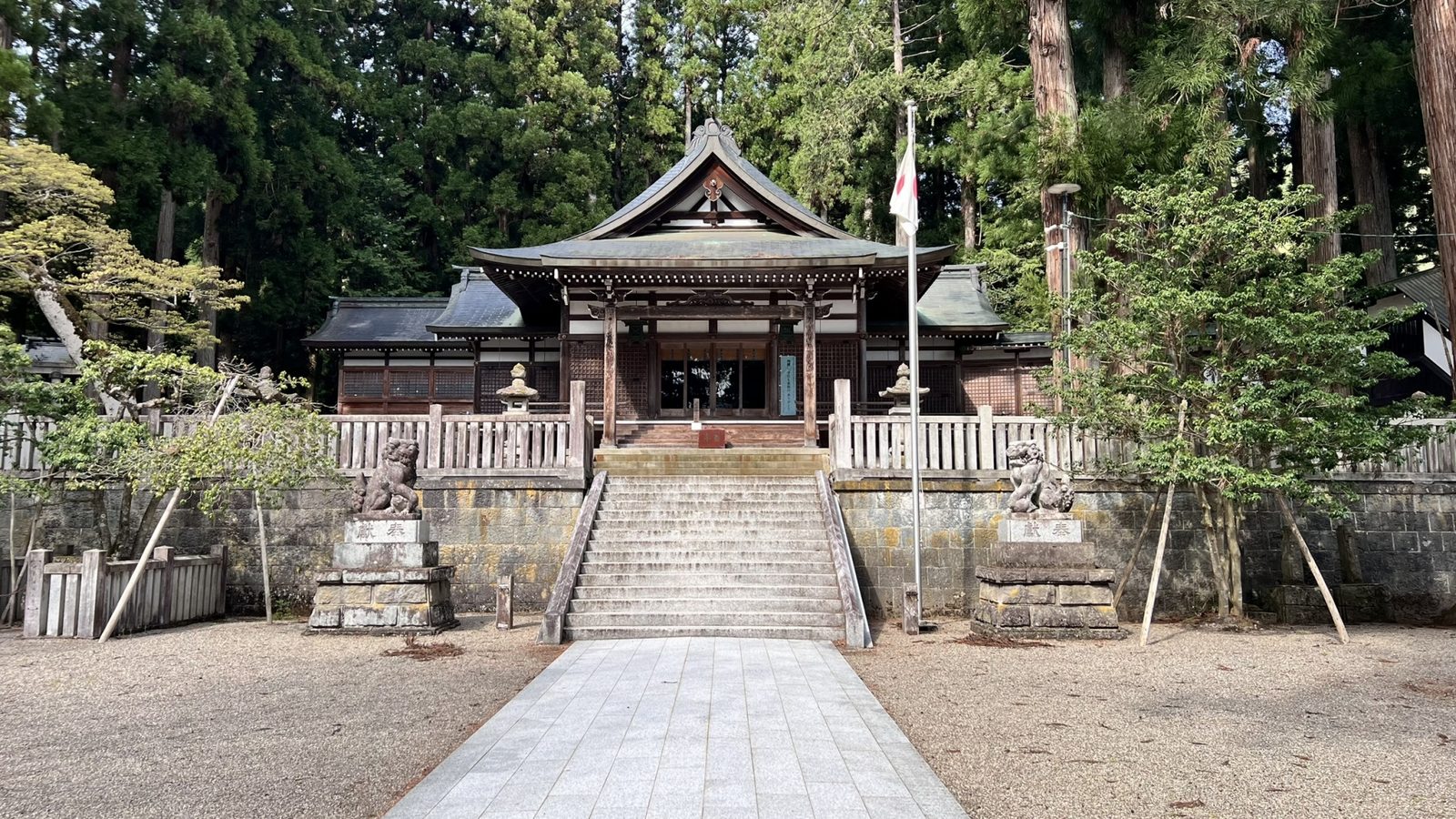
For anyone visiting outside those two days, the Hida Furukawa Festival Exhibition Hall keeps the festival on show all year, with real floats displayed indoors, karakuri demonstrations, and a chance to try striking the okoshi-daiko.
The mark of the Hida carpenters
Furukawa is one of the homes of the Hida no Takumi, the carpenters whose skill has been prized since ancient times, when craftsmen from Hida were sent to the capital to raise its temples and palaces. Their signature is carved into the town itself: under the eaves of many houses sits a kumo, a cloud-shaped bracket, and each carpenter cut his own cloud pattern as a kind of maker's mark, so that many different clouds can be found along the streets. The tradition is gathered at the Hida no Takumi Craft Museum, a building joined entirely without nails in the old way; its own eaves carry the cloud marks of the carpenters who raised it.
Good to know
Furukawa is easiest as a half-day from Takayama: a local train on the JR Takayama Main Line takes about fifteen minutes, and some Limited Express Hida trains continue here too, with the old town only a short walk from the station. The carp are in the canal roughly from April to November, and the Furukawa Festival falls on April 19 and 20 — lodging around those nights books up far in advance. The Festival Exhibition Hall and the Craft Museum keep regular closing days and shorter winter hours, so it is worth confirming times and fares officially before you set out. Some visitors arrive already knowing the town from the animated film Your Name. (Kimi no Na wa.); the station and the nearby Hida City Library are among the places fans recognise, and the local tourism office maps a route between them. For the livelier sister town just down the line, see Takayama Old Town; for the thatched farmhouses deeper in the mountains, see Shirakawa-go.
In pictures
Highlights
The Setogawa canal and its carp
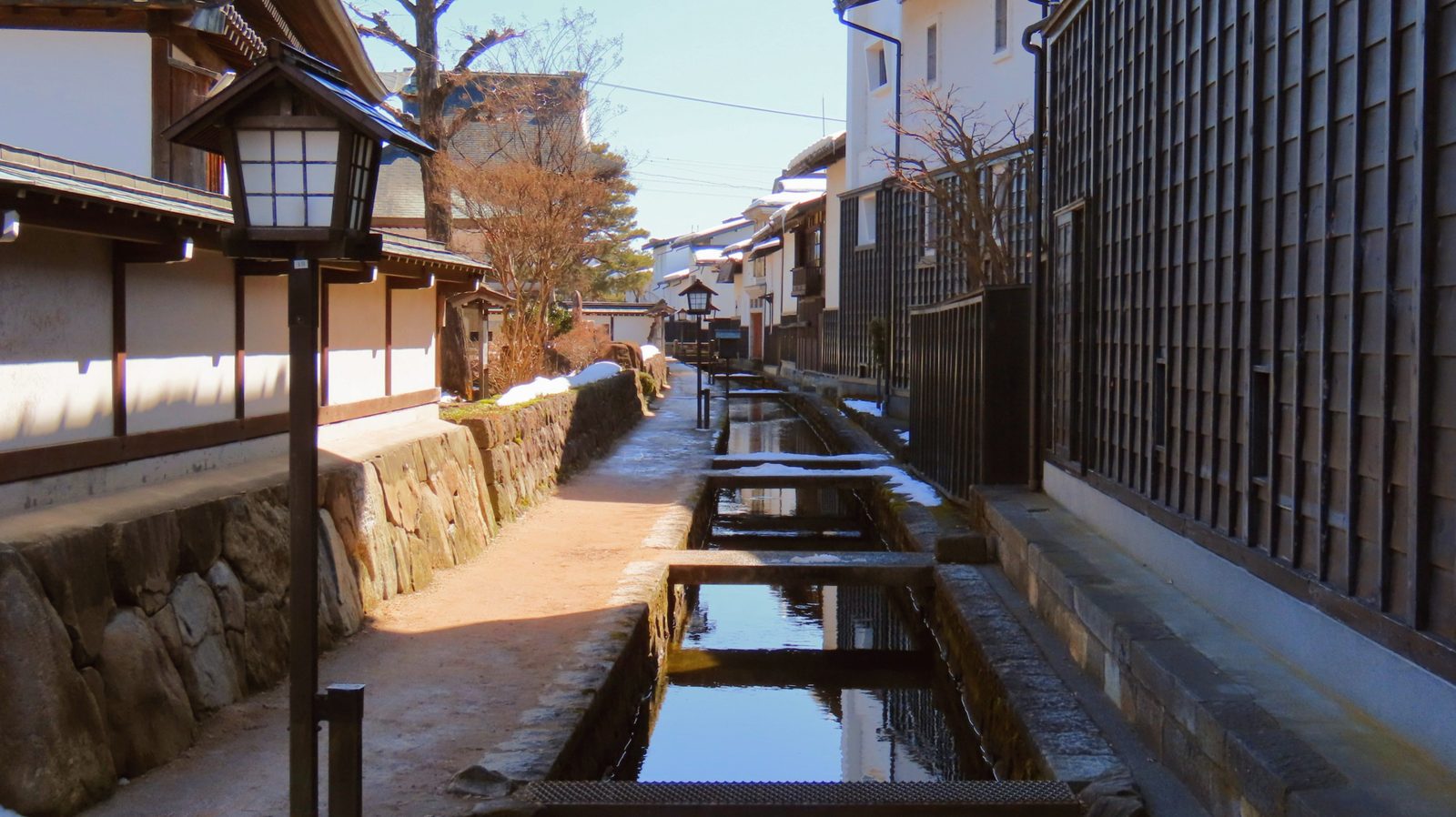
A clear channel of water runs between rows of white-walled storehouses, and from spring to late autumn hundreds of colourful carp swim in it. In winter the carp move to the pond at the Masushima Castle ruins, returning to the canal in spring.
A quieter neighbour to Takayama
Furukawa sits about fifteen minutes up the line from Takayama, but draws far fewer visitors. It is a lived-in castle town of merchant houses, latticed shopfronts and old sake breweries rather than an open-air museum.
The work of the Hida carpenters
The town is one of the homes of the Hida no Takumi, master carpenters prized since ancient times. Under the eaves of many houses sits a cloud-shaped bracket called a kumo, each carved with a carpenter's own pattern like a maker's signature.
The Furukawa Festival
Held on April 19 and 20 as the spring rite of Ketao Wakamiya Shrine, the festival is famous for the okoshi-daiko, a great drum carried through the streets at night, and for its carved yatai floats. Both are inscribed on UNESCO's Intangible Cultural Heritage list.
The festival, any day of the year
The Hida Furukawa Festival Exhibition Hall keeps the festival on show all year, with real floats displayed indoors, mechanical karakuri puppets, and the chance to try striking the okoshi-daiko drum.
A suggested route
- 1
Setogawa canal & storehouse street
Begin along the white-walled storehouses and the carp-filled canal, the heart of the old town.
- 2
Ichinomachi merchant street
Wander the lanes of latticed shopfronts and look in at one of the old sake breweries.
- 3
Hida Furukawa Festival Exhibition Hall
See the towering yatai floats indoors and try the okoshi-daiko, whatever the time of year.
- 4
Hida no Takumi Craft Museum
Step inside a building joined entirely without nails, and find the carpenters' cloud marks under the eaves.
- 5
Back to Takayama
The old town is a short walk from the station, an easy fifteen-minute hop back down the line.
Best time to visit
The town rewards a visit in any season, but spring is special — the carp return to the Setogawa canal around April, and the Furukawa Festival fills the streets on April 19 and 20. The carp swim in the canal roughly from April to November, then winter over at the Masushima Castle pond. Autumn brings colour to the surrounding hills. The festival nights are crowded and lodging fills early, so plan ahead, and confirm dates and hours officially before you go.
Getting there
- TakayamaJR Takayama Main Line local train to Hida-Furukawa Station, about 15 minutes; some Limited Express Hida trains also continue here. The old town is a short walk from the station.
- NagoyaLimited Express Hida toward Takayama and Toyama, about 2 hours 40 minutes to Hida-Furukawa, or change at Takayama for the short local hop.
- By carAbout 15 minutes north of Takayama; there is paid parking near the old town.
Would you like to visit?
Plan your visit
Want to include this in a guided day with transport and an English- or Vietnamese-speaking guide? Tell us your dates and we’ll build it around you.