
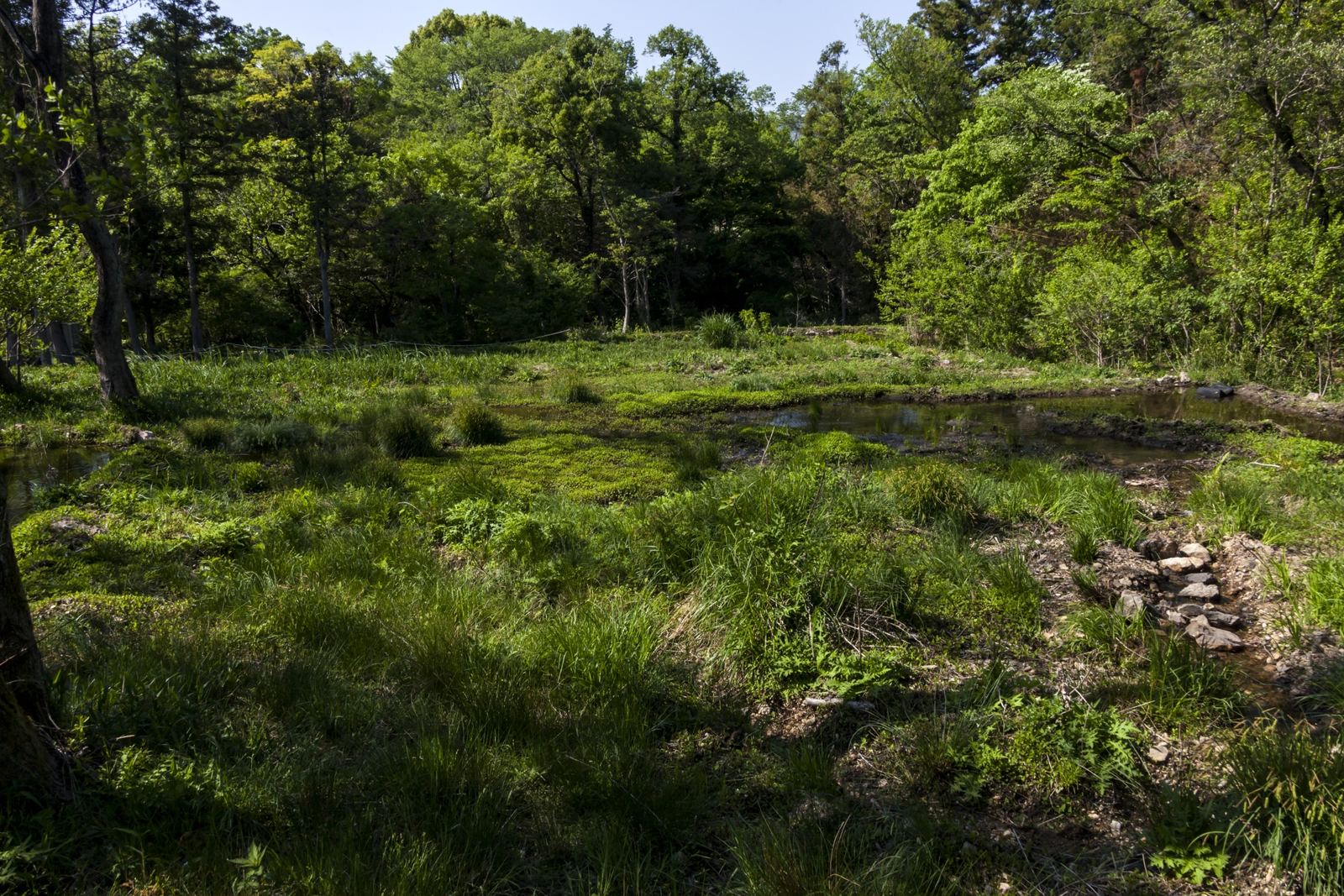
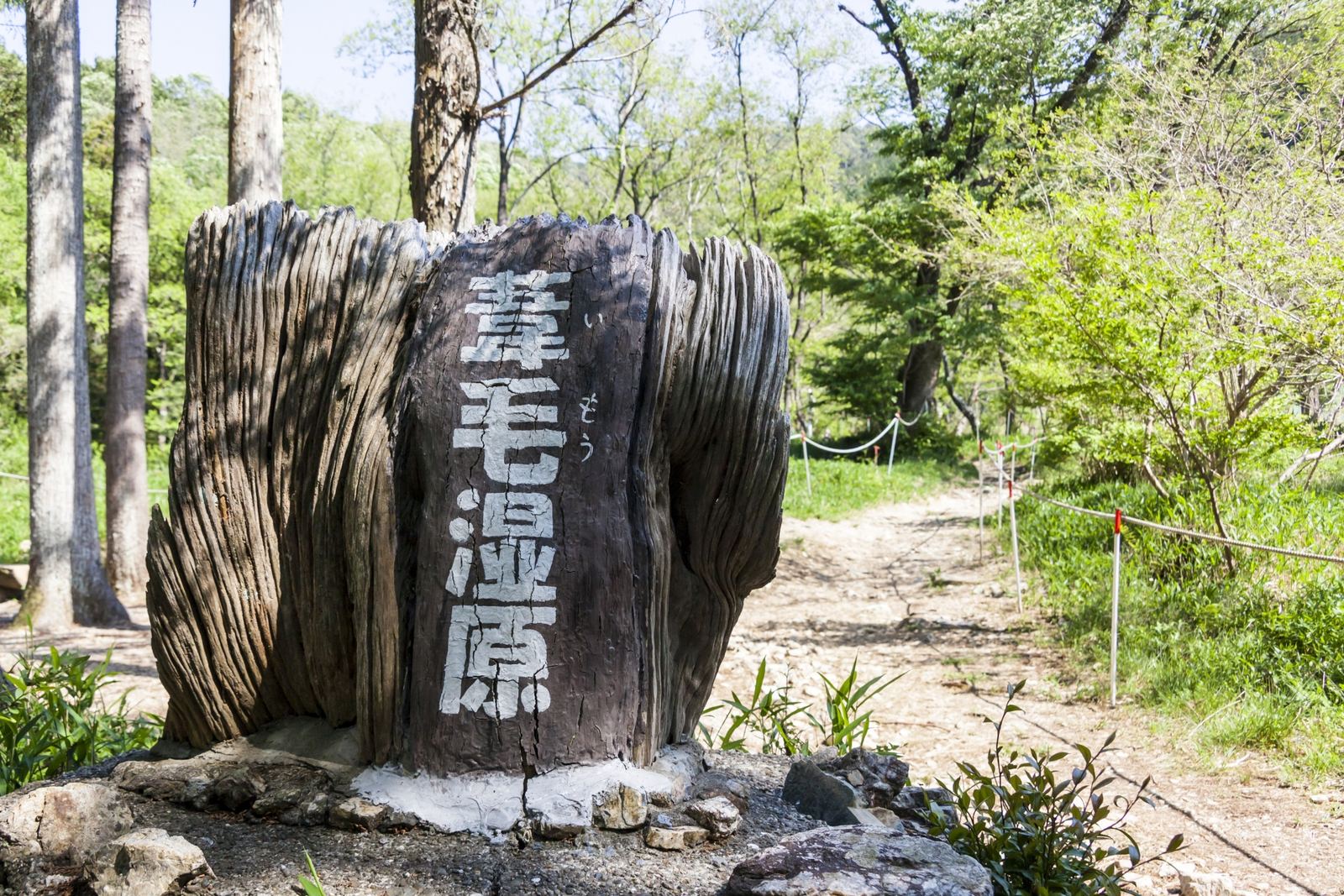
Imo Marsh
On the eastern edge of Toyohashi, at the foot of low wooded hills, a wooden boardwalk winds across one of the largest spring-fed marshes in the country. This is Imo Marsh — barely three hectares, and yet home to some 250 wetland plants, several of them found almost nowhere else. The water seeps up out of the bedrock rather than pooling, so it is not the vast peat moor of Oze in the far north but a small, intimate cousin, known affectionately as "the mini-Oze of the Tokai region." In spring the ground is stitched with tiny gentians, in early summer with carnivorous flowers, and in September the whole marsh turns white with star sand-grass. Since 2021 it has been a National Natural Monument.
Plan your visitImo Marsh lies on the eastern edge of Toyohashi, where the city gives way to the low wooded ridges of the Yumihari hills. It is easy to miss and easy to underestimate: a patch of wet ground barely three hectares across, reached by a short path from a quiet car park. But this small marsh is one of the largest spring-fed wetlands in the country, and among the richest — some 250 kinds of plant grow here, a few of them found in almost no other place.
A marsh fed from below
Most wetlands sit where water collects and has nowhere to go. Imo works the other way around. Water rises out of the chert bedrock and runs slowly down a gentle slope, keeping the ground wet through every season — a spring-fed marsh, which is a rarer thing than the ordinary sort. It is not the great high moor of Oze, far away in the northern mountains, but a small and quiet version of the same idea, and that is how local people came to call it "the mini-Oze of the Tokai region."
A protected place, and its plants
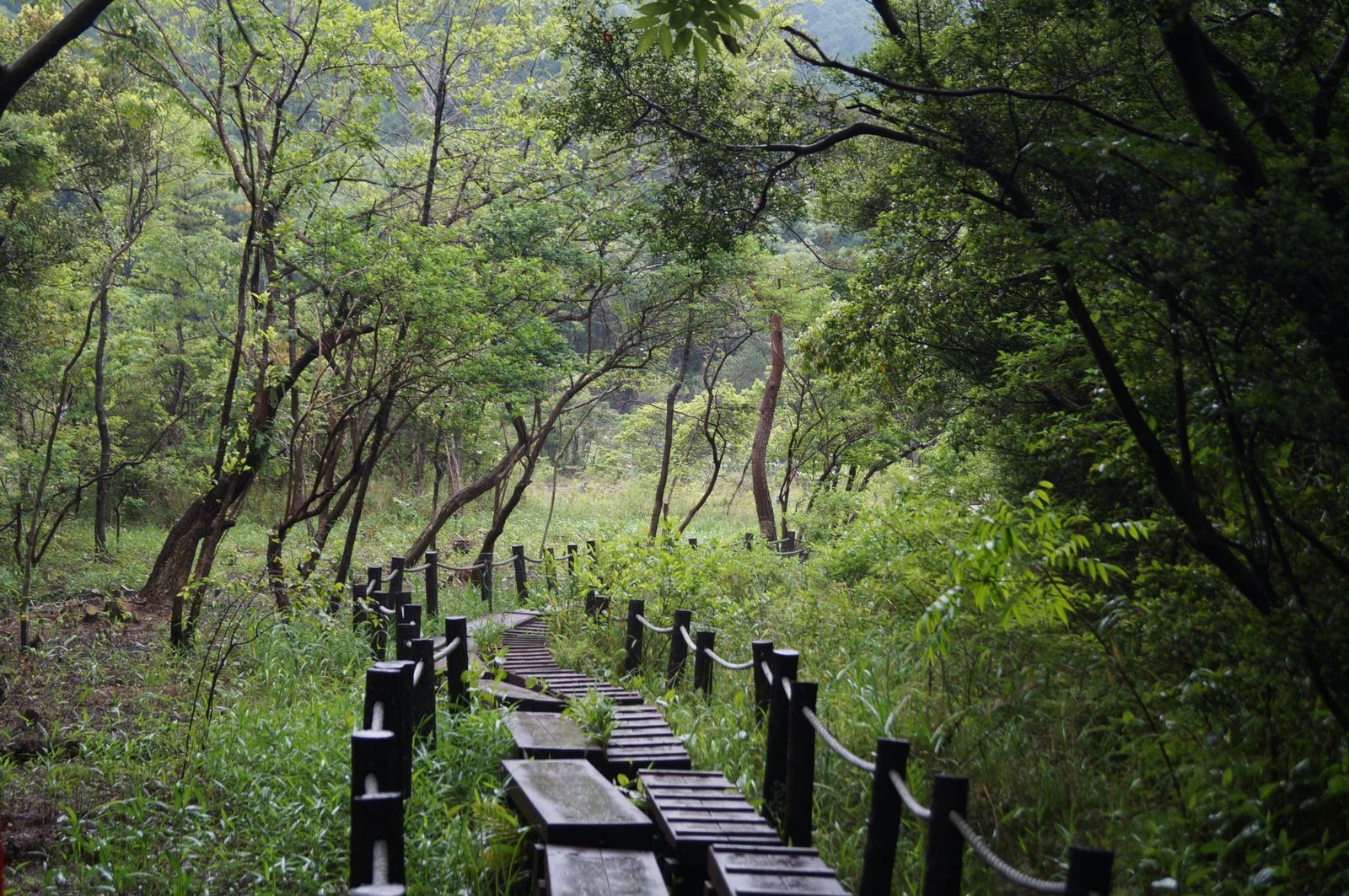
In October 2021 the marsh was named a National Natural Monument. For all its modest size it holds an unusual company of plants: the Mikawa-baikeiso and the star sand-grass that belong to this region and little beyond it, and, closer to your feet, the sundews and bladderworts — small carnivorous plants that live off insects because the wet, thin soil offers them so little. Many are rare, and some are endangered, which is why a wooden boardwalk carries you out over the marsh and asks you to stay on it. The seasons turn the ground different colours: gentians in spring, odd small flowers in early summer, and at the very start of autumn a whitening-over as the star sand-grass comes into bloom.
Brought back by hand
A marsh like this does not keep itself. Over the years trees and dry-ground plants crept in from the edges, the water began to fall, and the open wet ground shrank. Rather than lose it, the city's cultural-property centre and a local group of volunteers set about bringing it back — using the careful, layer-by-layer methods of an archaeological dig to lift away the encroaching soil and let the old marsh plants return. Much of the open ground you walk beside today is the result of that slow, deliberate work, and it is part of what makes the place worth the short trip out.
Good to know
The marsh is free and open to the sky, with no gate and no closing time, but there is nothing much in the way of facilities, so bring water and wear shoes you don't mind getting wet. It is small — most people make the circuit in under an hour — so it suits a gentle morning rather than a full day, and it pairs well with the hills behind it if you want to walk on. Early September, when the star sand-grass flowers, is the loveliest and the busiest time; the car parks fill on fine weekends, so arrive early. For another quiet stretch of East Mikawa nature, see the cool summer gorge at Chiiwa Gorge in Oku-Mikawa; and for help choosing your season, the best time to visit central Japan.
In pictures
Highlights
A marsh fed from below
Most wetlands form where water gathers and cannot drain. Imo Marsh is different — water rises steadily out of the chert bedrock and trickles down a gentle slope, keeping the ground wet the year round. This kind of spring-fed marsh is unusual, and at around three hectares Imo is counted among the largest of its type in Japan. It is not the sweeping high moor of Oze, but a small, quiet version of the same idea, which is how it came by its local nickname.
A National Natural Monument
In October 2021 the marsh was named a National Natural Monument, protection given to only a handful of places in Aichi. Some 250 kinds of wetland plant grow here, among them the Mikawa-baikeiso and the star sand-grass that are all but unique to this region, along with sundews and bladderworts — small carnivorous plants that trap insects to live in the poor, wet soil. Many are rare or endangered, which is why the path keeps you to the boardwalk.
The boardwalk and the seasons
A wooden walkway loops out over the wet ground, so you can make a slow circuit without ever stepping onto the marsh itself. Each season brings something different — the pale blue of spring gentians in April, the odd little flowers of the carnivorous plants and the clematis in early summer, and, at the very start of autumn, the marsh whitening over as thousands of star sand-grass come into bloom.
Brought back by hand
A marsh like this does not look after itself. As trees and dry-ground plants began to close in and the wet ground started to dry, the city's cultural-property centre and a local conservation group set about restoring it — borrowing techniques from archaeology to dig back the encroaching soil, layer by layer, so that the old marsh plants could return. Much of what you see today is the fruit of that patient work.
The hills around
Imo Marsh sits in a fold of the Yumihari hills, which wrap around it on three sides. From the top of the marsh a path climbs on into the woods, and walkers with more time carry on up to the ridge for a longer half-day and a view back over the Toyohashi plain to the sea. For most visitors, though, the marsh itself is the whole of it — a gentle, unhurried hour.
A suggested route
- 1
Car park and trailhead
From the free car parks a short path leads in past Nagao Pond to the mouth of the marsh.
- 2
The boardwalk loop
Walk the wooden circuit out over the wet ground — an unhurried half-hour to an hour, depending on how often you stop.
- 3
The flowers of the season
Gentians in spring, carnivorous plants and clematis in early summer, and the white star sand-grass at the start of September.
- 4
On up into the hills
With more time, follow the path on from the top of the marsh up into the Yumihari hills for a longer walk and a view.
Best time to visit
The signature season is early September, when the star sand-grass flowers and the marsh turns white; this is also the busiest time, and the car parks fill on fine weekends, so come early. Spring, from around April, brings gentians and other small flowers; and early summer is the time for the carnivorous plants and the clematis. The marsh is small and low-lying — after rain the ground is wet and the boardwalk can be slippery, so wear shoes you don't mind getting muddy, and stay on the walkway.
Getting there
- Toyohashi Station (JR / Meitetsu)Toyotetsu bus on the Imure–Iwasaki line toward Akaiwaguchi to the "Iwasaki / Imo-shitsugen" stop, then about a 15-minute walk.
- Central ToyohashiAbout 10–15 minutes by car; two free car parks, which fill on September weekend mornings.
- Toyokawa IC (Tomei Expressway)About 30 minutes by car.
Would you like to visit?
Plan your visit
Want to include this in a guided day with transport and an English- or Vietnamese-speaking guide? Tell us your dates and we’ll build it around you.