
Magome & Tsumago
Two beautifully preserved post towns of the old Nakasendo highway, linked by a walkable forest trail over the Magome Pass — stone-paved streets, water wheels and wooden inns, at their freshest in the new green of early summer.
Plan your visitHigh in the Kiso Valley, where the old Nakasendo highway once carried travellers between Kyoto and Edo, two post towns have survived almost intact. Magome and Tsumago are linked by a forest trail over a low pass, and walking between them — stone underfoot, cedars overhead, the sound of water never far away — is one of the most rewarding easy hikes in central Japan.
Towns frozen, gently, in time
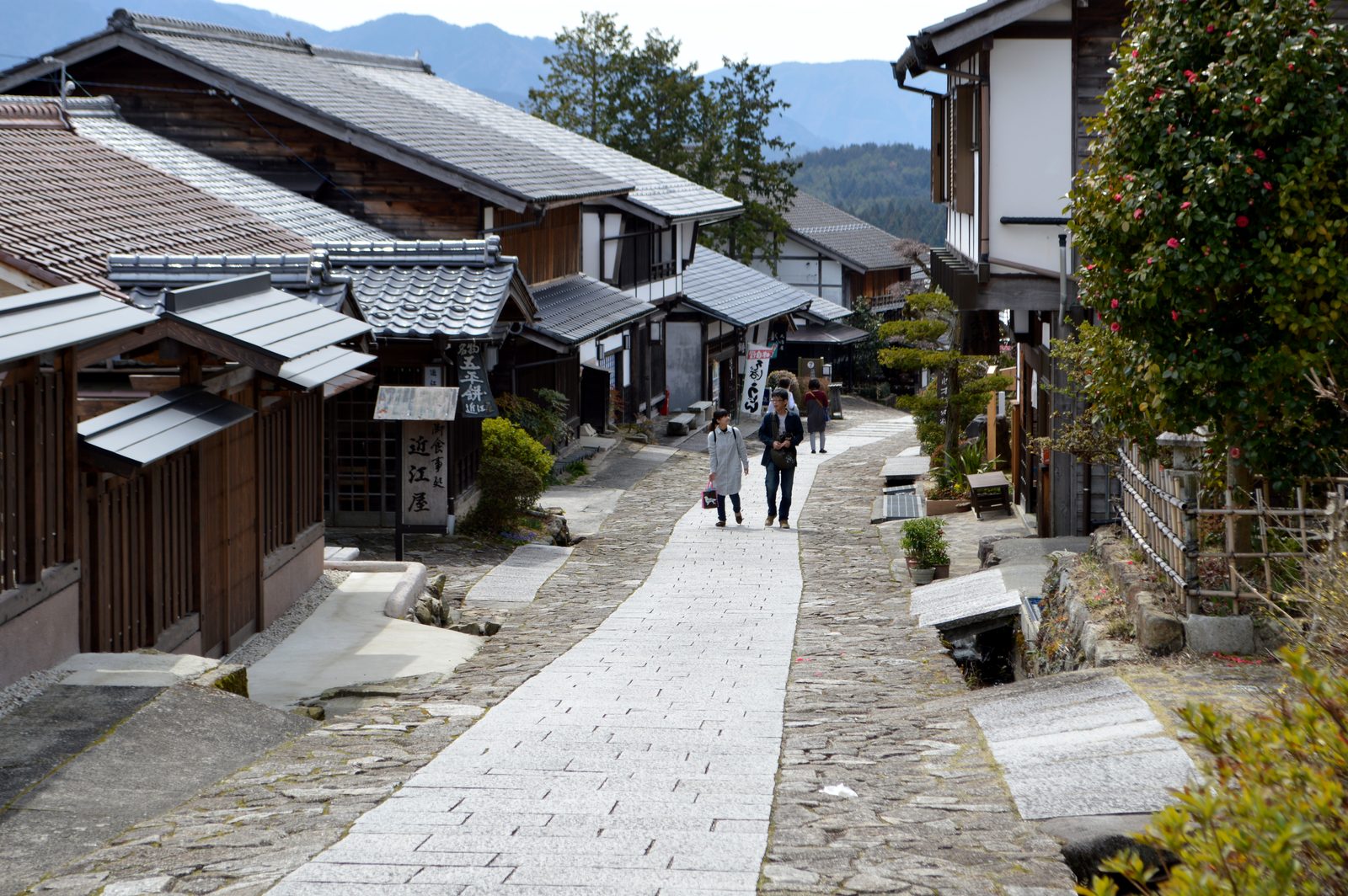
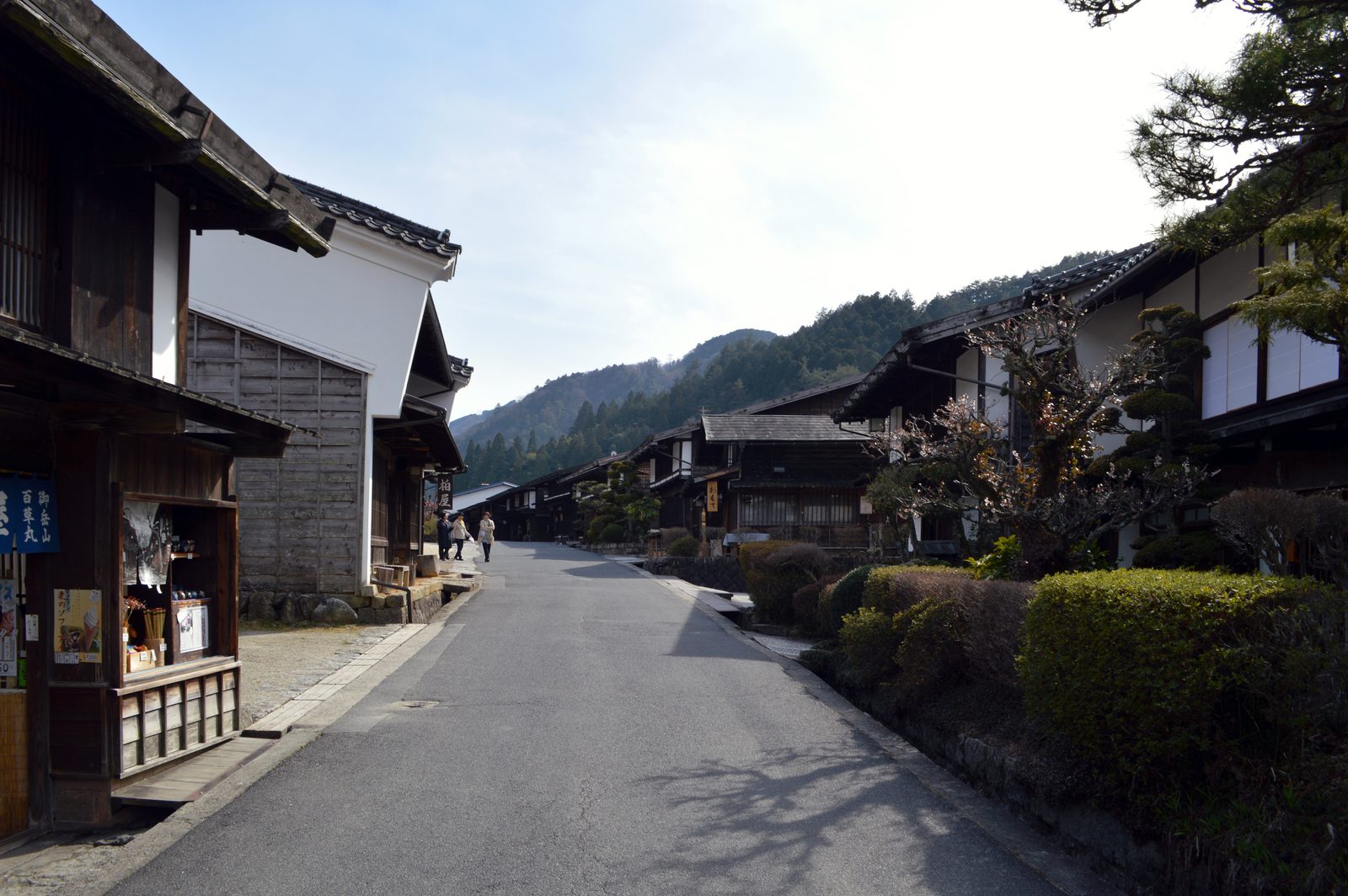
In the Edo period, post towns like these gave travellers food, rest and fresh horses along the great inland highway. When the railways and modern roads moved elsewhere, Magome and Tsumago were left behind — and that is exactly why they survive. Both have carefully preserved their streets of dark timber inns, shopfronts and lantern-lit eaves; Tsumago in particular feels like stepping straight into an old woodblock print.
The walk over the pass
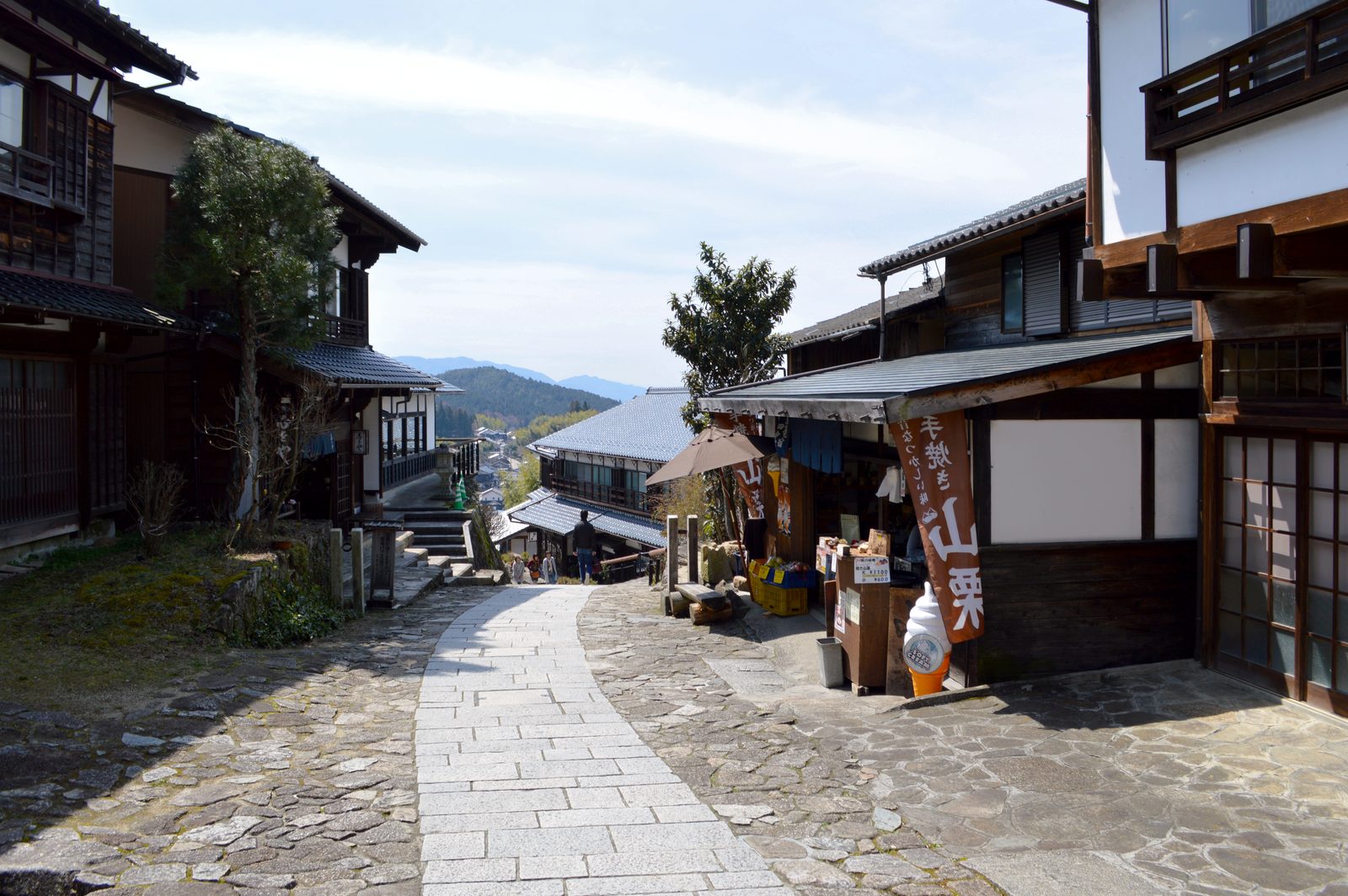
The classic way to experience them is on foot. A well-marked trail climbs out of Magome to the Magome Pass, then descends through cedar forest past small waterfalls to Tsumago — a few hours at an easy pace, with tea houses to rest at along the way. It crosses a pass rather than staying flat, so proper shoes and water help, but it asks no special fitness. Many walkers go downhill from Magome to Tsumago and ride a local bus back; on the busier stretches you'll see bells along the path, rung to let the forest know you're coming.
Freshest in the new green
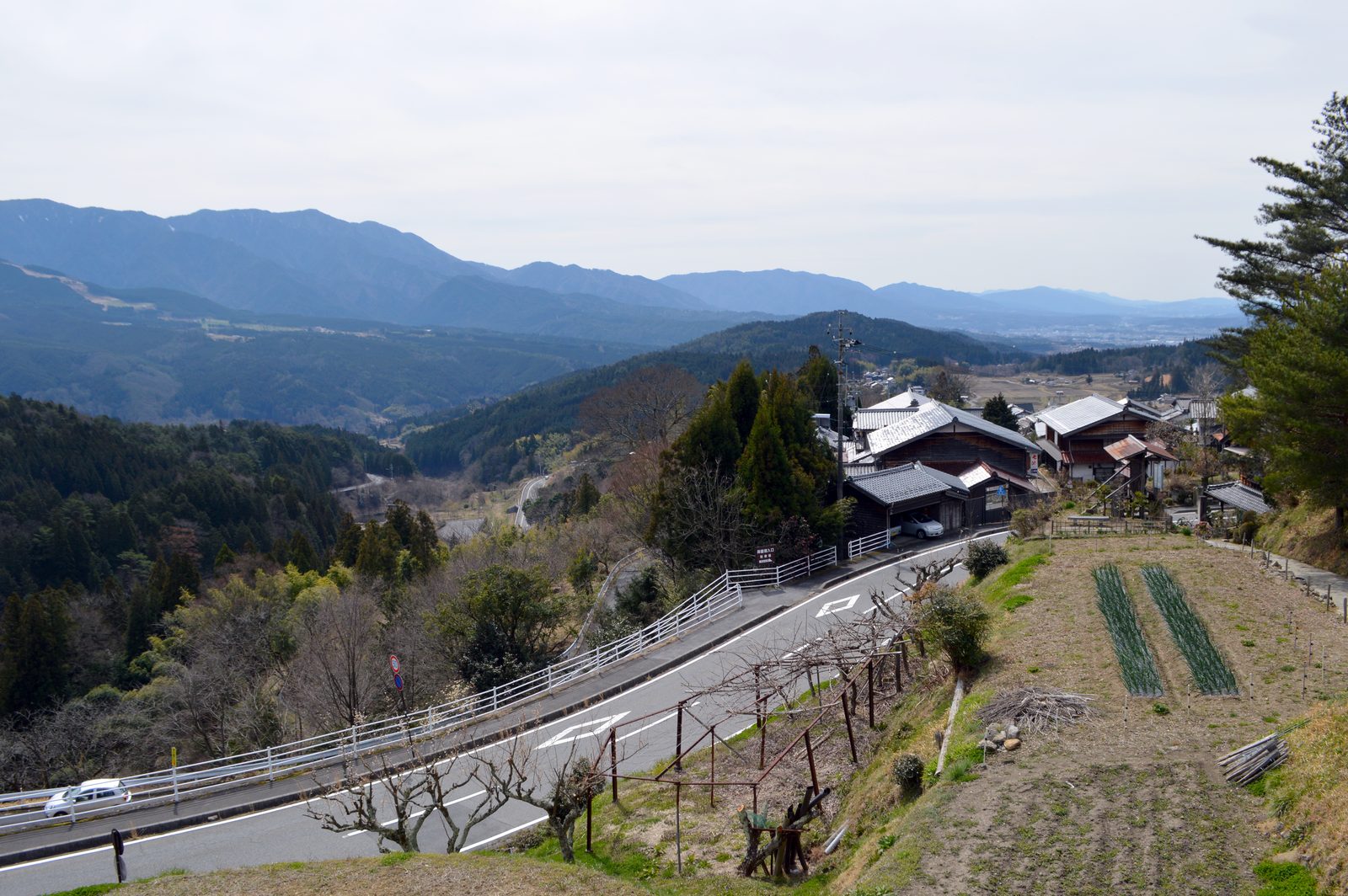
Late spring and early summer are a beautiful time to walk it, when the young leaves are at their brightest and the streams run full. Autumn is the other great season, the maples turning the valley red and gold. Even in the green months the air up here stays cool and clear.
Small pleasures along the way
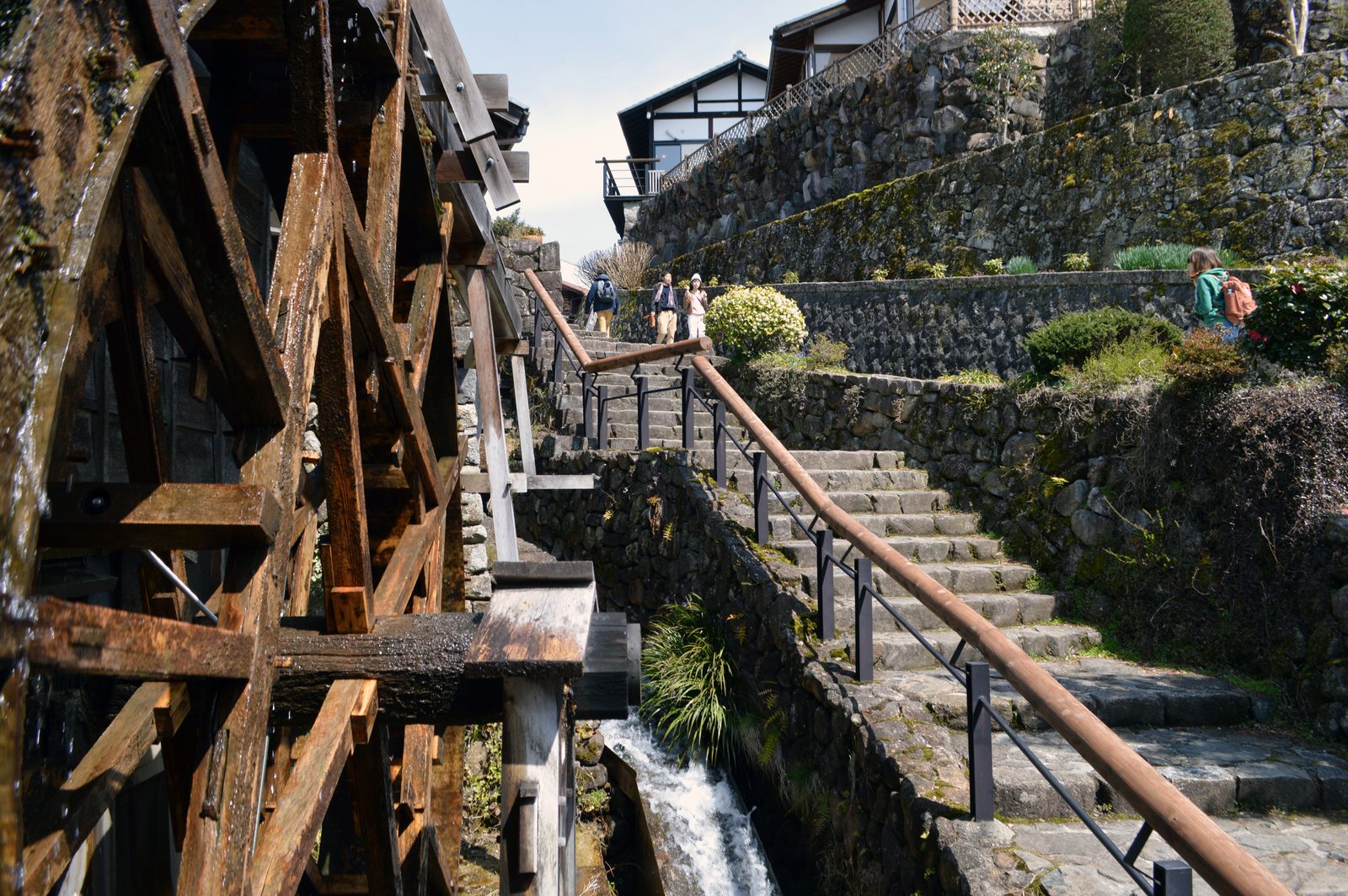
Half the joy is in the details — a turning water wheel, a mossy stone marker, a cup of tea at an old rest house. Look for gohei-mochi, flattened grilled rice cakes brushed with a sweet-savoury sauce, a local favourite that tastes especially good after a stretch of walking.
Make it part of your trip
Magome and Tsumago make a memorable day from Nagoya, and combine well with Kiso or a wider tour toward Takayama. We can sort transport at both ends, time the walk and bus, and guide you in English or Vietnamese — or arrange a gentler version if you'd rather stroll the towns than hike the pass. Tell us your dates and we'll shape it around you.
Highlights
Two preserved post towns
Magome and Tsumago were staging towns on the Edo-era Nakasendo highway, and both have kept their old streetscapes of dark timber inns and shops remarkably intact.
A walkable historic trail
A well-marked forest path links the two towns over the Magome Pass — one of Japan's most accessible and rewarding stretches of old highway to walk.
New green in early summer
In late spring and early summer the trail is at its freshest, all young leaves, birdsong and the sound of mountain water.
Stone, water and timber
Stone-paved slopes, turning water wheels and deep-eaved wooden buildings give both towns a quiet, lived-in beauty.
Tea houses & local snacks
Rest stops along the way serve tea and local treats like gohei-mochi, grilled rice cakes in a sweet-savoury sauce.
A suggested route
- 1
Magome-juku
Climb the stone-paved main street with its shops and viewpoints.
- 2
Magome Pass
Walk up out of town to the high point of the trail.
- 3
Forest trail & waterfalls
Descend through cedar woods past the Odaki and Medaki falls.
- 4
Tsumago-juku
Reach the level, beautifully preserved streets of Tsumago.
- 5
Tea-house breaks
Pause along the way for tea and gohei-mochi.
Best time to visit
New green in late spring and early summer, vivid maples in autumn. The trail between the towns is mostly gentle but does cross a pass — wear proper shoes, carry water, and start early. Confirm bus times officially.
Getting there
- Nakatsugawa Station (JR Chuo Line)About 25–30 minutes by Kita-ena bus to Magome.
- Nagiso Station (JR Chuo Line)A short bus ride or walk to Tsumago, at the other end of the trail.
- Nagoya (Nagoya Station)~50 min by JR limited express to Nakatsugawa, then the bus.
Would you like to visit?
Plan your visit
Want to include this in a guided day with transport and an English- or Vietnamese-speaking guide? Tell us your dates and we’ll build it around you.