
Nagoya Castle
One of Japan's three great castles, built on the orders of Tokugawa Ieyasu — famous for its golden shachihoko, a meticulously reconstructed palace, and easy access from central Nagoya.
Plan your visitIf you visit just one landmark in the city, make it Nagoya Castle. Built in the early Edo period on the orders of Tokugawa Ieyasu, it is counted among Japan's three most famous castles and remains the proud symbol of Nagoya — with easy access right from the city centre.
A castle built to last
Construction began around 1610 as the seat of the Owari-Tokugawa, the foremost of the three privileged Tokugawa branches (the gosanke). For centuries the castle anchored the city that grew around it. Much was lost in the air raids of 1945; the main keep was rebuilt in 1959, and the magnificent Hommaru Palace was painstakingly reconstructed and fully opened in 2018.
The golden shachihoko
The pair of kinshachi — mythical creatures with the head of a tiger and the body of a fish — gleam in gold at either end of the keep's roof. They were believed to ward off fire, and over the centuries they have become the very symbol of Nagoya.
Hommaru Palace — the must-see
The reconstructed Hommaru Palace is the highlight of a visit. Rebuilt with traditional joinery and Japanese cypress, its rooms glow with gold-leaf sliding screens and recreated paintings of the Kanō school. Walking through its successive chambers gives a vivid sense of how a great lord lived and received guests.
Grounds, walls and garden
Beyond the palace, huge stone ramparts and surviving corner turrets — some of them designated Important Cultural Properties — encircle the inner grounds. The Ninomaru Garden, in the former second bailey, is a calm and elegant place to walk.
Please note: the main castle keep has been closed for structural rebuilding in recent years. The grounds and Hommaru Palace remain open and very much worth the trip — please check the current status before you go.
Make it part of your trip
Nagoya Castle pairs naturally with Atsuta Jingu and the Nagoya Port Aquarium for a full day in the city. We can arrange a guided day with transport and an English- or Vietnamese-speaking guide — tell us your dates and we'll plan it around you.
In pictures
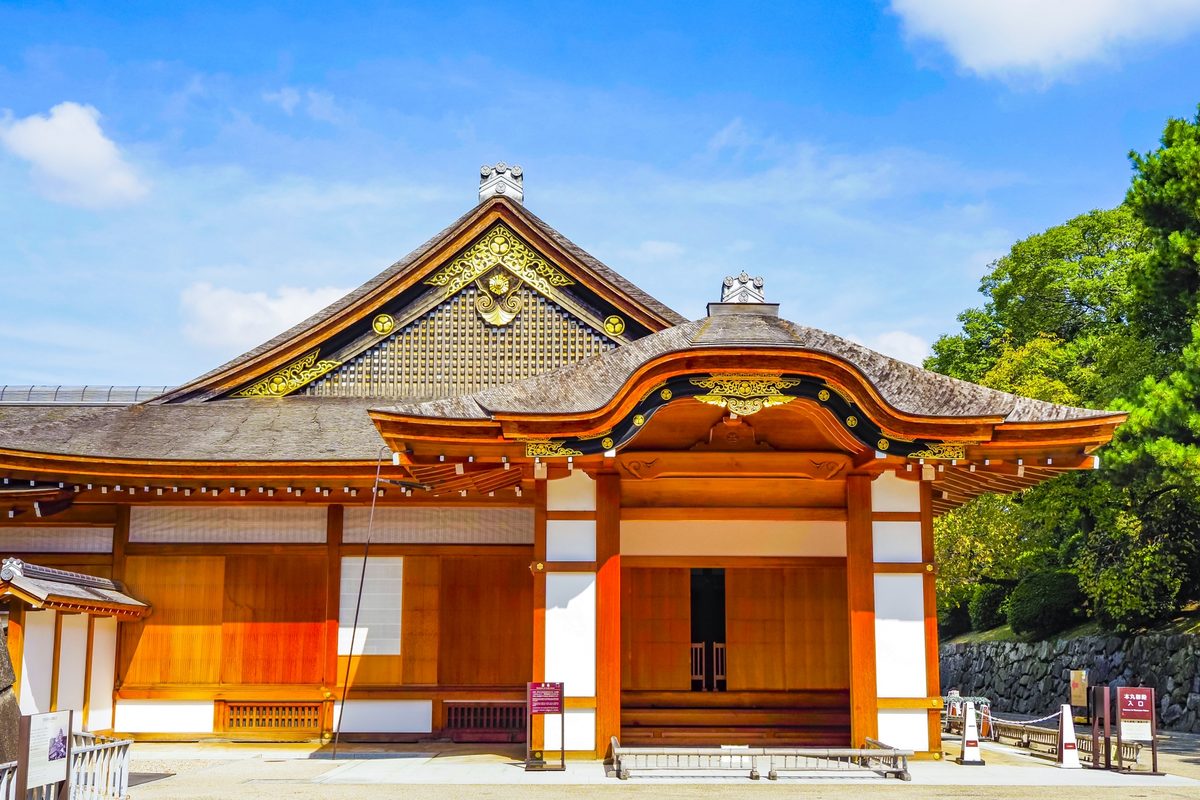
Hommaru Palace exterior in Japanese cypress, its gables crowned with gilded carvings.
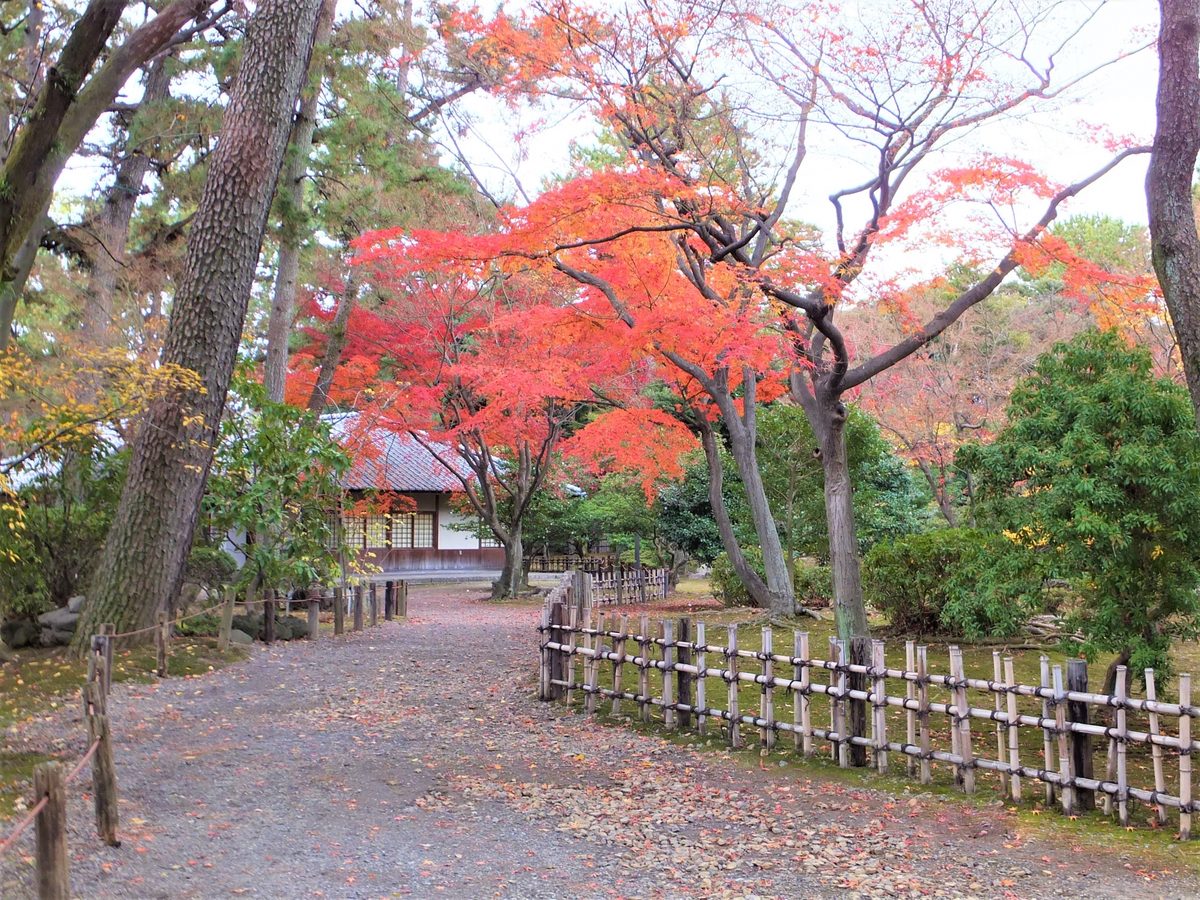
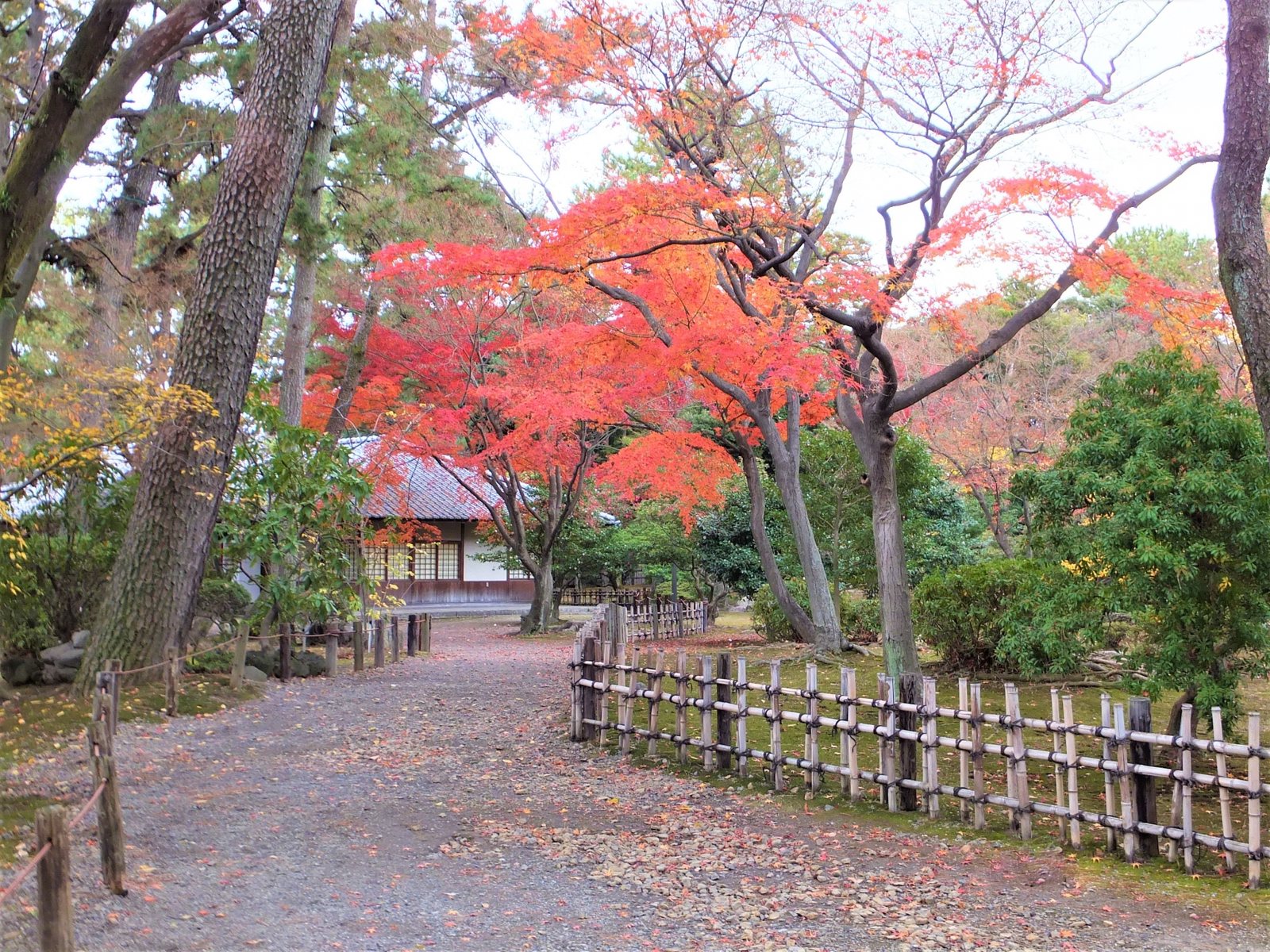
Fiery red maples line a gravel path and bamboo fence in the castle grounds in autumn.
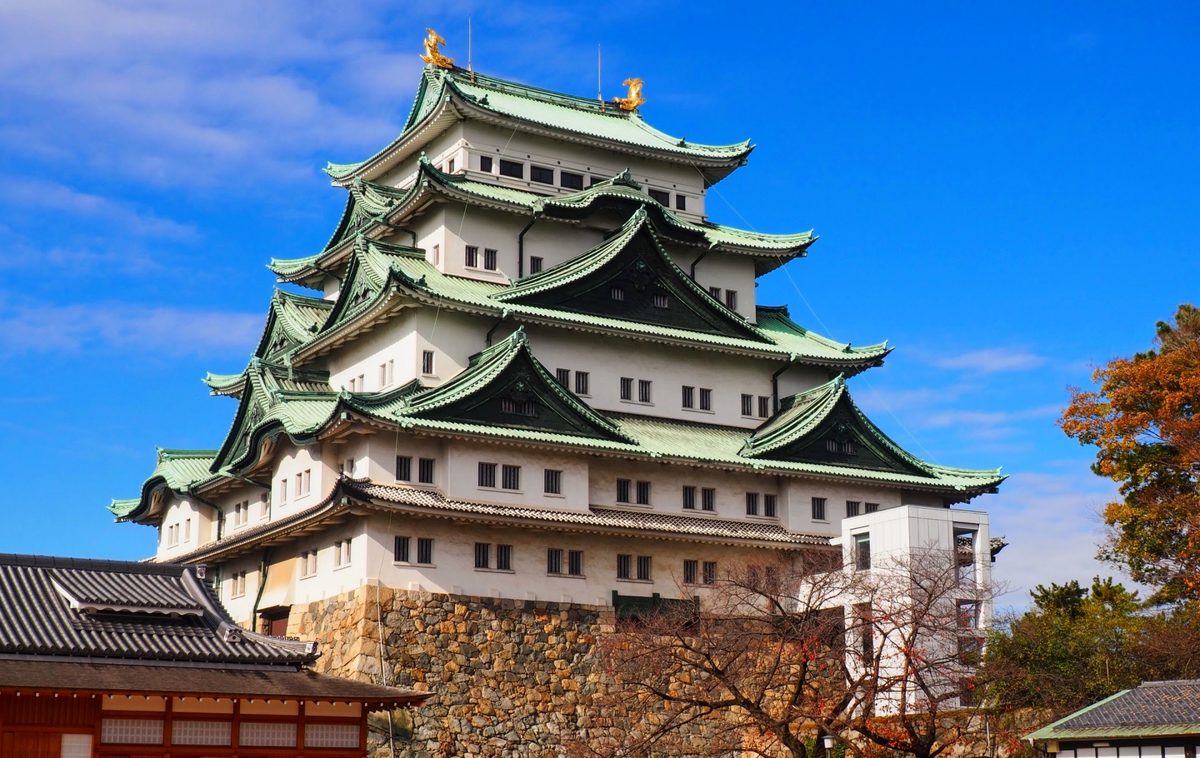
Close-up of the tiered castle keep, golden shachihoko crowning its rooftop above stone walls.
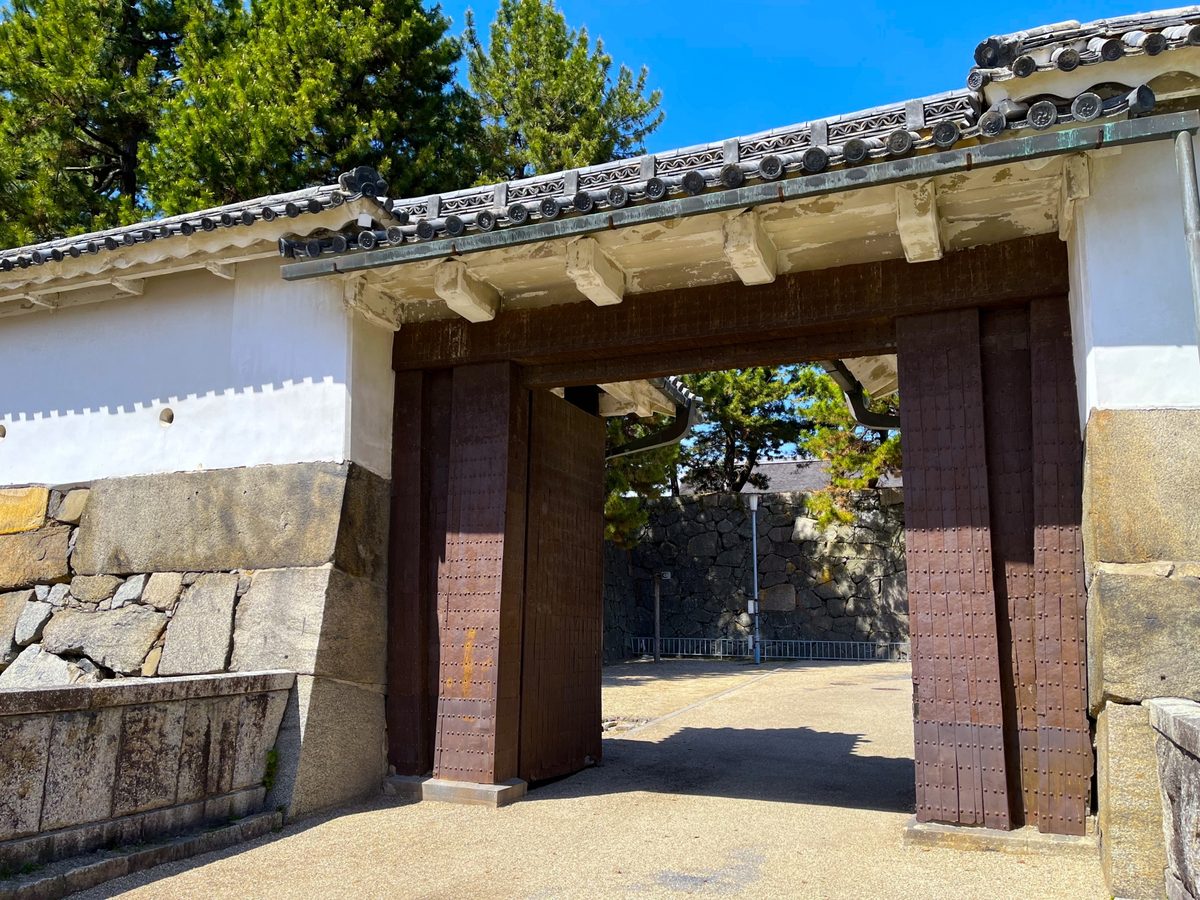
A castle gate with heavy wooden doors set in white plaster walls atop massive stone foundations.
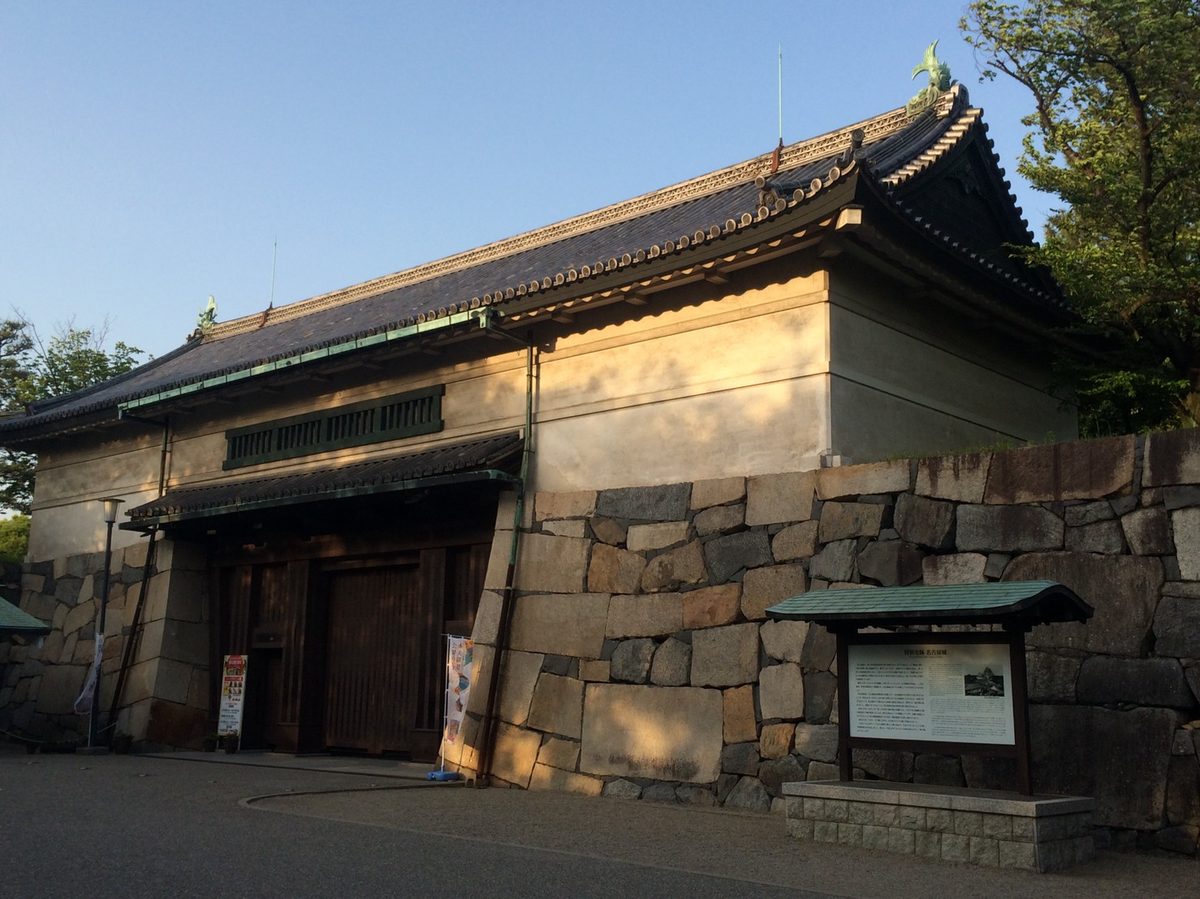
A copper-roofed castle gate at golden hour, a small golden shachihoko on its ridge above the stone wall.
Highlights
A castle of the shoguns
Built in the early 1600s on the orders of Tokugawa Ieyasu as the seat of the Owari-Tokugawa — one of the three privileged branches of the ruling family. It was counted among Japan's three great castles.
The golden shachihoko
The pair of glittering golden "tiger-fish" (kinshachi) crowning the roof are the enduring emblem of Nagoya, and among the most famous castle ornaments in Japan.
Hommaru Palace
A faithfully reconstructed Edo-period palace, completed in 2018 using traditional techniques — gold-leaf sliding screens, cypress woodwork and recreated Kano-school paintings. The highlight of any visit.
Stone walls & turrets
Massive stone ramparts and surviving corner turrets, some designated Important Cultural Properties, ring the inner grounds.
Ninomaru Garden
A graceful Japanese garden in the former second bailey — lovely for a quiet stroll.
A suggested route
- 1
Seimon (Main Gate)
Enter through the main gate and take in the scale of the stone walls.
- 2
Hommaru Palace
Tour the reconstructed palace with its gold-leaf screens — the unmissable highlight.
- 3
Castle keep & golden shachihoko
Admire the great keep and its golden shachihoko from the grounds (interior closed for rebuilding).
- 4
Ninomaru Garden
Wander the Japanese garden in the former second bailey.
- 5
Kinshachi Yokocho
Finish at the food street by the gate for Nagoya specialities like miso-katsu and tebasaki.
Best time to visit
At its most beautiful with cherry blossoms in late March–early April and autumn colour in November. Weekday mornings are the calmest. Note that the main keep (tenshu) has been closed for structural rebuilding in recent years — the grounds and Hommaru Palace remain well worth visiting.
Getting there
- Shiyakusho / Nagoyajo Station (Meijo Subway Line)About a 5-minute walk — the closest station.
- Sengencho Station (Tsurumai Subway Line)About a 12-minute walk.
- Nagoya Station~10–15 min by subway (Higashiyama then Meijo Line), changing at Sakae.
Plan your visit
Want to include this in a guided day with transport and an English- or Vietnamese-speaking guide? Tell us your dates and we’ll build it around you.