
Shirakawa-go
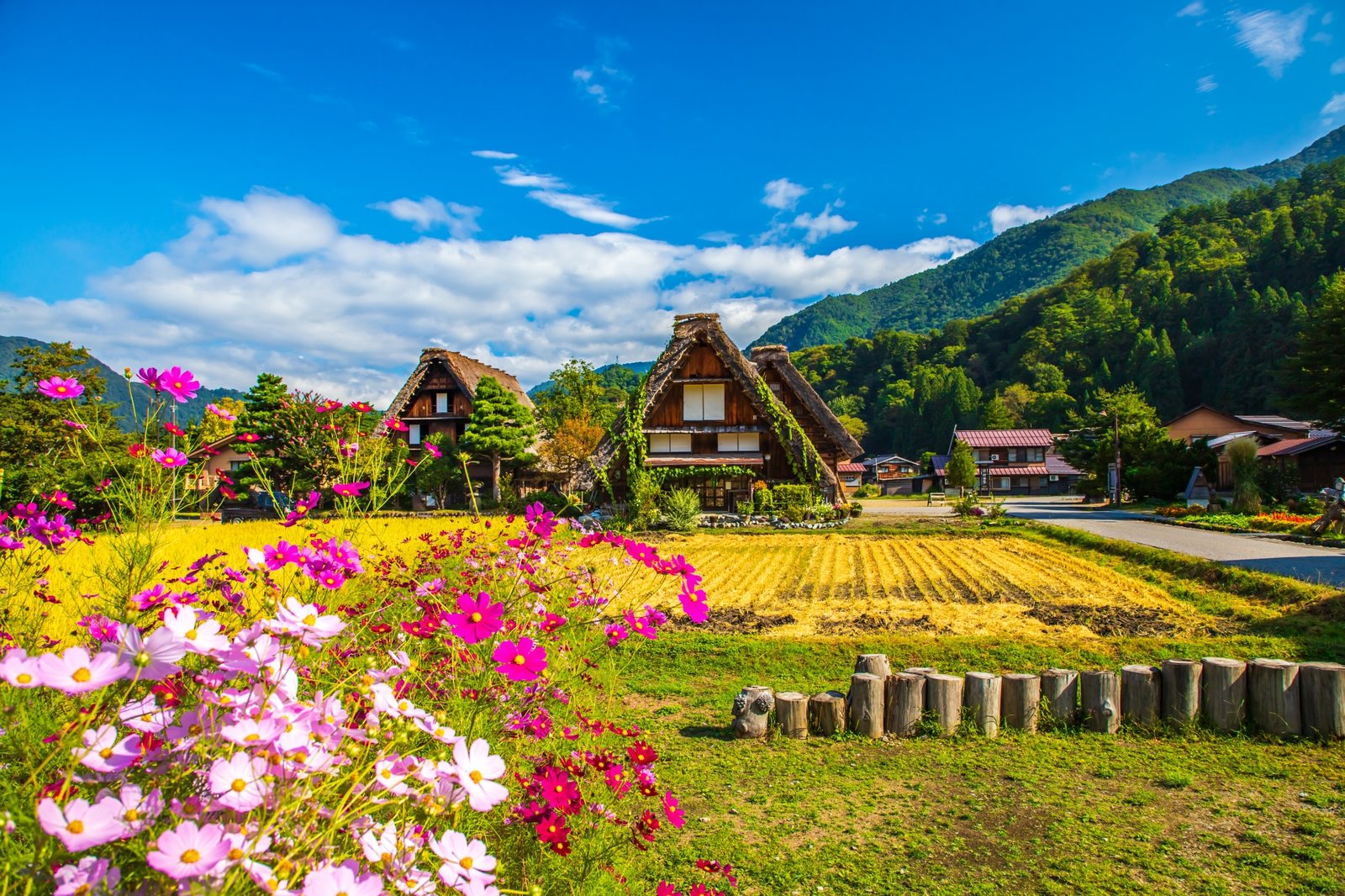
A UNESCO World Heritage village of steep thatched gassho-zukuri farmhouses in the mountains of Gifu — still lived in today, and unforgettable under winter snow.
Plan your visitDeep in the mountains of northern Gifu, Shirakawa-go looks like a scene from a folk tale: clusters of steep-roofed farmhouses, snow on the eaves, smoke rising into a cold blue sky. It is one of the most photographed villages in Japan — and, remarkably, still a place where people live.
Houses built for the snow
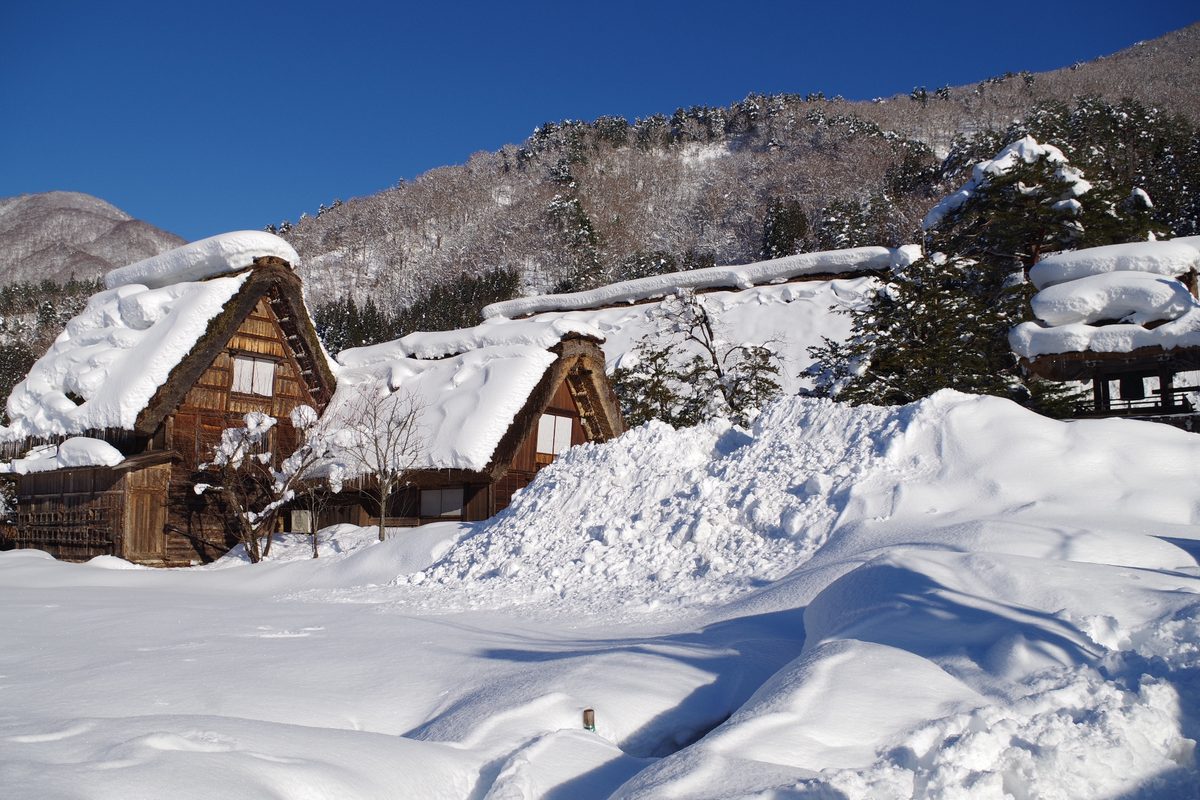
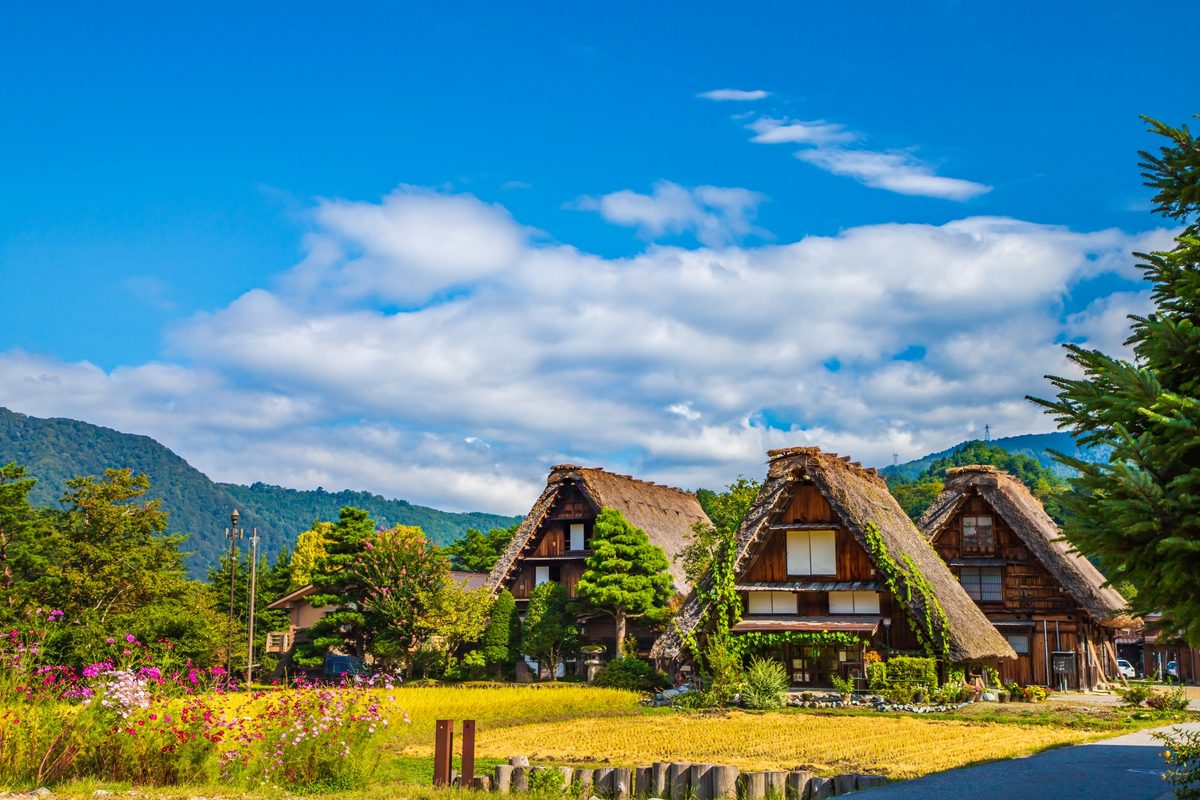
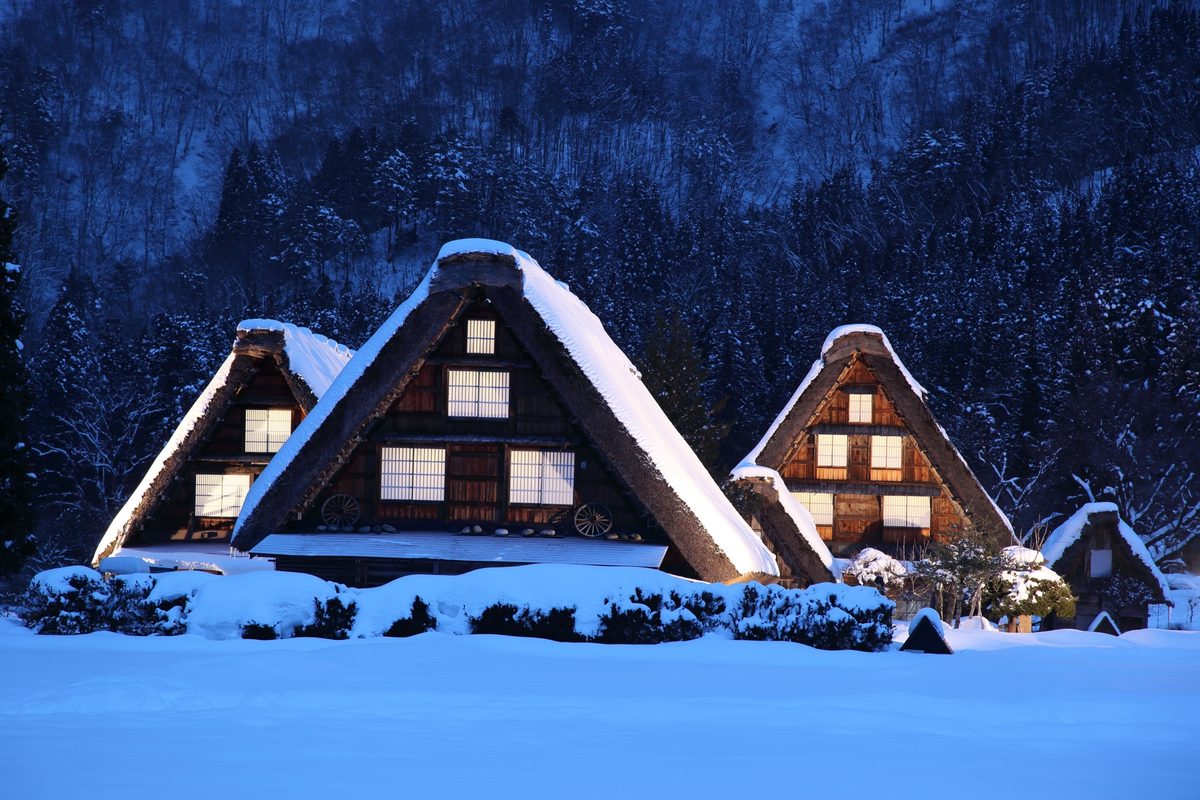
The village is famous for its gassho-zukuri farmhouses. The name means "praying hands," after the steep thatched roofs that meet at a sharp angle to shed the region's heavy snow. Built without nails and rethatched by the whole community, some of these houses are more than 250 years old. Their vast timber attics were once used to raise silkworms.
A World Heritage village that's still alive
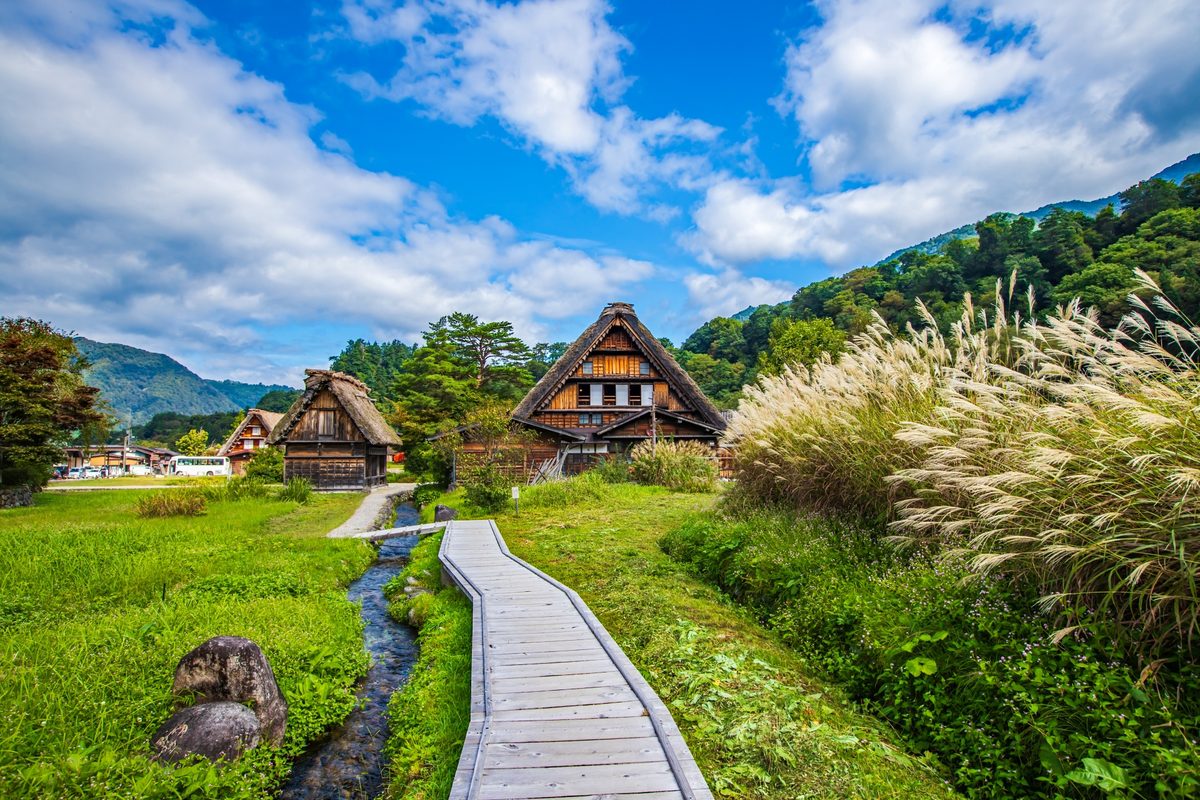
In 1995, Ogimachi — the main village of Shirakawa-go — was inscribed as a UNESCO World Heritage Site together with neighbouring Gokayama. What makes it special is that it isn't a museum: families still farm the rice fields and live in the houses, so the village keeps its quiet, lived-in character.
What to see
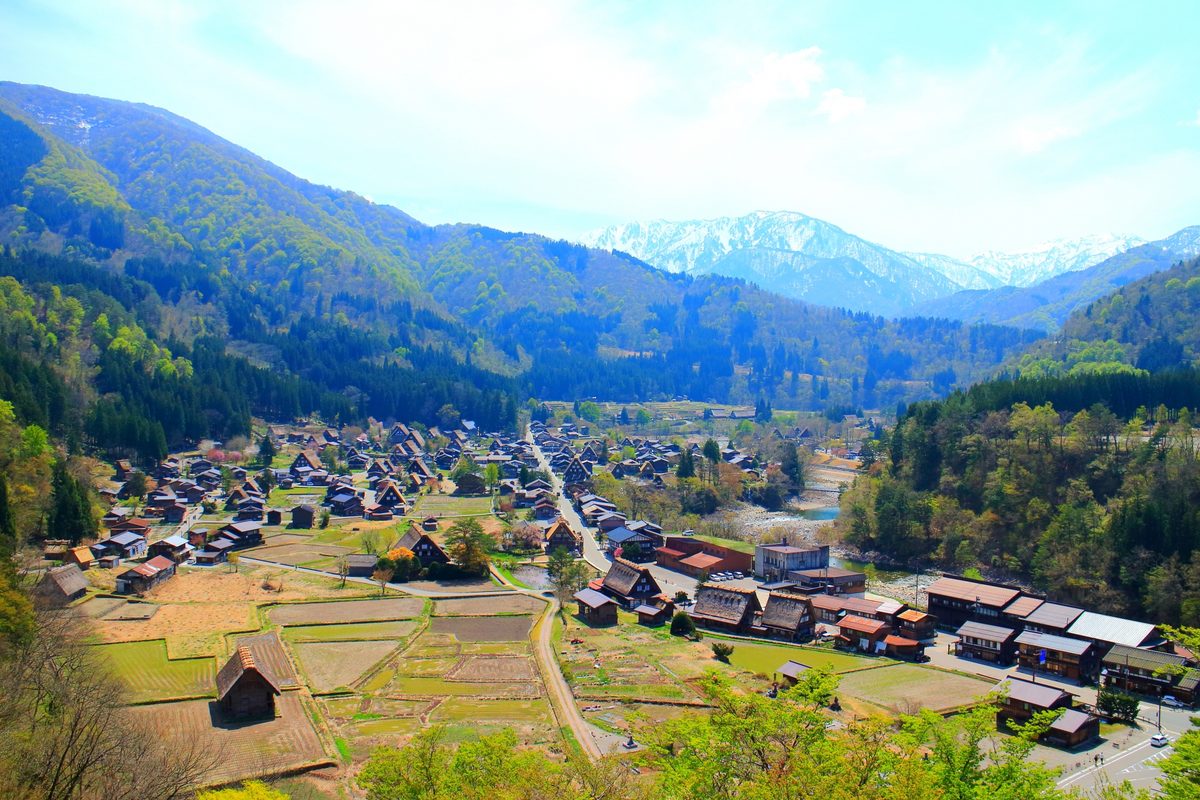
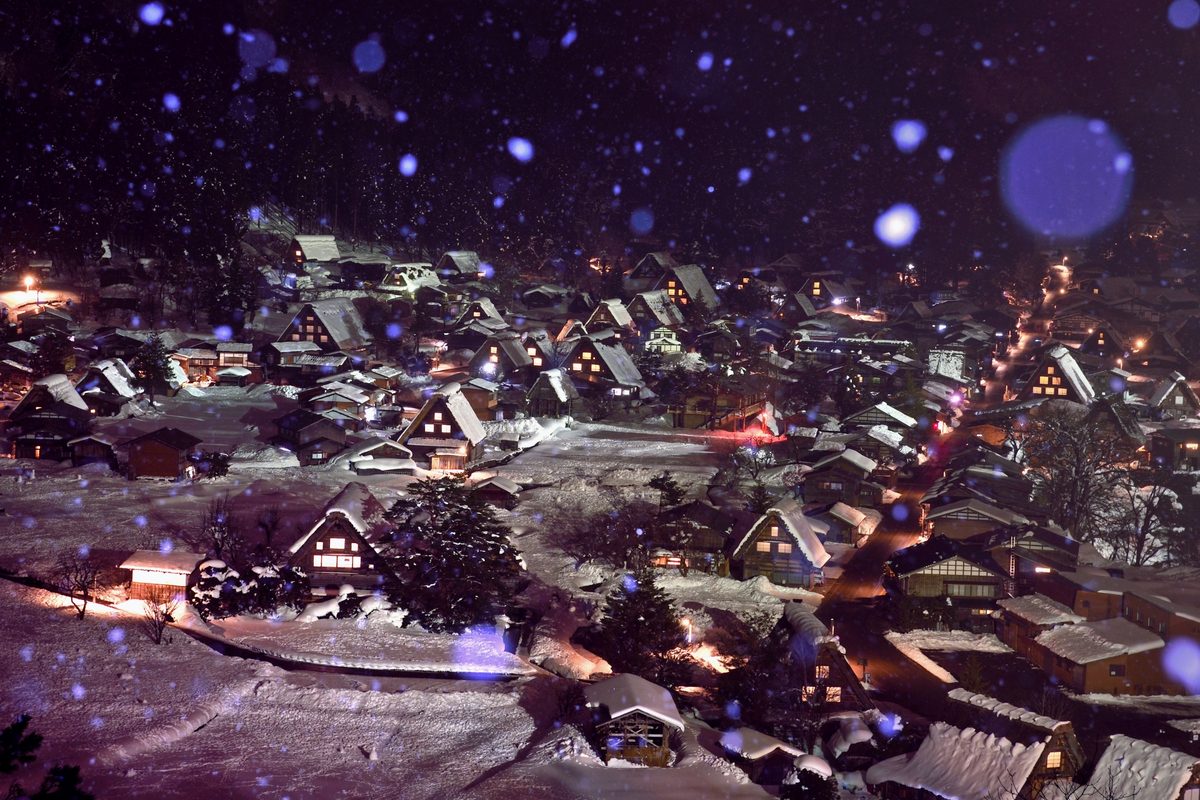
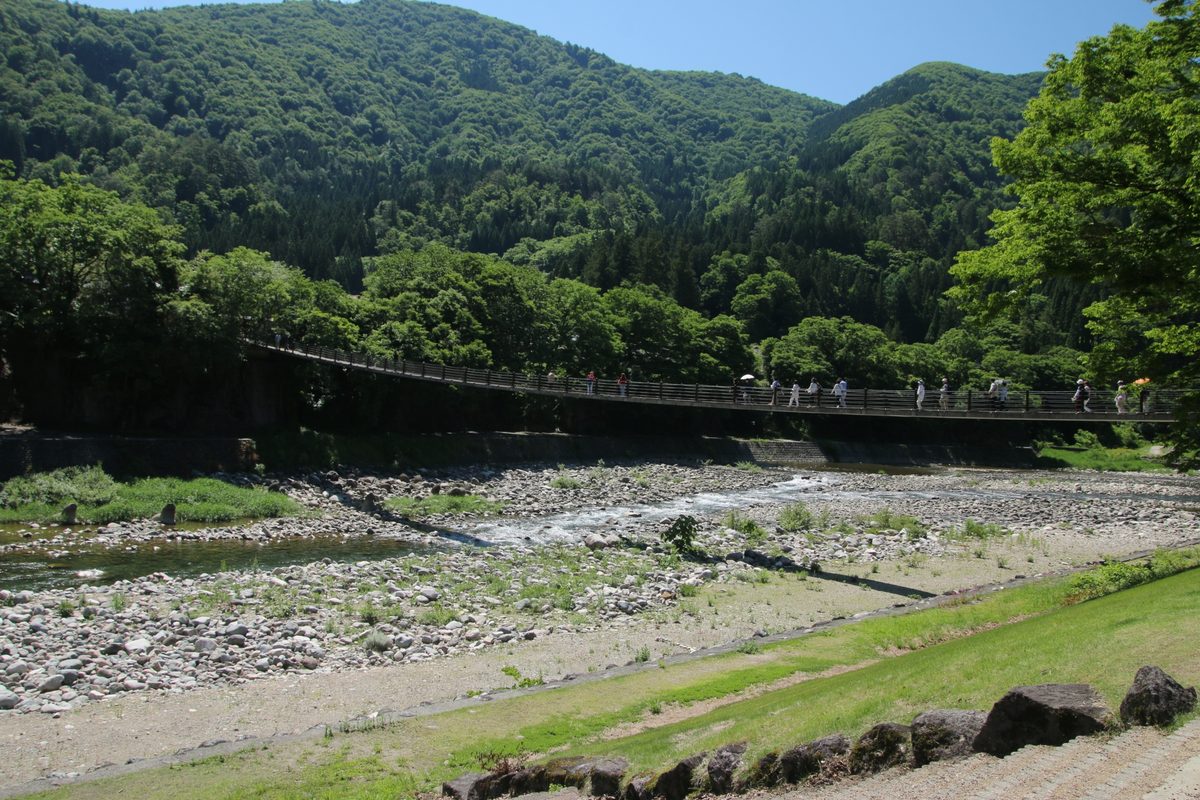
Cross the Deai suspension bridge and wander the lanes. Step inside an open house such as the Wada House or Kanda House to see the soaring attic frames. For the classic view — rows of thatched roofs framed by mountains — climb to the Shiroyama viewpoint (a shuttle bus also runs).
When to go
Shirakawa-go is lovely year-round, but it is most famous under deep snow in January and February. On a handful of winter evenings the village is lit up; this is hugely popular and now requires advance reservation. Autumn foliage (late October–November) is another beautiful time.
Make it part of your trip
Shirakawa-go pairs naturally with Takayama, just under an hour away by bus. We can arrange a guided day or overnight from Nagoya, with transport and an English- or Vietnamese-speaking guide — tell us your dates and we'll plan it around the seasons.
In pictures
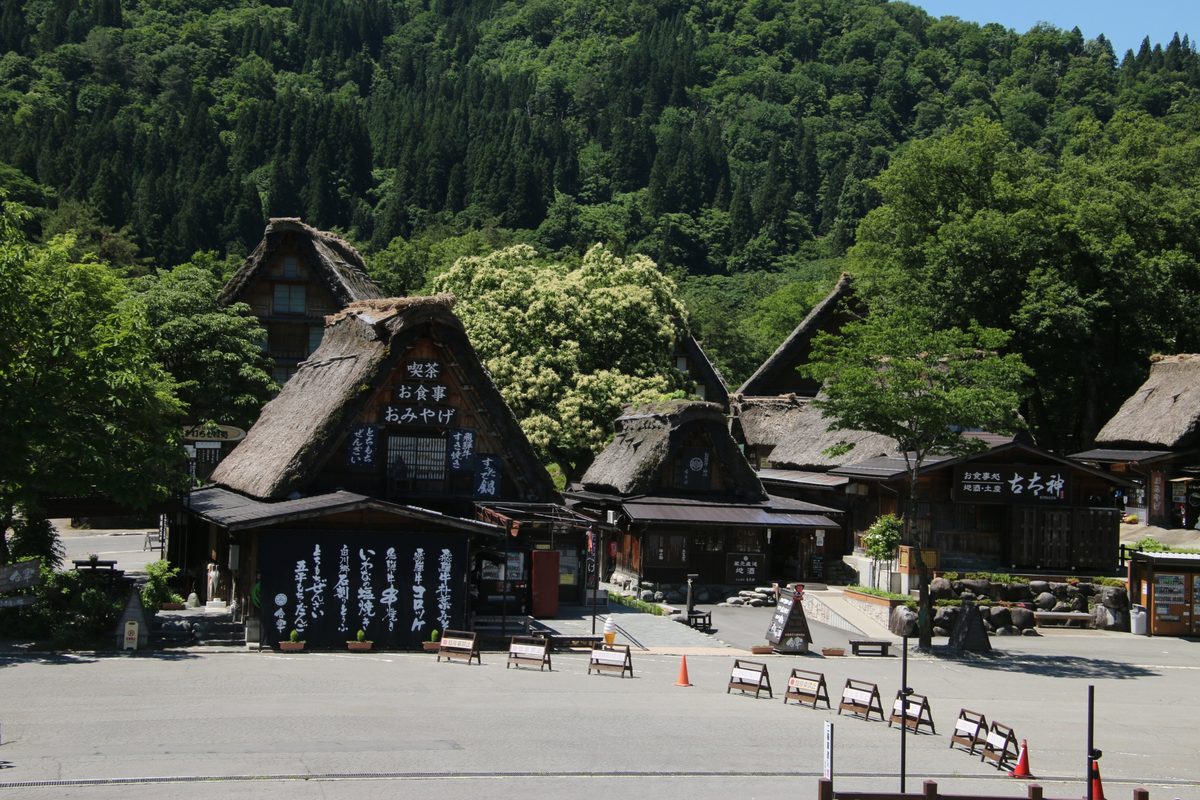
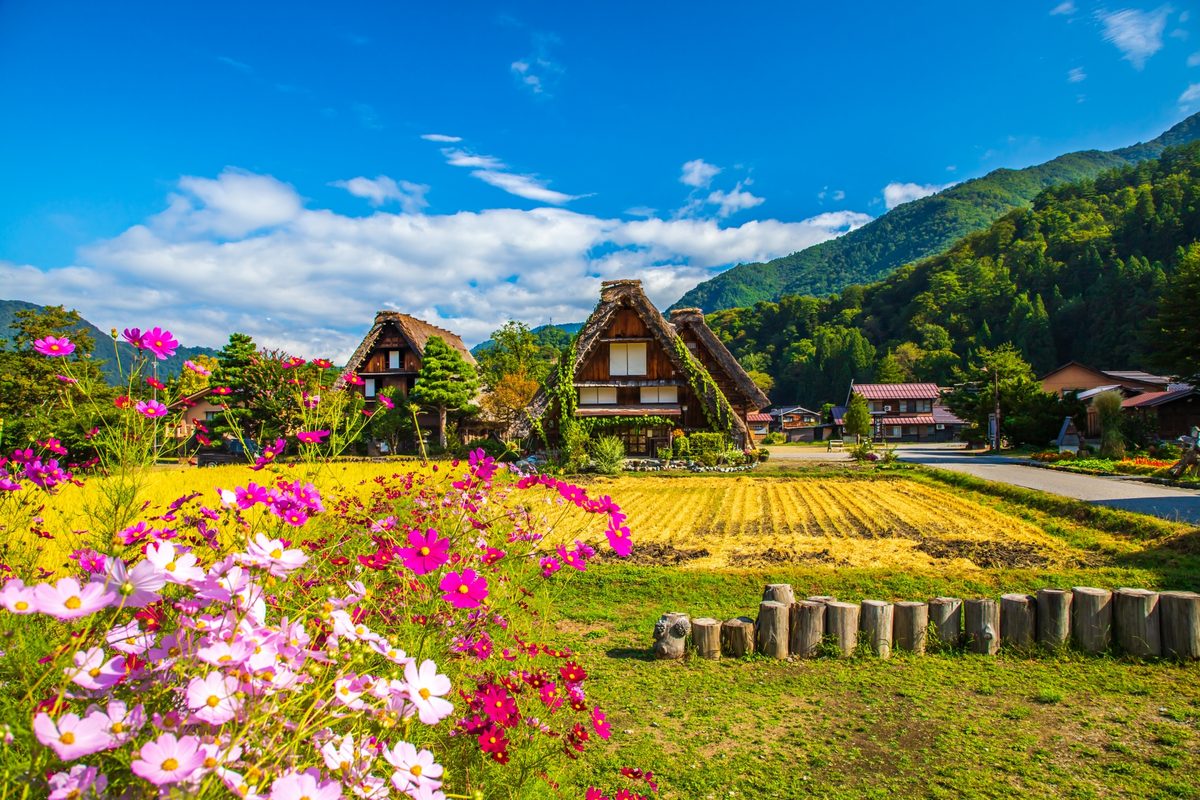
Highlights
Gassho-zukuri farmhouses
Houses built with steep thatched roofs shaped like two hands pressed together in prayer ("gassho") to shed heavy mountain snow. Some are more than 250 years old.
A UNESCO World Heritage Site
The village of Ogimachi was inscribed in 1995, together with nearby Gokayama, as a rare surviving example of a traditional mountain settlement.
A living village
This is not an open-air museum — families still live and farm here, which gives the village its quiet, genuine atmosphere.
The Shiroyama viewpoint
A short climb (or shuttle) leads to the lookout with the classic panorama of thatched roofs cradled by mountains.
Open historic houses
Step inside homes such as the Wada House and Kanda House to see the soaring timber attics once used for silkworm farming.
A suggested route
- 1
Deai Bridge
Cross the suspension bridge over the Sho River into the village.
- 2
Main street & open houses
Wander the lanes and step inside a gassho-zukuri home such as the Wada House.
- 3
Myozenji Temple
See the rare thatched temple and bell tower.
- 4
Shiroyama Viewpoint
Climb (or take the shuttle) for the postcard panorama.
- 5
A café or local soba
Warm up with local soba or sweets before you leave.
Best time to visit
Beautiful in every season — fresh green in summer, fiery foliage in autumn, and famous under deep snow in January and February. The winter evening light-up runs only on a few set dates and requires advance reservation.
Getting there
- Nagoya~2.5–3 hours by highway bus (via Gifu/Takayama). There is no train to the village.
- Takayama~50 min by bus — easy to combine with a Takayama visit.
- Kanazawa~75 min by bus.
Would you like to visit?
Plan your visit
Want to include this in a guided day with transport and an English- or Vietnamese-speaking guide? Tell us your dates and we’ll build it around you.