Skip to content
Trip Japan YLP
Toyokawa Inari (Myogonji Temple)
Temple·Toyokawa City, Aichi

Toyokawa Inari (Myogonji Temple)

In the city of Toyokawa, in eastern Aichi, stands one of Japan's most famous Inari sites — though, despite the name, it is not a shrine but a Zen Buddhist temple. Founded in 1441, Myogonji enshrines at its mountain gate a guardian deity, Toyokawa Dakini Shinten, who is shown riding a white fox; and it is from that white fox, long tied to the Inari faith of good business and good fortune, that the temple came to be known as Toyokawa Inari. Behind the great halls lies Reikozuka, where more than a thousand stone foxes stand in ranks, and the lane up to the gate is lined with shops selling the local inari-zushi. It is atmospheric, busy on festival days, and open all year.

規劃你的造訪

In the eastern part of Aichi, in the city that shares its name, Toyokawa Inari is one of the best-known Inari sites in the country — and one of the most misread. For all the red banners and the foxes, it is not a Shinto shrine at all, but a Zen Buddhist temple of the Soto school, properly named Myogonji. Founded in 1441, it draws some five million visitors a year, most of whom come to pray for good business and good fortune, then to walk the mound of stone foxes and the old lane of inari-zushi that runs up to the gate.

A temple that people call a shrine

The confusion has a simple root. When the priest Tōkai Gieki opened Myogonji in 1441, he set at its heart an image of the thousand-armed Kannon, and at the mountain gate he enshrined a guardian deity, Toyokawa Dakini Shinten, from an image carved by an earlier master of his line, Kangan Giin. That guardian is a Buddhist deity, but she is shown riding a white fox — and the fox is the animal of Inari, the folk worship of rice, harvest and prosperity. Over the centuries the two were drawn together, merchants of the Edo period carried the name across the country, and the temple came to be known to everyone as Toyokawa Inari. It is commonly counted among the three great Inari of Japan, though accounts differ on which the other two are. The oldest building on the grounds is the Sanmon, the mountain gate, dating from 1536 and said to have been given by the warlord Imagawa Yoshimoto; the vast main hall was completed in 1930.

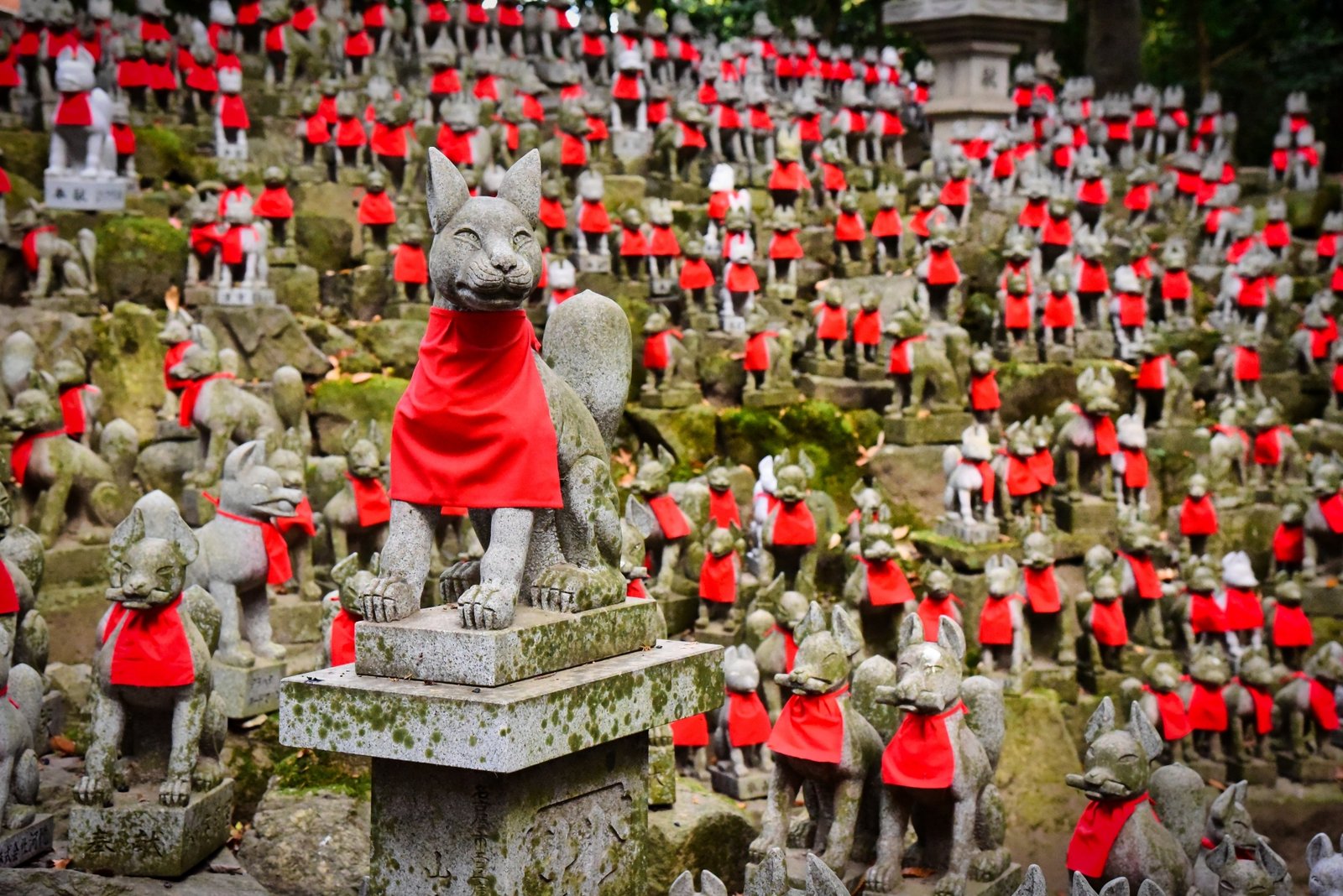
Ranks of stone foxes at Reikozuka, behind the main halls of Toyokawa Inari.

Reikozuka and a thousand foxes

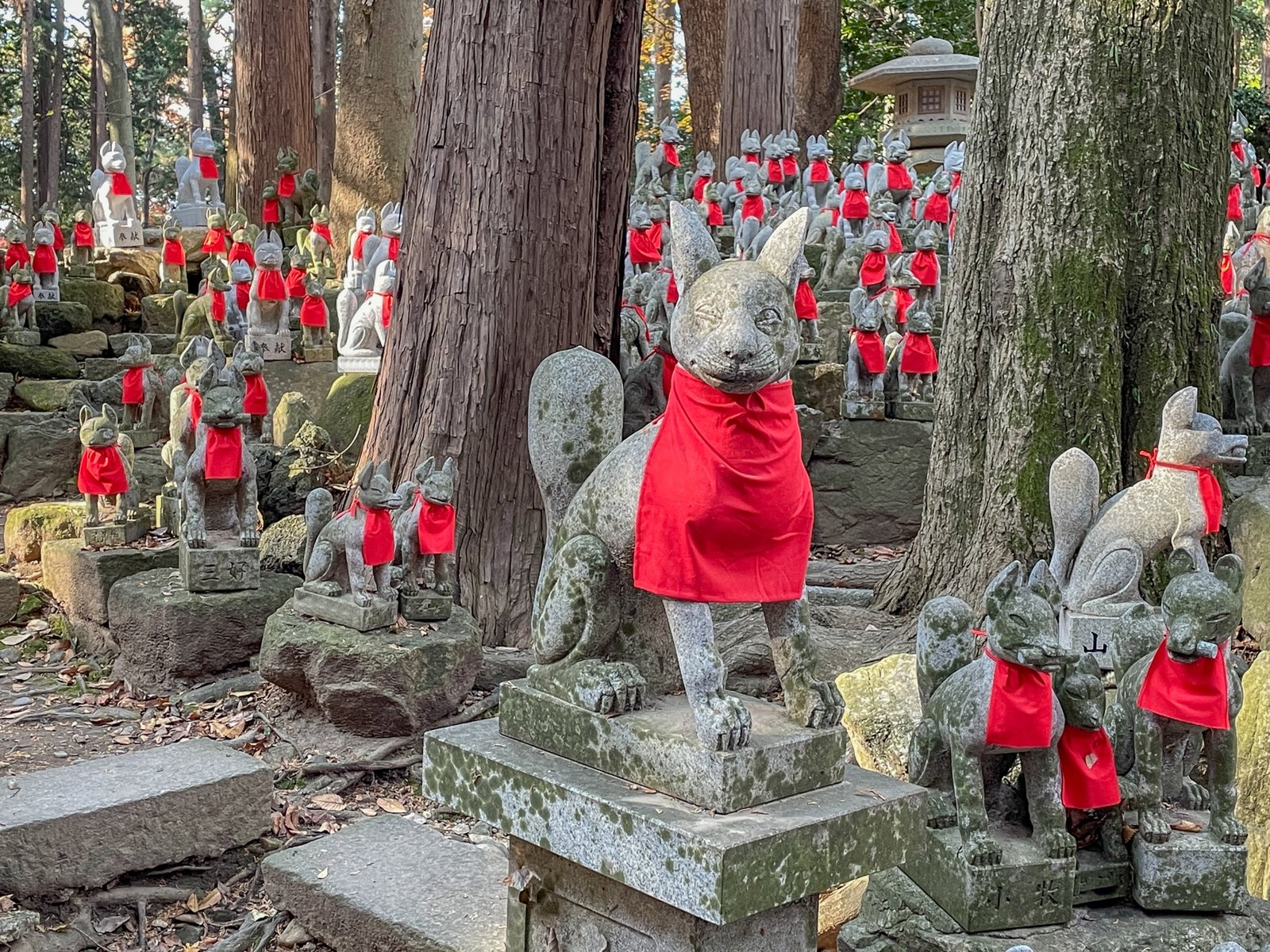
The sight most people remember is behind the main halls, along a path through the trees. This is Reikozuka, and here stand more than a thousand stone foxes, offered one by one over the years by worshippers giving thanks for a prayer answered. They sit in mossy ranks, large and small, some holding a scroll or a key in their mouths, their painted eyes long faded — for the fox is not the deity but her messenger, and so many of them gathered in one quiet hollow make an impression that is hard to describe and easy to remember. It costs nothing to walk among them.

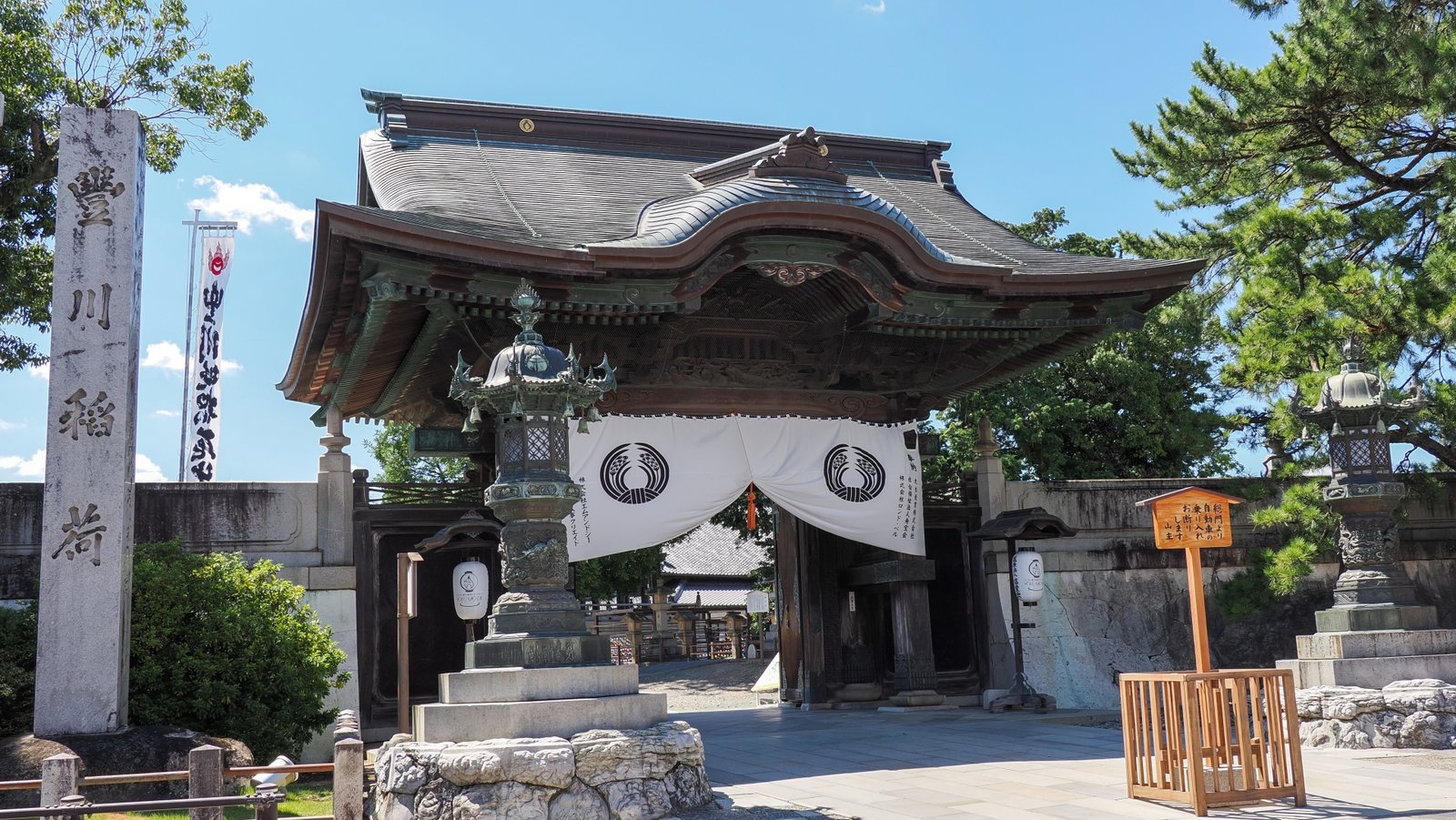
The outer gate and the stone pillar bearing the name of Toyokawa Inari, on the approach to the temple.

The lane of inari-zushi

The way up to the gate is a monzen-machi, a temple-front town, and it is worth lingering on. Shops and stalls line the approach, and the thing to eat is the local inari-zushi — sushi rice packed into a pouch of sweet, deep-fried tofu, which shares its name with the deity and is sold here in generous variety. It is the kind of unhurried street where you buy something to eat as you walk, look at the crafts and sweets, and let the visit slow down.

Good to know

The outer gate opens early and the grounds stay open into the evening, but the main hall and inner sanctuary keep shorter hours through the middle of the day, so it is worth checking the times before a late visit. Admission is free; prayers and blessings are arranged separately, and there is paid parking near the temple. Toyokawa Inari is busiest over the New Year holidays, when huge crowds come for their first prayers of the year, and quietest on an ordinary morning. It is an easy stop by train — about a five-minute walk from either JR Toyokawa Station, on the Iida Line reached from Nagoya via Toyohashi, or Meitetsu Toyokawa-Inari Station. For another day of quiet, revered ground nearer Nagoya, see Atsuta Shrine; and in June, the hillside of Katahara Hydrangea Village, in nearby Gamagori, makes a good pairing in the same eastern corner of Aichi.

影像中的它

影像中的它

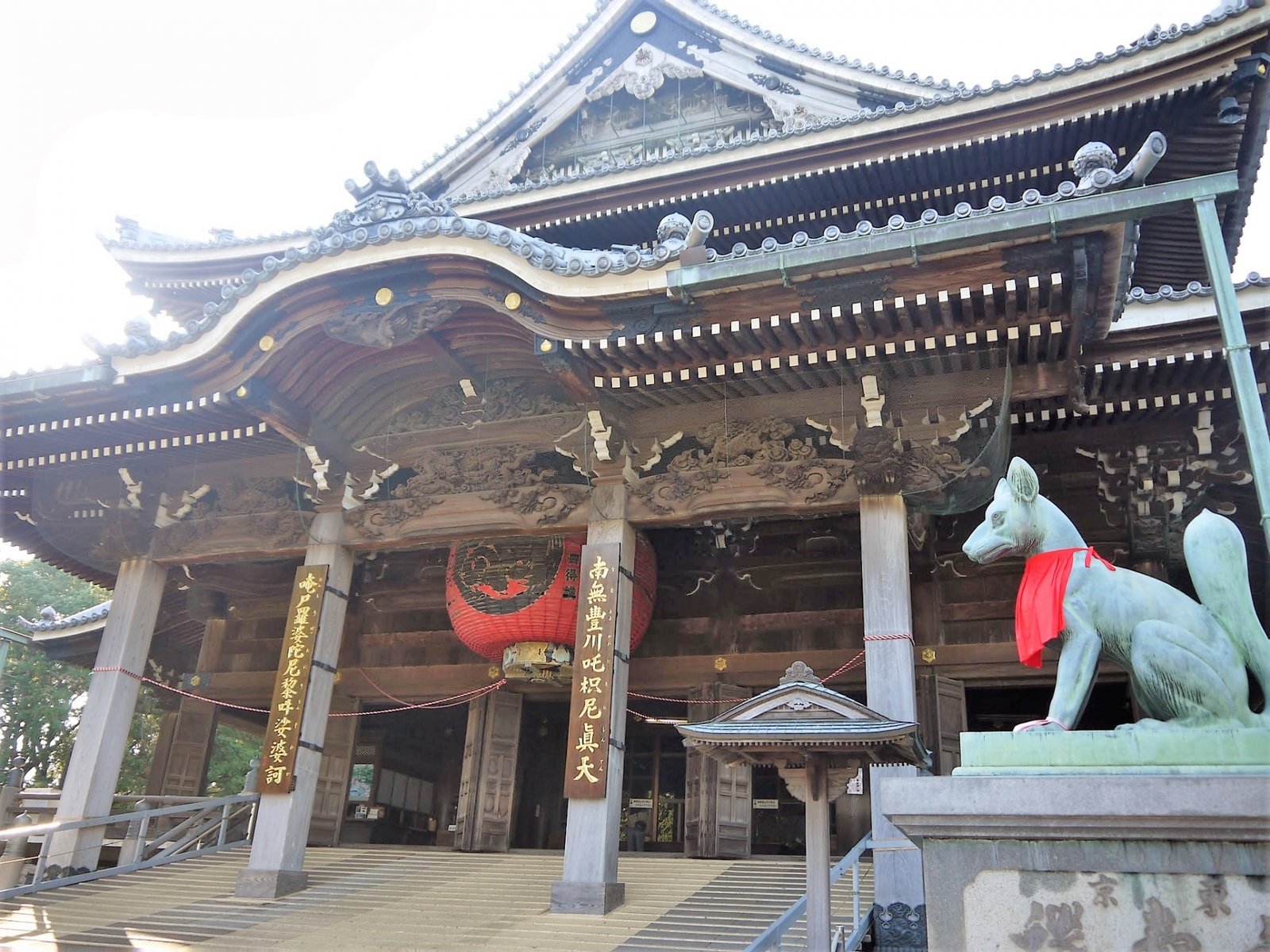
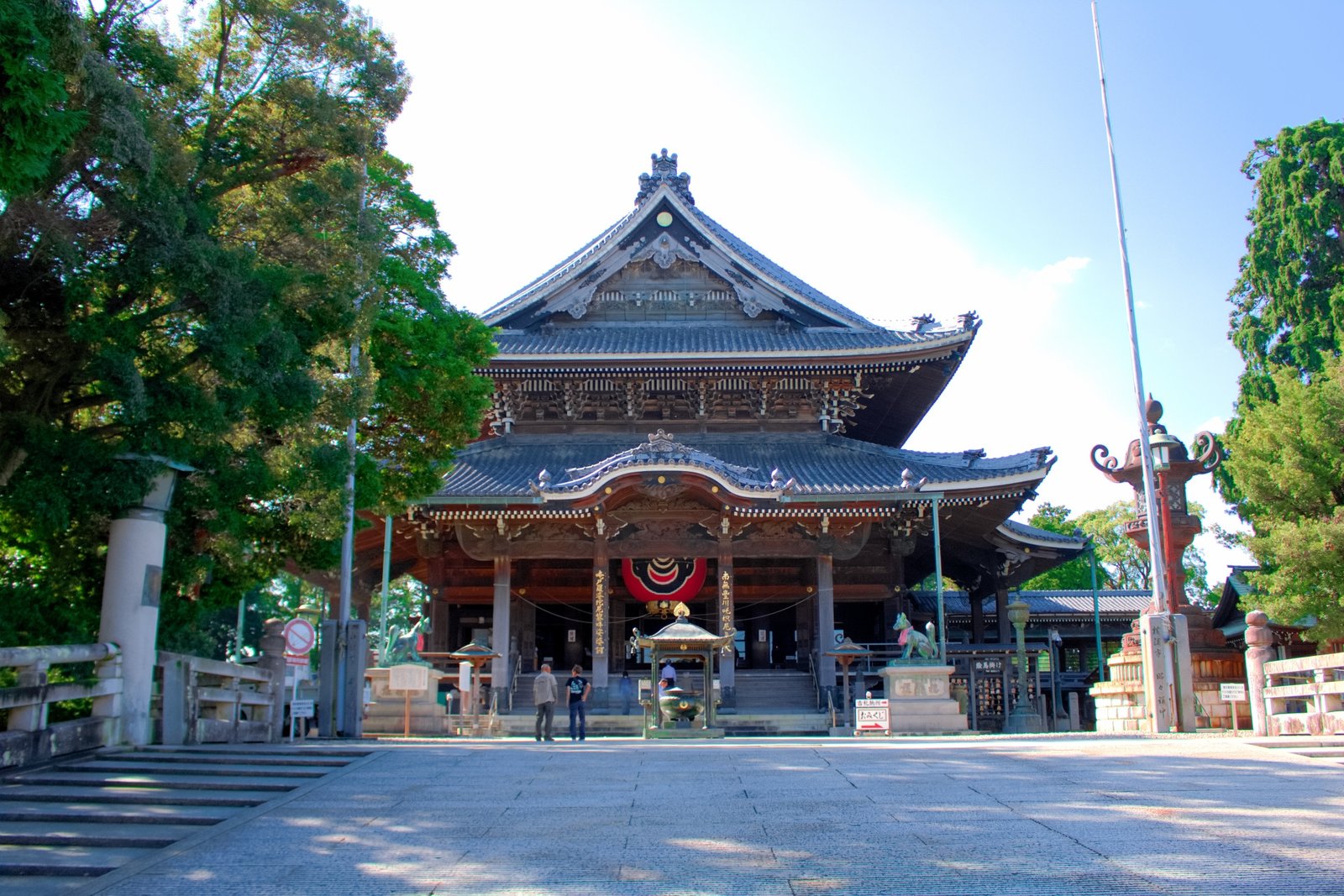
The main hall of Toyokawa Inari, hung with a great red lantern beneath the temple's name.
More of the stone foxes of Reikozuka, standing among the old cedars.
亮點

亮點

A temple, not a shrine

For all the red banners and foxes, Toyokawa Inari is not a Shinto shrine but a Zen Buddhist temple of the Soto school, properly called Myogonji. It was founded in 1441, and its principal image is a thousand-armed Kannon.

Toyokawa Dakini Shinten and the white fox

At the mountain gate the temple enshrines a guardian deity, Toyokawa Dakini Shinten, who is depicted riding a white fox. Because of that fox, the deity was drawn over the centuries into the Inari faith of good harvests and good fortune, and the temple took the popular name Toyokawa Inari.

Reikozuka, a place of a thousand foxes

Behind the main halls stands Reikozuka, where more than a thousand stone foxes — offered over the years by grateful worshippers — sit in mossy ranks among the trees. The fox is the deity's messenger, and the effect of so many together is quiet and strange.

The lane of inari-zushi

The approach to the gate is a monzen-machi, a temple-front town lined with shops and stalls. The local dish is Toyokawa inari-zushi, sushi rice in a sweet pouch of fried tofu, eaten as you walk.

One of Japan's great Inari, open all year

Toyokawa Inari is commonly counted among the three great Inari of Japan, and draws some five million visitors a year. It is busy above all at New Year, and quieter on an ordinary morning; there is no single best season.

建議路線

建議路線

  1. 1

    The Sōmon and the mountain gate

    Enter through the outer gate and the old Sanmon, the temple's oldest building, then on to the great main hall.

  2. 2

    The main hall

    Make your prayers before the deity at the main hall of 1930, the heart of the precincts.

  3. 3

    Reikozuka

    Follow the path behind the halls to the mound of more than a thousand stone foxes among the trees.

  4. 4

    The temple-front lane

    Walk back down the approach, where shops sell the local inari-zushi and Toyokawa sweets and crafts.

最佳造訪時節

最佳造訪時節

1月
2月
3月
4月
5月
6月
7月
8月
9月
10月
11月
12月

Toyokawa Inari is a year-round place with no single peak; much of a visit is spent walking the precincts and the temple-front lane, so it suits almost any day. It is at its most crowded over the New Year holidays, when great numbers come to make their first prayers of the year. Spring and autumn are pleasant for the walk; in high summer the open courtyards can be hot, so an earlier start is kinder. The main halls keep shorter hours than the outer gate, so check the times before a late visit.

前往方式

  • JR Toyokawa Station (Iida Line)About a 5-minute walk. Toyokawa is reached from Nagoya via Toyohashi on the Iida Line.
  • Meitetsu Toyokawa-Inari Station (Toyokawa Line)About a 5-minute walk to the gate.
  • By carPaid parking is available near the temple. Confirm details officially.
在 Google 地圖開啟

想去看看嗎?

聯絡我們

規劃你的造訪

想把這裡納入含交通、並有英語或越南語嚮導的一日行程嗎?告訴我們你的日期,我們會為你量身安排。

返回景點