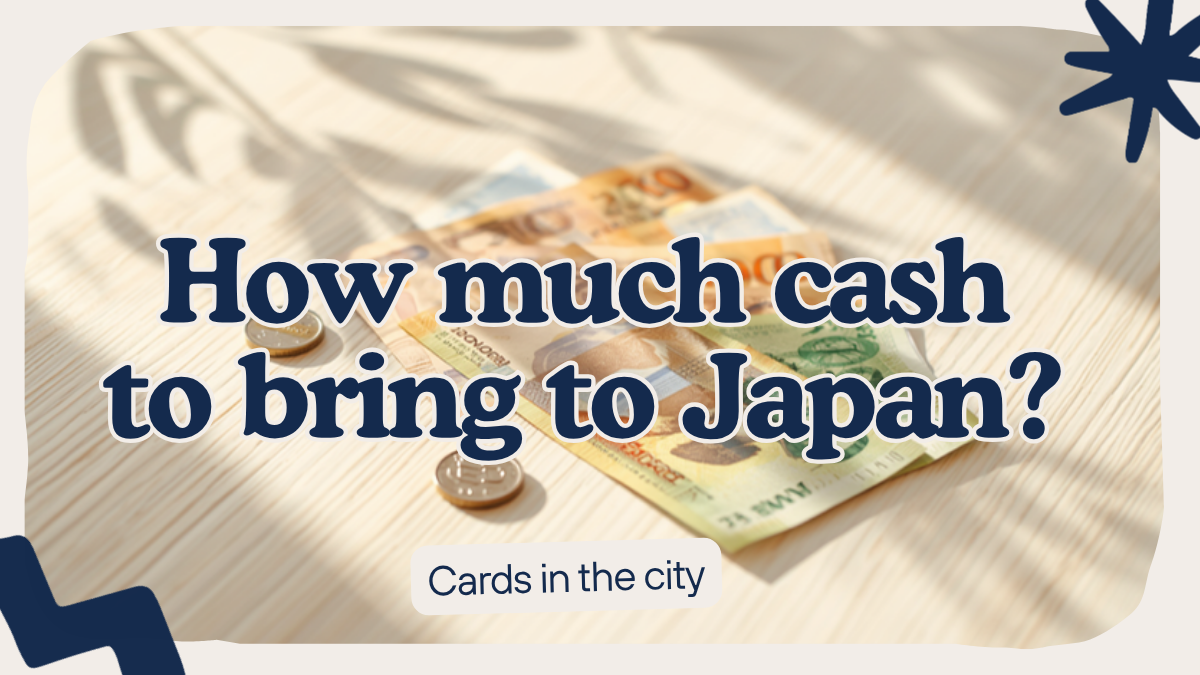
Is Japan cashless yet? How much cash to actually bring in 2026
By Trip Japan YLP Editorial TeamPublished by Trip Japan YLP
In this article
You've heard Japan is going cashless, and you've also heard it's stubbornly cash-only. Both are true, which is exactly the confusing part. So here's the honest version — the one we'd give a friend flying into Nagoya next week — on how much cash to bring to Japan and where a card quietly stops working.
The short answer
In the big cities, you can get surprisingly far on a card or your phone. Visa, JCB and Mastercard are accepted at most hotels, department stores, larger shops and city restaurants. Tap-to-pay apps like PayPay have spread almost everywhere, and your IC transit card — a Suica, or our local manaca — doubles as loose change at convenience stores and vending machines. Plenty of visitors find cards handle most of their spending in Tokyo, Osaka or central Nagoya.
But — and it's a real but — the moment you step off the main streets, cash comes back.
Where cash still rules
Think of it as a rule of thumb: the smaller and older the place, the more likely it wants yen. A family-run noodle shop with a handwritten menu. A mountain bus with a coin box by the door. The offering box at a shrine, the little stall selling omamori (good-luck charms), the entrance fee at a temple — almost always coins. Some onsen (hot springs), some countryside guesthouses, even the odd rural hotel: cash only. Japan's official tourism body puts it plainly — many places, especially in rural areas, may still only accept cash, so check ahead and keep some on you.
This is where a lot of first-timers get caught. You breeze through three cities on a card, then reach a beautiful little town — the kind we love out here in central Japan — and suddenly nothing beeps.
So, how much cash?
There's no magic number, but here's how we think about it (as of July 2026). Keep a cushion of ¥10,000–20,000 on you, and top it up before you head into the countryside rather than after. Break a big note early so you've got ¥100 and ¥500 coins for shrines, coin lockers and bus fares — those coin boxes rarely give change. A day of temples and small shops calls for a little more; a day in a city mall, a little less.
Getting yen is the easy part
Don't stress about arriving cashless. The most reliable cash machine in Japan is sitting in every 7-Eleven: Seven Bank ATMs — tens of thousands of them — take foreign cards and switch to English, Vietnamese and seven other languages at a tap. Japan Post Bank ATMs work too. Airport exchange counters are fine for your first ¥10,000 or so on landing. One small thing at card terminals: if the machine asks whether to charge you in yen or your home currency, yen is usually the simpler choice.
The central-Japan version
Here's the local truth. Nagoya itself is easy — tap away. But the trips people remember are the ones out in the hills: a potters' lane in Tokoname, a canal town in Hida, a spring-fed pond in the Gifu mountains. Those are exactly the places that still love cash. So when you plan a day away from the city, tuck a few extra notes in your pocket. You'll relax, and so will the shopkeeper.
If you want the tap-and-go side of this — trains, subways, the card itself — we wrote a whole guide to Japan's IC cards. And for the small towns worth carrying cash for, here's where to find them.
Planning a trip around central Japan? See the small-group days we run from Nagoya.
Browse all toursDid you enjoy this story?