Japan's quiet side: the small towns and countryside of central Japan
By Trip Japan YLP Editorial TeamPublished by Trip Japan YLP
In this article
Ask most first-time visitors to name a place in Japan, and you'll hear the big three: Tokyo, Kyoto, Osaka. Which is fair enough. But after years of showing people around our own corner of the country, the moments I see land hardest are almost never in a big city. They're on a quiet lane where a canal runs past white-walled storehouses, or on a hilltop where the only sound is a wooden castle floor creaking under your feet.
That's the Japan I want to tell you about here: the small towns, and the countryside around them, in the middle of the country. Less famous, and honestly all the better for it.
First, where do I mean?
We're based in Nagoya, in what's called the Tokai region — three prefectures gathered around the city: Aichi, Gifu and Mie. It sits right between Tokyo and Kyoto, which means most travellers glide straight through it on the bullet train without stopping. Their loss, a little. This is where a lot of Japan's quieter, more everyday countryside actually is, and it's remarkably easy to reach.
Here are a few of the towns I'd send a friend to.
Up in the Gifu mountains
If you only have time for one direction, go north into Gifu. The mountains here kept their old towns while the rest of the country rebuilt.
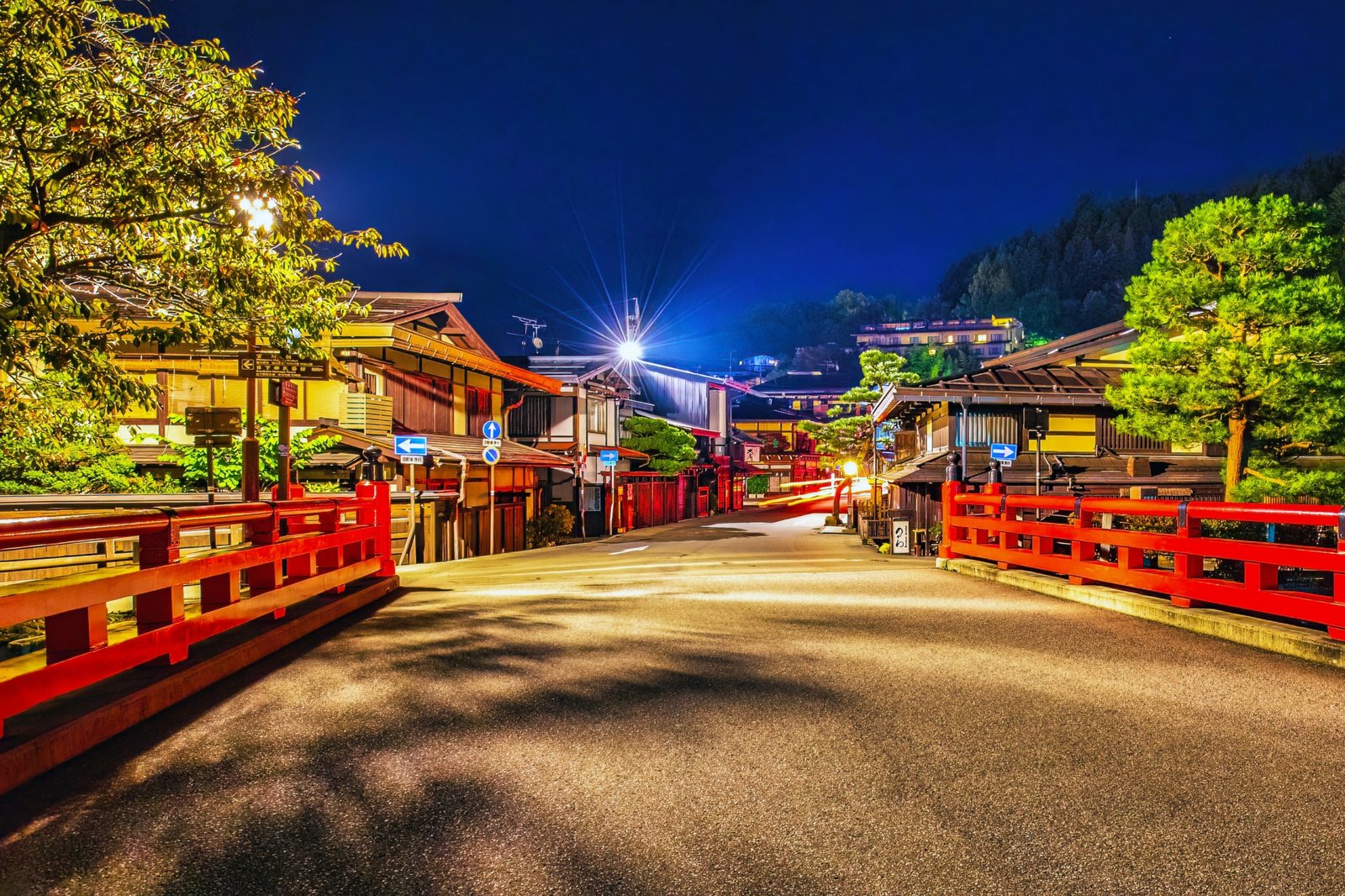
Takayama is the one most people have heard of — an Edo-era merchant town where the Sanmachi streets are still lined with dark-timbered houses, now sake breweries, cafés and craft shops. Look for the round cedar balls hung at the brewery doors, wander the riverside morning market, and eat Hida beef until you're happy. It's about two and a quarter hours from Nagoya on the Hida limited express, and it deserves an unhurried day. If it's on your list, we wrote a proper Takayama travel guide too.
Fifteen minutes further up the same line, though, is the one I quietly love more: Hida-Furukawa. Same beautiful woodwork, a fraction of the crowds. A clear canal runs beside the white-walled storehouses, with hundreds of koi carp in it from spring to late autumn, and if you look under the eaves you'll spot the little cloud-shaped carvings the Hida carpenters left as their signatures. Once a year, on April 19 and 20, the whole quiet town erupts for the Furukawa Festival and its thundering okoshi-daiko drum.
And then there's Shirakawa-go, a UNESCO World Heritage village of steep thatched farmhouses that people still live and farm in. It's famous buried in winter snow, but it's lovely in any season, and it's only about fifty minutes by bus from Takayama, so the two pair up naturally.
Closer to home, in Aichi
You don't have to go far from Nagoya at all. Inuyama has one of only twelve original castle keeps left in Japan — a small, steep, entirely real wooden tower above the Kiso River, with a castle town of old shops and street food leading up to the gate. It's around twenty-five minutes from the city on the Meitetsu train.
South of Nagoya, minutes from the airport, Tokoname has been firing pottery for a thousand years. Its walking path climbs past a slope walled entirely with old clay pipes, the largest surviving climbing kiln in Japan, and a street of ceramic lucky cats watched over by one enormous cat face. Because it's so close to Chubu Centrair, it's the easiest half-day in the region — perfect for a first or last afternoon.
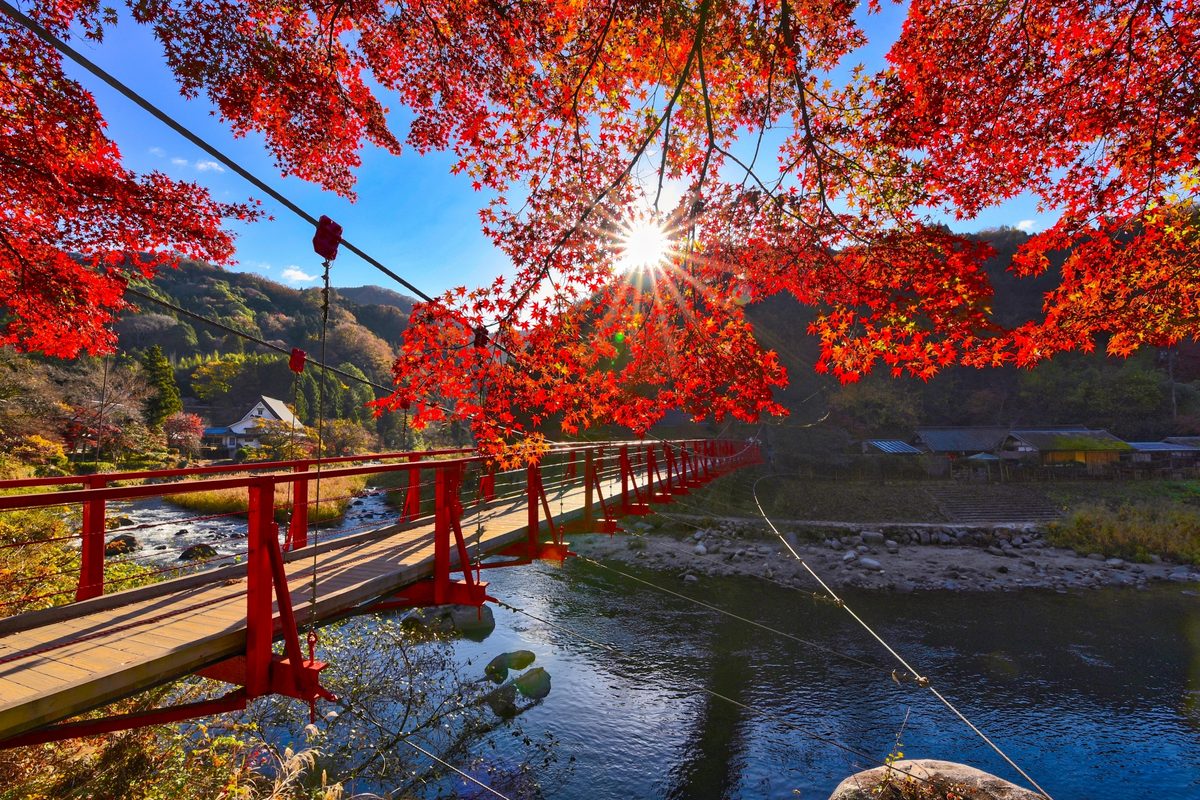
For something even quieter, the washi-paper village of Obara sits up in the hills of northern Toyota. People here still make paper by hand, and every November the village pulls off a small miracle: a rare four-season cherry that blooms at the same time as the autumn maples, so you get pink blossom and red leaves in one frame.
And a hot-spring hamlet in Mie
Over in Mie, tucked into the Suzuka foothills, is Yunoyama Onsen — a little hot-spring village whose waters, by tradition, were found back in the year 718. A ropeway floats you up the mountain above it, where even in the thick of summer the air runs a good ten degrees cooler than the city. Soak first, ride second; it's about an hour from Nagoya by direct bus.
When to go
Honestly, there's no wrong season for the countryside up here — spring blossom, deep summer green, autumn maples, winter snow, each one changes the towns completely. If you want the full picture, I laid it all out month by month in the best time to visit central Japan.
Whenever you come, leave a day for the small places. The cities will show you Japan at full volume. It's these towns that let you hear it think.
Planning a trip around central Japan? See the small-group days we run from Nagoya.
Browse all toursDid you enjoy this story?