Things to do in Nagoya, the big city most travellers skip
By Trip Japan YLP Editorial TeamPublished by Trip Japan YLP
In this article
Most people blow straight through Nagoya. It sits right on the Tokaido Shinkansen line between Tokyo and Kyoto, so the bullet train pulls in, a handful of people step off, and everyone else keeps rolling west. I get the instinct. I also think it's a small tragedy, because this is where we're based, and once you know where to point yourself there are more good things to do in Nagoya than a single day can hold.
So let me play local for a minute. Here's how I'd spend a day here — two, if you can spare them.
Start with the castle and the shrine
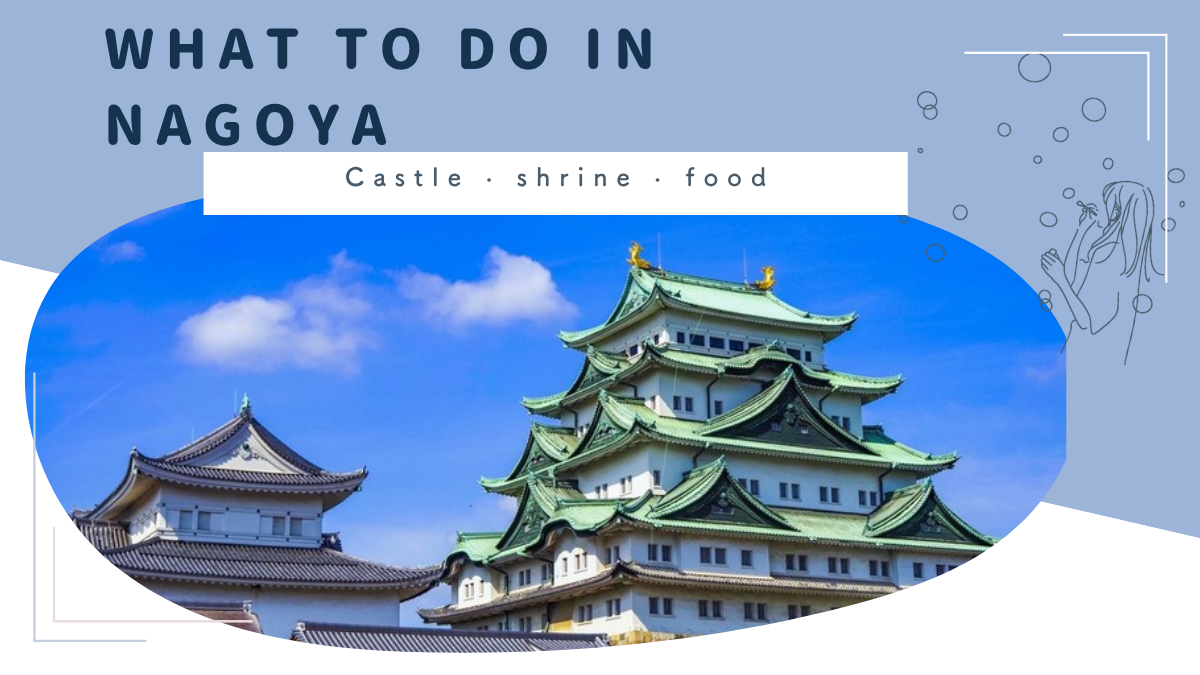
The obvious first stop is Nagoya Castle, with its pair of golden shachihoko — those glittering tiger-fish on the roof that are basically the city's mascot. I'll be honest with you, though: the main keep is closed. It's being rebuilt from scratch in wood, the way it stood in 1612, and that won't be finished for years. You can only admire it from outside for now.
Don't let that put you off. The reason to go is the Hommaru Palace next door, painstakingly reconstructed and reopened in 2018 with gold-leaf screens and cypress woodwork so crisp it looks freshly painted. Entry to the grounds and the palace is ¥500, and it's open 9:00 to 16:30 (last entry at 4). Go in the morning while it's quiet.
Then swap the crowds for calm at Atsuta Jingu. It doesn't look like much from the gate, but this is one of the most sacred shrines in the whole country — second only to Ise — and it has quietly guarded the sacred sword Kusanagi, one of Japan's three imperial treasures, for something like nineteen hundred years. You won't see the sword; nobody does. What you get instead is a huge, cool forest in the middle of the city, free to walk, where the traffic noise just falls away. That contrast is the whole point.
The city itself
For the modern side, head to Sakae. The Mirai Tower there (you might still hear it called the Nagoya TV Tower) has a nice claim to fame: finished in 1954, it's the oldest tower of its kind in Japan, up four years before Tokyo Tower. It stands in the middle of a long green park, right next to Oasis 21, a curved glass roof with a shallow pool of water on top that you can walk beneath. Come back after dark — both light up.
A short subway ride away is Osu, a tangle of covered shopping arcades where a centuries-old temple, second-hand kimono, cheap electronics, Brazilian snacks and bubble tea all somehow share the same streets. It's the most fun you can have in Nagoya without a plan.
And if you're travelling with kids, save an afternoon for the port. That's where you'll find the Port of Nagoya Public Aquarium, one of Japan's biggest, with orcas and belugas and a proper penguin colony, and right beside it Legoland Japan. Either one can eat a whole day on its own.
The food is the real reason
Here's the thing locals will tell you: people who come back to Nagoya usually come back for the food. There's a whole category for it, Nagoya meshi, and it's rich, sweet, and unapologetically local.
The one dish to build a meal around is hitsumabushi — grilled eel over rice, but with a ritual. You eat it in stages: a few bites plain, then some with spring onion and wasabi, then you pour hot dashi broth over the rest and finish it like a soup. Three meals in one bowl. After that, work your way through miso katsu (a pork cutlet under thick, sweet red-miso sauce), tebasaki (peppery fried chicken wings you're meant to eat with your fingers), and, if you spot the name, the fiery Taiwan ramen — which, despite the name, was invented right here in Nagoya.
Breakfast has its own tradition too. Order a coffee at an old-school kissaten in the morning and it often arrives with toast and a boiled egg for no extra charge — the famous Nagoya morning service. Ask for ogura toast and you'll get sweet red-bean paste on hot buttered bread. Strange on paper. Wonderful in practice.
Easy day trips from the city
If you give Nagoya two days, spend the second one just outside it. All of these are close.
Ghibli Park sits about an hour east, out where the 2005 World Expo was held, reached by subway and then the little Linimo maglev train. One warning that matters: you cannot buy tickets at the gate. They're sold by date and time, released online two months ahead on the 10th of each month, and popular days vanish in minutes — so book before you fly. For a different kind of nostalgia, the Toyota Automobile Museum nearby lines up a century of cars from around the world, not just Toyotas.
Prefer old Japan? Inuyama Castle, half an hour north by train, is one of only twelve original castle keeps left standing — a small, steep, wonderfully creaky wooden tower over the Kiso River. And if you're flying in or out of Centrair, leave time for Tokoname, a pottery town of kiln chimneys and a walking path lined with ceramics, right by the airport.
Getting there, and getting around
Nagoya is easy to reach. From the airport, the Meitetsu μ-SKY train runs non-stop to Nagoya Station in 28 minutes. From Tokyo, the Nozomi bullet train takes about 1 hour 40 minutes; Kyoto and Osaka are closer still.
In the city, the subway will take you almost everywhere, and a rechargeable manaca IC card (or your Suica from Tokyo) works on every train and bus. If you're here on a weekend or a public holiday, buy the Donichi Eco Kippu — a ¥620 day pass giving you unlimited subway and city buses, which pays for itself in about three rides.
One last thing. If you're timing a visit around the weather or the seasons, we keep a running central Japan seasons guide that'll tell you what the month you're coming actually feels like.
Give the city a chance and it gives a lot back. Come hungry — that part matters most.
Planning a trip around central Japan? See the small-group days we run from Nagoya.
Browse all toursDid you enjoy this story?