Green tea vs black tea: it's the same plant, and that still surprises me
By Trip Japan YLP Editorial TeamPublished by Trip Japan YLP
In this article
Here's a thing I like telling guests, because it gets a proper double-take every time. Green tea, black tea, oolong, white tea — they're all the same plant. Not cousins. Not related species. The same leaf, treated differently.
So the English breakfast you had this morning and the sencha we'd pour you in Shizuoka? They started life on the same bush.
The plant is called Camellia sinensis. Pretty much every real tea on earth comes from it. Herbal things like chamomile or rooibos are a different story — botanically they aren't tea at all — but if it's actually tea, it's this one plant.
So what makes them different? Oxidation
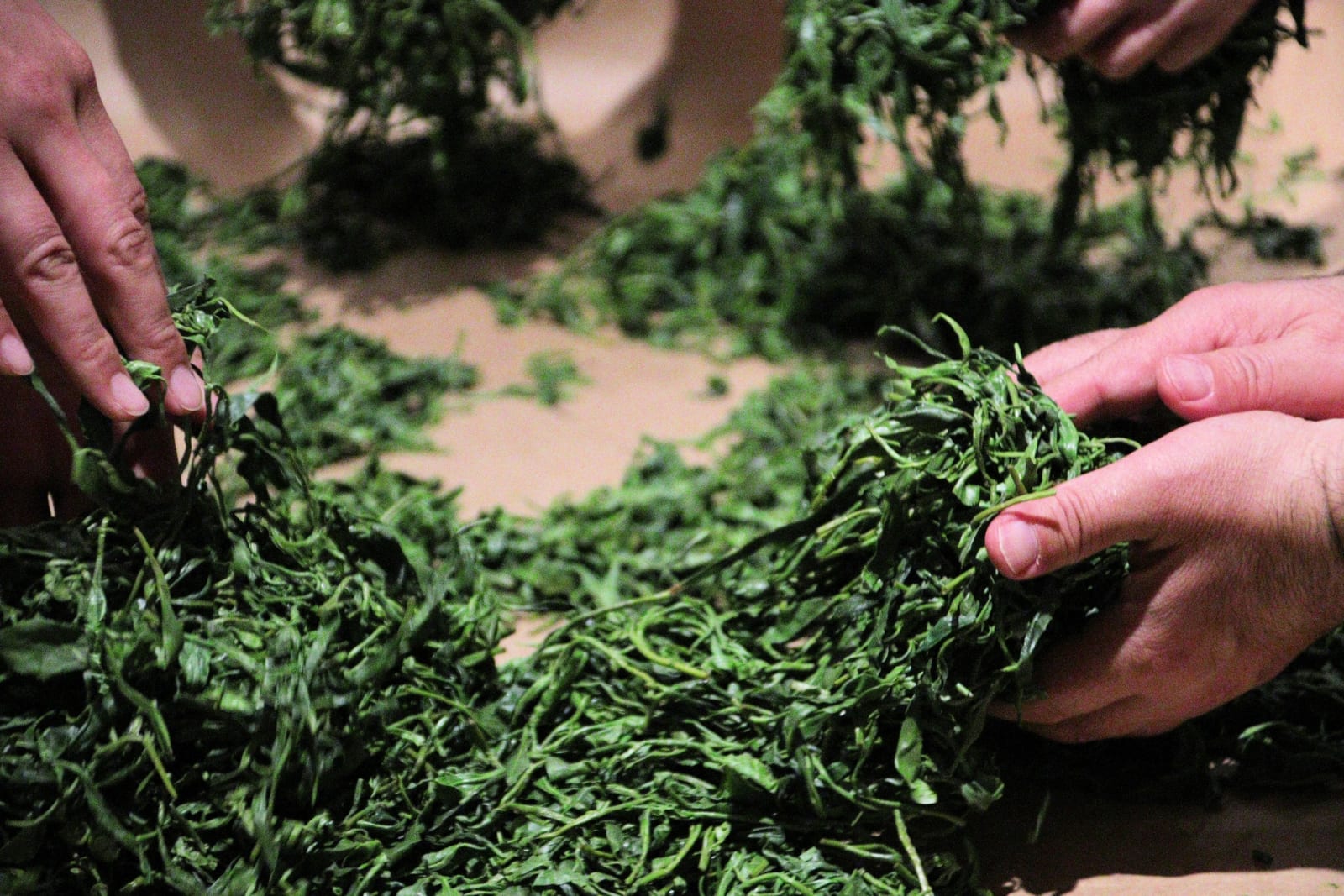
Once a tea leaf is picked, it starts to change. Enzymes in the leaf react with the air, the leaf darkens, and the flavour turns from fresh and grassy toward malty and deep. It's the same basic thing that happens to a cut apple on the kitchen counter.
Tea people often call it fermentation, and in Japanese it's literally 発酵. But it isn't really fermentation in the yeast-and-bread sense. It's oxidation. And the whole family tree of tea is just a question of when you stop it.
Stop it almost immediately, and you get green tea. The leaf stays green, the flavour stays fresh.
Let the leaf wither gently, barely interfere, and you get white tea — the lightest touch of all.
Let it go partway, then halt it, and you get oolong. Somewhere in the middle, which is why oolong can taste floral one time and toasty the next.
Let it run all the way to the end, and you get black tea. Full oxidation, dark leaf, that familiar brisk cup.
Same leaf. Four drinks. The difference is timing.
Japan's move: steam it
Every tea-growing country has to answer the same question — how do you stop the oxidation? You apply heat, fast. That much is universal. What differs is how.
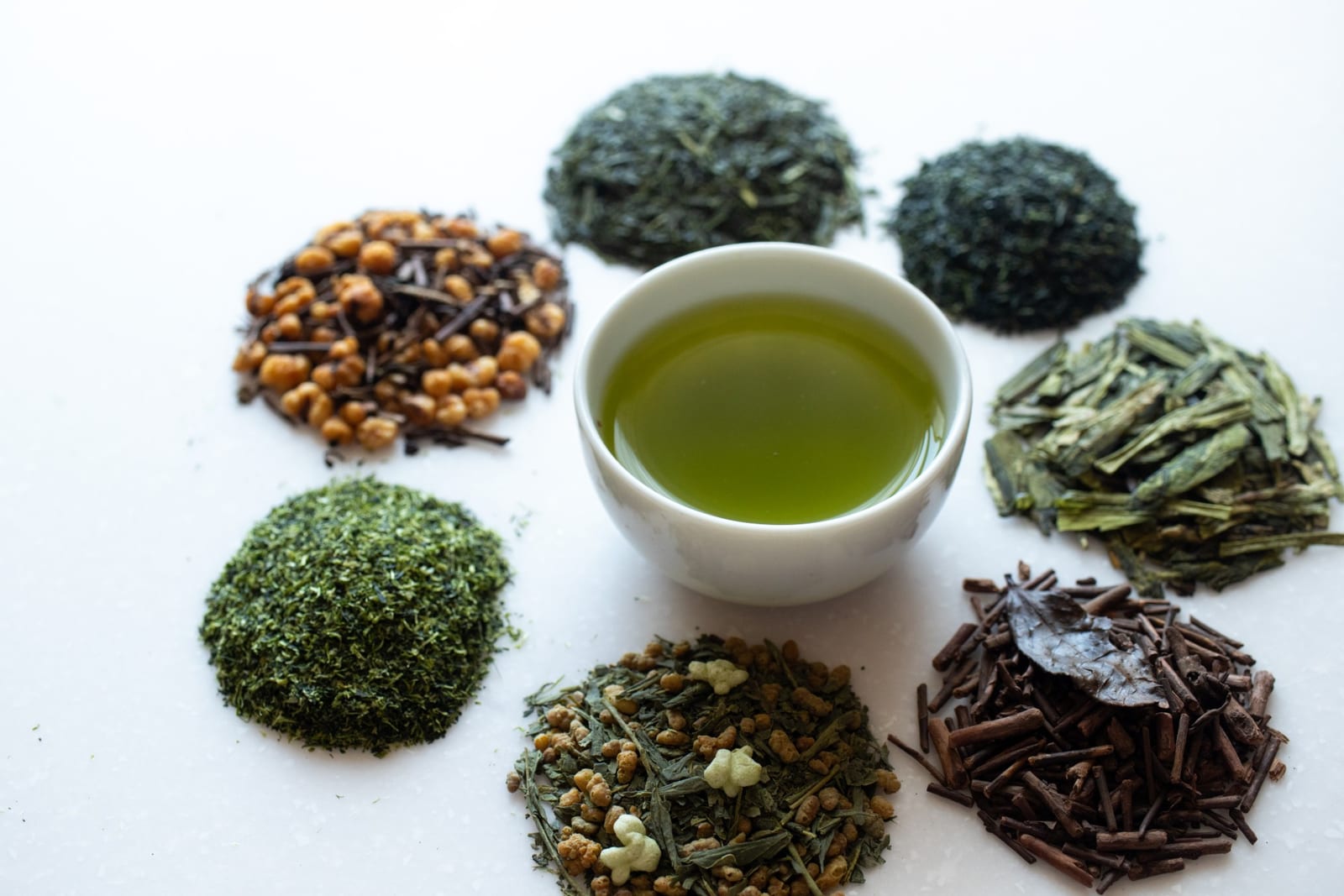
Across much of China, the traditional answer is dry heat: the leaves are roasted or tumbled in hot pans. Japan went another way. Here, the leaves are steamed, within hours of picking, and that steam is why Japanese green tea looks the way it does. Vivid, almost electric green in the cup, with that fresh, slightly oceanic character. Roasting tends to give a rounder, toastier flavour; steaming keeps the colour bright.
For black tea it's the opposite approach entirely: you want the oxidation, so the leaves are withered for hours, rolled to break them open, and left to darken before drying. Nobody rushes in with steam.
If you want the whole journey step by step, we walked through it in how green tea is actually made.
Why Japan stayed green
Japan does make black tea, and pan-fired green tea too — kamairicha, mostly down in Kyushu, is roasted rather than steamed. But green is overwhelmingly the national habit, and that's history as much as technique. Tea arrived here as a monk's medicine, grew into the tea ceremony, and then, in the 1700s, a steamed-and-rolled method turned it into something ordinary people drank every day. It stuck. We told that story back in the short history of Japanese tea.
Which is also why Japan's two most famous cups are both green but nothing alike — one steeped, one whisked as powder. That's a whole subject of its own, and it's over in sencha or matcha.
What about caffeine and taste?
You'll hear confident claims that green tea has less caffeine than black. Honestly, I'd be careful with that. Cup to cup, how much caffeine you end up with depends heavily on the leaf, the water temperature, and how long you leave it — a strong gyokuro can easily out-punch a weak black tea. Brewing does more work than colour.
Taste is a safer generalisation. Green tends toward fresh, grassy, sometimes savoury; black toward malty and robust; oolong sits between and swings either way; white is delicate and faintly sweet. Broad strokes, but useful ones when you're standing in a Japanese supermarket tea aisle wondering what you're looking at.
Next time you pour a cup
Try this. Brew a green tea and a black tea side by side, and remind yourself they're the same leaf. It changes how the green one tastes — you stop measuring it against black tea and start noticing what it actually is.
And if that gets you curious about where each one grew, the map of Japan's tea regions is a good next stop.
If you'd rather taste all this in the place it happens, we do spend a full day at a tea farm in the Kawane valley — steam, hills, and a lot of pouring. No pressure either way. Even from your own kitchen, the leaf is worth getting to know.
Planning a trip around central Japan? See the small-group days we run from Nagoya.
Browse all toursDid you enjoy this story?